
Setting the Stage: Sibling Rivalry on a Shared Platform
Platform sharing has been a part of the automotive world for decades, often resulting in cars that feel like little more than re-badged copies of one another. But every so often, a shared foundation gives rise to two vehicles with truly distinct souls. This is precisely the case with the Hyundai Ioniq 5 and Kia EV6. These corporate cousins are built on the same brilliant architecture, yet they couldn’t be more different in personality, creating one of the most compelling rivalries on the road today.
The common DNA is Hyundai Motor Group’s Electric-Global Modular Platform, or E-GMP. This purpose-built EV architecture is the source of their shared strengths. It allows for an exceptionally long wheelbase, which translates directly into a surprisingly spacious interior. The E-GMP also provides a completely flat floor, opening up the cabin in ways traditional cars cannot. Perhaps most importantly, it incorporates a groundbreaking 800-volt electrical system, a feature typically reserved for high-end performance EVs that enables ultra-fast charging.
With the same bones, the design teams went in opposite directions. The Ioniq 5 embraces a retro-futuristic aesthetic. Its sharp, polygonal lines and distinctive pixelated LED lights feel like a modern tribute to 1980s concept cars. The clean, almost hatchback-like silhouette is bold, unapologetic, and instantly recognizable. It’s a design that makes a statement by looking back to move forward.
In the other corner, the Kia EV6 projects pure athleticism. Its design, centered around the “Digital Tiger Face,” is all about sleek, muscular curves and a coupe-like roofline that screams forward motion. Where the Ioniq 5 is angular and architectural, the EV6 is fluid and predatory. It looks fast even when standing still. This fundamental difference in philosophy sets up the core conflict of this Hyundai Ioniq 5 vs Kia EV6 matchup. This kind of head-to-head analysis is something we specialize in, and you can explore more of our vehicle comparisons to see how other rivals stack up.
Over the next few sections, we will dissect every critical aspect of this Ioniq 5 vs EV6 comparison. We’ll move from raw acceleration and real-world range to interior comfort and long-term ownership costs. By the end, you’ll have a clear picture of which of these contenders for the best electric SUV 2026 is the right choice for you.
Drivetrain and Acceleration Showdown
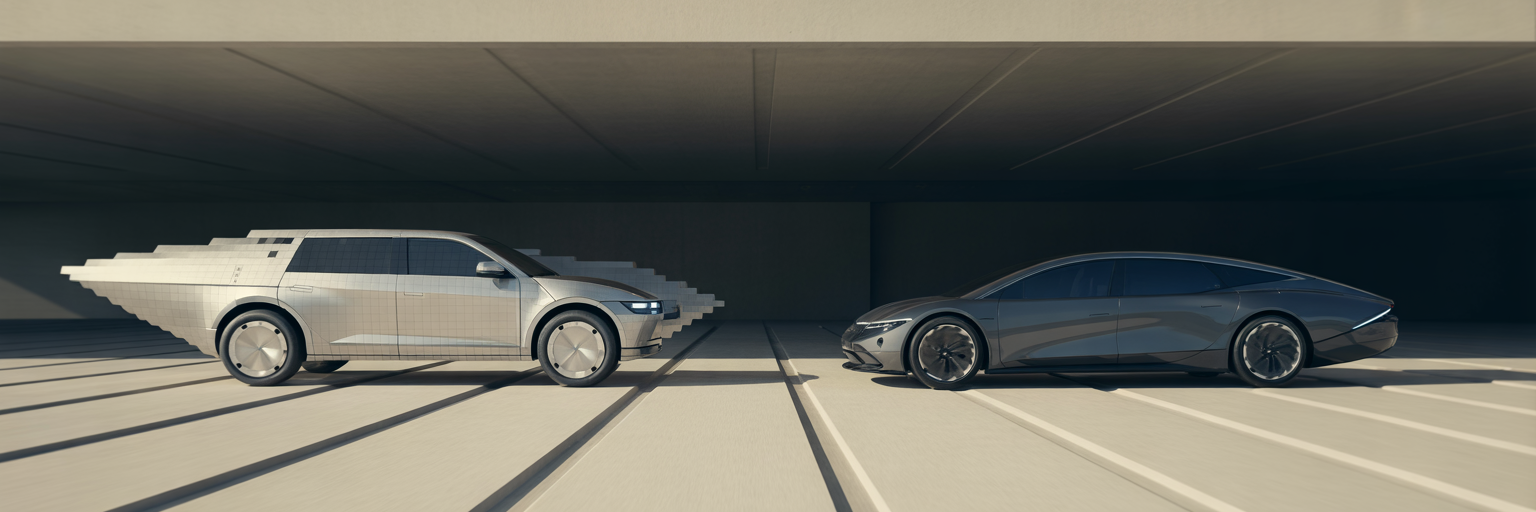
While both vehicles share a platform, the way they deliver power speaks volumes about their intended character. The experience of acceleration in an EV is fundamentally different from a gasoline car; it’s the silent, instant rush of torque that defines the modern driving experience. Here, we’ll break down how the Ioniq 5 and EV6 translate their electric power into straight-line speed, from the practical base models to the astonishingly quick performance halos.
Base Model Performance: The Daily Drivers
For many buyers, the standard-range, rear-wheel-drive (RWD) models are the entry point. The Ioniq 5 SE Standard Range offers a competent powertrain that is more than adequate for city commuting and confident highway merging. It’s smooth, quiet, and delivers the effortless acceleration EV drivers love. The base Kia EV6 Wind RWD comes with a bit more horsepower from the start, giving it a slightly quicker feel off the line. Both are perfectly suited for daily driving, providing a responsive and serene experience without the need for the larger battery pack.
Upping the Ante: Long-Range and AWD Configurations
This is where performance gets interesting for the mainstream buyer. Opting for the long-range battery and the dual-motor all-wheel-drive (AWD) setup transforms both vehicles. With over 320 horsepower on tap, the Ioniq 5 SEL and Limited AWD models become genuinely quick, hitting 60 mph in under five seconds. The EV6 GT-Line AWD matches this performance almost identically. The key difference is in the delivery. The Ioniq 5’s power surge feels smooth and linear, like a high-speed train. The EV6, especially in Sport mode, has a sharper, more aggressive throttle response that encourages spirited driving, reinforcing its athletic character.
The Performance Halos: Ioniq 5 N and EV6 GT
At the top of the food chain are the Hyundai Ioniq 5 N and the Kia EV6 GT. These are not just crossovers with more power; they are legitimate performance machines that can challenge dedicated sports cars. The EV6 GT was the first to arrive, stunning the world with 576 horsepower and a 0-60 mph time of just 3.4 seconds. It’s a raw, visceral experience. However, Hyundai’s N division took the formula and refined it. The Ioniq 5 N pushes the envelope even further with up to 641 horsepower in “N Grin Boost” mode, dropping the 0-60 sprint to a blistering 3.2 seconds. It adds a host of track-focused software and hardware, making it the more hardcore and engaging driver’s car of the two.
| Model & Trim | Drivetrain | Horsepower (approx.) | 0-60 MPH (est.) |
|---|---|---|---|
| Hyundai Ioniq 5 SE Standard Range | RWD | 168 hp | 7.4 sec |
| Hyundai Ioniq 5 SEL/Limited | AWD | 320 hp | 4.9 sec |
| Hyundai Ioniq 5 N | AWD | 641 hp (Boost) | 3.2 sec |
| Kia EV6 Wind | RWD | 225 hp | 6.7 sec |
| Kia EV6 GT-Line | AWD | 320 hp | 4.9 sec |
| Kia EV6 GT | AWD | 576 hp | 3.4 sec |
Note: Figures are based on manufacturer estimates for 2026 models and may vary. This table illustrates the performance parity in mainstream trims and the distinct power levels of the high-performance N and GT models.
Range and Charging Efficiency Examined
For any EV buyer, two questions stand above all others: “How far can it go?” and “How long does it take to charge?” In this critical area, both the Ioniq 5 and EV6 excel, thanks again to their shared E-GMP foundation. While their range figures are closely matched, the real story is their class-leading charging capability.
When comparing EPA-estimated range, the numbers are often neck and neck. Depending on the battery and drivetrain configuration, both vehicles offer trims that can exceed 300 miles on a full charge. However, the Kia EV6 range and performance often gets a slight edge in highway driving. Its more aerodynamic, sleeker profile cuts through the air with a little less resistance, which can translate to a few extra miles on a long road trip. The Ioniq 5’s boxier shape, while great for interior space, creates slightly more drag.
The true advantage for both models is the 800-volt architecture. This is what enables an exceptional EV charging speed comparison against competitors. At a 350kW DC fast-charging station, both the Ioniq 5 and EV6 can replenish their batteries from 10% to 80% in approximately 18 minutes. This is a claim backed by independent testing, as U.S. News reports that both models can achieve this rapid charging under ideal conditions. This speed dramatically reduces downtime on road trips, making long-distance travel in these EVs far more convenient than in many rivals that use a slower 400-volt system.
Of course, real-world conditions matter. American drivers in colder climates will appreciate the battery preconditioning feature in both vehicles. This system automatically heats the battery as you navigate to a fast charger, ensuring it’s at the optimal temperature to accept the fastest possible charging speed upon arrival. It’s a small detail that makes a big difference in winter.
Beyond charging, both cars offer a standout utility feature: Vehicle-to-Load (V2L). This function effectively turns the car into a mobile power source. Using an adapter, you can plug in and power standard electronics, from a laptop and speakers at a campsite to a coffee maker at a tailgate. In a power outage, it can even run essential home appliances like a refrigerator. This adds a layer of practical utility that elevates these crossovers beyond simple transportation, giving them capabilities that rival some of the most versatile vehicles on the market, like those seen in our analysis of trucks with the best towing and fuel economy.
On the Road: Handling Dynamics and Ride Quality
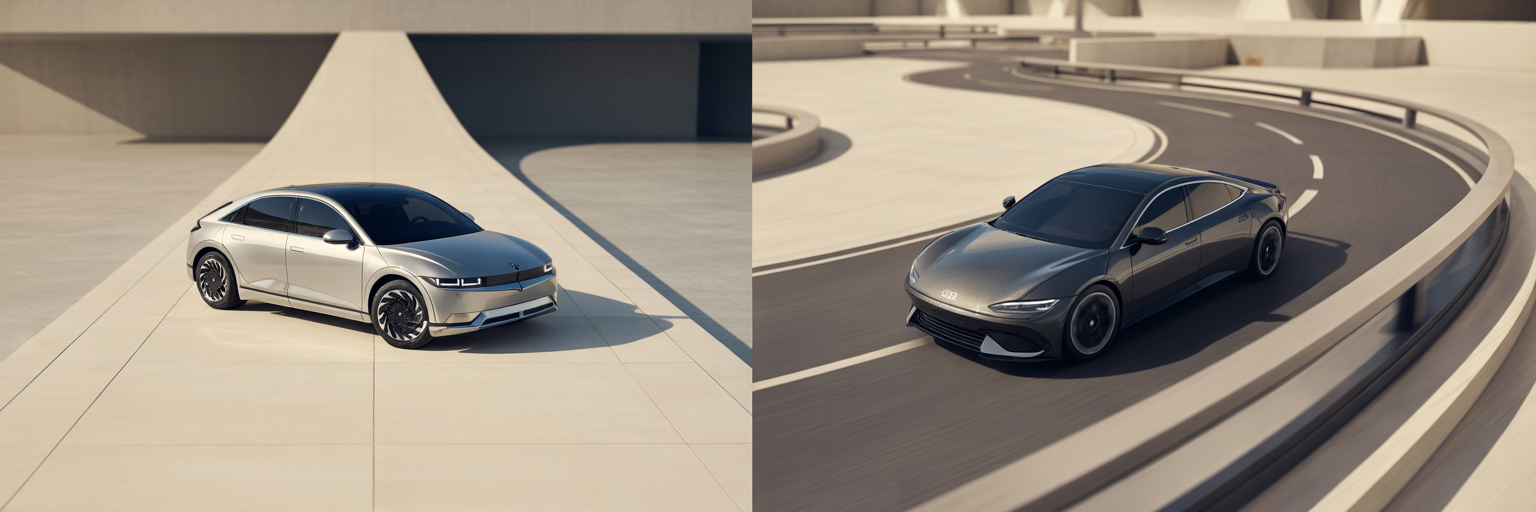
Numbers on a spec sheet only tell part of the story. How a car feels on the road—the way it absorbs bumps, turns into a corner, and communicates with the driver—is what truly defines its personality. This is where the Ioniq 5 and EV6 diverge most clearly, offering two distinct driving experiences tailored to different priorities.
The Hyundai Ioniq 5 is tuned for comfort. Its longer wheelbase and softer suspension setup create a composed, plush ride that excels at soaking up road imperfections. On the broken pavement of city streets or during long, relaxed highway cruises, the Ioniq 5 feels serene and isolating. It glides over bumps that would feel jarring in other vehicles, making it an exceptionally comfortable daily driver. It’s the kind of car that lowers your stress levels during a morning commute.
In contrast, the Kia EV6 is engineered for engagement. It features a firmer suspension, a quicker steering ratio, and a slightly lower center of gravity. These attributes combine to create a more agile, planted, and connected feel. On a winding back road, the EV6 is the clear enthusiast’s choice. It turns in eagerly, stays flat through corners, and gives the driver confidence to push a little harder. It feels less like a crossover and more like a sporty grand tourer.
This difference is immediately apparent through the steering wheel. The Ioniq 5’s steering is light and effortless, prioritizing ease of use in parking lots and low-speed maneuvers. It’s perfect for navigating tight urban environments. The EV6’s steering, however, is weightier and more communicative. It provides a stronger sense of what the front tires are doing, creating a more direct connection between the driver and the road. You feel more involved in the act of driving.
Ultimately, this is a deliberate trade-off. The Ioniq 5’s focus on comfort means it exhibits some noticeable body roll when pushed hard in corners. The EV6’s sportiness comes at the cost of ride quality; its firmer setup can feel a bit busy over rough surfaces. There is no right or wrong answer here. The deciding factor is your personal preference: do you want a car that coddles you, or one that excites you?
Inside the Cabins: A Tale of Two Philosophies
The opposing design philosophies of the Ioniq 5 and EV6 are most apparent once you open the doors. Thanks to the flat floor of the E-GMP platform, both cabins feel incredibly spacious, but they use that space in entirely different ways. One feels like a futuristic lounge, while the other feels like a high-tech cockpit. This section offers a detailed Hyundai Ioniq 5 interior review and contrasts it with the EV6’s driver-centric approach.
The Ioniq 5: A Mobile Living Space
Hyundai designed the Ioniq 5’s interior around the concept of a “living space.” The atmosphere is open, airy, and minimalist. Large windows and available light-colored interior palettes enhance the sense of spaciousness. The standout feature is the “Universal Island,” a center console that can slide forward and back by nearly six inches. This incredible flexibility allows the driver or passenger to easily slide across to the other side, creates a perfect spot for a large bag, or simply opens up the front footwell. It’s a clever design that prioritizes versatility and social interaction.
The EV6: A Driver-Focused Cockpit
The Kia EV6 takes the opposite approach. Its interior is designed to be a driver-focused cockpit. The most prominent feature is the large, curved display screen that is angled slightly toward the driver, making it easy to read at a glance. Unlike the Ioniq 5’s open floor plan, the EV6 has a high, fixed center console that rises to meet the dashboard. This design creates a snug, enveloping feel for the driver and front passenger, clearly separating their space. It feels sporty and purposeful, much like the interior of a traditional sports car.
Material Quality and Practicality
Both vehicles make extensive use of sustainable and high-quality materials, including recycled plastics, eco-processed leather, and fabrics derived from natural fibers. The fit and finish in both are excellent, feeling solid and well-constructed. When it comes to practicality, the differences are subtle but important. The Ioniq 5’s boxier shape and taller roofline give it a slight advantage in rear headroom, making it a bit more comfortable for tall passengers in the back. Rear legroom is generous in both cars. For cargo, the Ioniq 5 generally offers more space behind the rear seats. However, both have a small front trunk, or “frunk,” for storing charging cables or a small bag, though neither is particularly large.
Tech and Infotainment Usability
Stepping inside either the Ioniq 5 or EV6, you are greeted by a wall of screens. Both vehicles feature a stunning dual 12.3-inch screen setup, with one serving as the digital instrument cluster and the other as the central infotainment touchscreen. While the hardware is nearly identical, the user experience and control interfaces reveal key differences that will impact your daily interaction with the car.
The software itself presents two different aesthetics. Hyundai’s infotainment system uses a bright, predominantly white and blue theme. It’s clean and easy to read, but some may find it a bit plain. Kia’s system, on the other hand, features a darker, more modern look with purple and black accents that feels more sophisticated and aligns with its sporty character. Both systems are responsive to touch and have logical menu structures, though they can take some time to learn. Crucially, both offer Apple CarPlay and Android Auto, but it’s important to verify if a wired connection is still required for 2026 models, as this has been a point of contention for some users.
The most significant difference in day-to-day usability lies in the climate and media controls. The Ioniq 5 employs a more traditional approach with a dedicated panel below the main screen. It uses a mix of physical buttons and touch-sensitive controls for functions like temperature and fan speed. This makes it easy to make adjustments without taking your eyes off the road. You can feel for the right button, a small detail that makes a big difference.
The EV6 opts for a more high-tech, and potentially polarizing, solution. It features a slim, dual-function capacitive touch bar. With the press of a button, this bar toggles between controlling the climate system and managing media shortcuts like volume and track selection. While clever and space-saving, it requires an extra tap to switch modes and lacks the tactile feedback of physical controls. Which do you prefer? The straightforward reliability of a button, or the sleek minimalism of a touch bar?
Finally, for audiophiles, the premium sound systems are another point of comparison. The Ioniq 5 offers a Bose premium audio system, known for its powerful and balanced sound signature. The EV6 is available with a Meridian premium audio system, which is often praised for its clarity and detailed soundstage. The “better” system is subjective and will come down to personal listening preference.
Safety Systems and Driver Assistance Features
Modern car buyers expect a comprehensive suite of safety features, and both Hyundai and Kia deliver. The Ioniq 5 and EV6 come equipped with advanced driver-assistance systems (ADAS) that provide a crucial layer of security and convenience. Packaged as Hyundai SmartSense and Kia Drive Wise, these suites include a host of technologies designed to prevent accidents and reduce driver fatigue.
Both vehicles come standard with the features American buyers now consider essential. This includes robust systems that actively monitor the vehicle’s surroundings and can intervene to avoid a collision. Key standard features on most trims include:
- Forward Collision-Avoidance Assist (FCA) with Pedestrian, Cyclist, and Junction-Turning Detection
- Blind-Spot Collision-Avoidance Assist (BCA)
- Rear Cross-Traffic Collision-Avoidance Assist (RCCA)
- Lane Keeping Assist (LKA) and Lane Following Assist (LFA)
- Smart Cruise Control with Stop & Go
- Highway Driving Assist 2 (HDA2)
The standout technology on both is Highway Driving Assist 2 (HDA2). This is a sophisticated Level 2 semi-autonomous system that makes long highway drives significantly less stressful. It combines adaptive cruise control with active lane centering to keep the car perfectly positioned in its lane, even through gentle curves. The “2” in HDA2 signifies a key upgrade: the ability to perform automated lane changes. With the driver’s confirmation via the turn signal, the car will check for a clear opening and smoothly move into the adjacent lane on its own. It’s a feature that feels futuristic and works remarkably well.
While the core systems are shared, there can be differences in how they are packaged. For example, premium features like the Blind-Spot View Monitor, which displays a live camera feed of your blind spot in the instrument cluster when you signal, or the 360-degree Surround View Monitor for easy parking, may be standard on higher trims of one model but part of an optional package on the other. It’s essential to check the specific trim level you’re considering.
For objective validation of their safety, both the Ioniq 5 and EV6 have consistently earned top marks from safety authorities. Their excellent crashworthiness is confirmed by Top Safety Pick+ awards from the Insurance Institute for Highway Safety (IIHS) and 5-Star overall ratings from the National Highway Traffic Safety Administration (NHTSA), providing peace of mind for you and your passengers.
Long-Term Value: Reliability and Ownership Costs

A car is a major investment, so understanding the long-term costs is crucial. When it comes to reliability and total cost of ownership, the Ioniq 5 and EV6 are again closely matched, but one holds a significant advantage that could sway long-term owners.
Because both vehicles are built on the same E-GMP platform and use identical battery packs, motors, and core electrical components, their mechanical reliability is expected to be very similar. Both Hyundai and Kia have built a strong reputation for quality and dependability over the past decade, and these EVs are no exception. Furthermore, owning an EV brings inherent savings. With no oil changes, fewer moving parts, and no need for gasoline, the routine maintenance costs are significantly lower than for a comparable internal combustion engine vehicle. Federal and state tax incentives can also help reduce the initial purchase price, though availability can vary.
The most critical difference, and a major win for Kia, is the warranty. This is where the two brands diverge in a way that directly impacts your wallet. While both offer an outstanding 10-year/100,000-mile warranty on the EV systems and powertrain, Kia’s basic “bumper-to-bumper” warranty is far superior. This is a tangible benefit that offers greater peace of mind. For buyers prioritizing cost-effectiveness above all, it’s worth noting that other segments, like the best hybrid SUVs under $35k, also offer compelling options with strong warranties.
| Warranty Type | Hyundai Coverage | Kia Coverage |
|---|---|---|
| Basic (Bumper-to-Bumper) | 5 years / 60,000 miles | 10 years / 100,000 miles |
| Powertrain | 10 years / 100,000 miles | 10 years / 100,000 miles |
| EV Systems | 10 years / 100,000 miles | 10 years / 100,000 miles |
| Anti-Perforation | 7 years / Unlimited miles | 5 years / 100,000 miles |
Note: This table highlights Kia’s significant advantage in basic warranty coverage, which can translate to lower out-of-pocket repair costs for non-powertrain components during long-term ownership. Always confirm warranty details with the dealer.
This extended basic warranty from Kia covers a wide range of components, from electronics to interior trim, for twice as long as Hyundai’s. For anyone planning to keep their vehicle for many years, this gives the EV6 a clear and tangible edge in the long-term value proposition.
The Final Verdict: Balancing Style, Comfort, and Performance
After dissecting every aspect of the Hyundai Ioniq 5 vs Kia EV6 debate, one thing is clear: there is no single winner. These are two of the best electric vehicles on the market, but they are designed for two different types of drivers. The “better” car is entirely dependent on what you value most in a vehicle. The choice comes down to a simple question of personality: do you prioritize comfort and space, or performance and engagement?
The Hyundai Ioniq 5 is the definitive choice for the buyer who values style, comfort, and innovation.
- Its strengths: Bold, retro-futuristic design that stands out everywhere; a supremely comfortable and quiet ride; and an innovative, spacious, and flexible interior that feels like a lounge on wheels.
The Kia EV6 is the clear winner for the driver who wants their EV to feel as sporty as it looks.
- Its strengths: Sleek, athletic styling that communicates performance; sharp, engaging handling that excites on a twisty road; and a driver-focused cockpit that creates a strong connection to the machine.
So, which should you choose? If your idea of the perfect EV is a practical, comfortable, and stylish sanctuary from the outside world, the Ioniq 5 is your car. It’s a brilliant execution of a mobile living space. If you crave an EV that puts a smile on your face on a winding road and communicates performance through its design and driving dynamics, the EV6 is the one to choose. Whichever you pick, you’re getting a fantastic EV. For more insights into the automotive world, explore everything Car Phanatics has to offer.