
Defining the Modern American Family Vehicle
For generations, the family car was the American station wagon. It was the wood-paneled vessel for everything from grocery runs to summer road trips, a rolling backdrop for countless childhood memories. Today, that role has been inherited by the full-size SUV. These vehicles are more than just transportation. They are mobile command centers for modern family life, tasked with handling school carpools, hauling sports equipment, and embarking on ambitious cross-country adventures. In this arena, two models have long stood as the dominant forces: the Chevrolet Tahoe and the Ford Expedition.
As we look at the 2026 models, both SUVs have been refined with sophisticated technology and comfort features that would have been unimaginable in their predecessors. Yet, their core design philosophies remain distinct, creating a fascinating choice for buyers. The Chevrolet Tahoe has built its reputation on a foundation of superb ride comfort and strong long-term value. It’s the smooth operator, designed to make long hours on the highway feel effortless. In the other corner, the Ford Expedition champions maximum interior space and outright capability, engineered to haul more people and tow heavier loads than its rival.
Choosing the best full size SUV for families is not a simple decision. It involves a careful balancing act of needs and priorities. Does your family include teenagers who need real legroom in the back, or are you more focused on a serene ride to keep younger children sleeping on long drives? Is your weekend defined by towing a large boat to the lake, or by fitting a week’s worth of camping gear behind the third row? This article will dissect these two American icons to help you make an informed choice. We will compare their interior passenger and cargo volume, analyze their powertrain performance and towing prowess, evaluate their long-distance ride quality, examine their cabin technology, and break down their total ownership costs. Our goal is to provide a clear guide for your family to determine which of these giants best serves your real-world needs.
Interior Volume and Third-Row Practicality
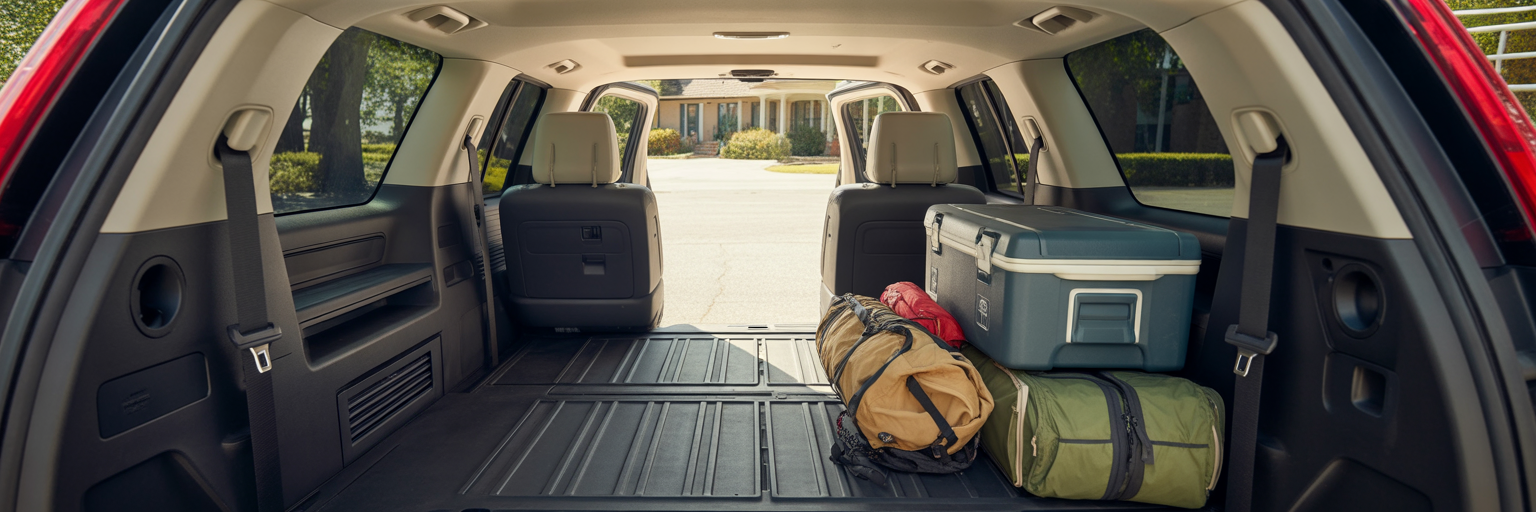
For any large family, the single most important metric for an SUV is often its interior space. It’s the difference between a peaceful road trip and a cramped, complaint-filled journey. When you examine the physical dimensions and practical usability of the cabin, clear differences between the Tahoe and Expedition emerge.
Third-Row Accommodations: Space for Teenagers and Adults
We’ve all seen it: the designated “kids’ row” in many SUVs that’s really only suitable for small children. This is where the Expedition establishes a significant advantage. A true family SUV with third row seating needs to accommodate growing kids, and Ford’s engineering delivers. With up to 36.1 inches of headroom and a generous 40.9 inches of legroom in its third row, the Expedition offers a space where even adults can sit comfortably for more than just a short trip across town. The seat cushion is positioned higher off the floor, providing better thigh support and preventing the knees-to-chin posture common in less spacious rivals.
The Chevrolet Tahoe, while comfortable, offers a slightly more compact third row with 38.2 inches of headroom but a tighter 36.7 inches of legroom in its latest iteration. While this is a massive improvement over older Tahoe models and perfectly adequate for children and smaller adults, taller teenagers on a long drive will notice the difference. For families who frequently use all three rows, the Expedition’s more generous passenger volume is a compelling reason to lean in its direction.
Cargo Capacity: From Groceries to Camping Gear
The eternal dilemma for three-row SUV owners is choosing between carrying passengers or carrying cargo. With the third row in use, luggage space can often shrink to the size of a small sedan’s trunk. The data shows how both standard and extended-length models address this challenge. The Ford Expedition cargo space is competitive, but the Tahoe and its larger Suburban sibling generally offer more volume, especially with the seats folded down.
| Cargo Space (Cubic Feet) | Chevrolet Tahoe | Ford Expedition | Chevrolet Suburban | Ford Expedition MAX |
|---|---|---|---|---|
| Behind 3rd Row | 25.5 | 20.9 | 41.5 | 36.0 |
| Behind 2nd Row | 72.6 | 63.6 | 93.8 | 79.6 |
| Behind 1st Row | 122.9 | 104.6 | 144.7 | 121.5 |
Note: Data is based on 2025 model year specifications, which are expected to be representative of the 2026 models. Figures represent the manufacturer’s official measurements and are the standard for comparing utility in this class.
Looking at the numbers, the standard Tahoe offers a more practical 25.5 cubic feet behind its third row, compared to the Expedition’s 20.9. This is the difference between fitting a few extra duffel bags or having to leave them behind. When you need maximum hauling ability, the Chevrolet Suburban is the undisputed king, offering a cavernous 144.7 cubic feet of total space. This makes it the default choice for families who need to move furniture or haul bulky sports equipment without compromise.
Ease of Access: Getting Everyone and Everything In
Space is useless if you can’t easily access it. Both SUVs feature second-row seats that tip and slide forward to create a path to the third row. Ford’s mechanism is particularly well-designed, allowing the seat to move forward even with a child seat installed, a feature that parents will find incredibly convenient. You don’t have to uninstall a car seat just to let someone into the back. Chevrolet’s system is also effective, but Ford’s execution feels slightly more intuitive and robust for daily use. For parents juggling groceries, backpacks, and toddlers, these small ergonomic details can make a big difference in day-to-day frustration levels.
Engine Philosophies and Powertrain Performance
Beneath the hoods of these two family haulers lie distinctly different engineering philosophies. Chevrolet sticks with proven, large-displacement engines, while Ford has fully embraced smaller, turbocharged powerplants. This choice fundamentally shapes the driving experience, from acceleration at a stoplight to fuel stops on a long trip.
Chevrolet’s Proven Power: The V8 and Duramax Diesel
There is a reassuring familiarity to the way a Chevrolet V8 delivers its power. The standard 5.3L and available 6.2L V8 engines in the Tahoe are known for their smooth, linear power delivery and a satisfying, deep rumble that many buyers associate with a traditional American SUV. The power builds predictably as you press the accelerator, without the sudden surges that can come with turbochargers. This makes for a very refined and easy-to-manage driving experience in town and on the highway.
Chevrolet also holds a unique advantage with its available 3.0L Duramax turbo-diesel engine. This powertrain is a standout in the segment, offering a substantial wave of low-end torque that is excellent for towing. More importantly, it delivers superior fuel economy, making it an ideal choice for families who cover a lot of highway miles. The diesel’s quiet operation and impressive range can significantly reduce the number of fuel stops on a long family vacation.
Ford’s Modern Muscle: The Twin-Turbo EcoBoost V6
Ford’s approach is to do more with less. The heart of the Expedition is its 3.5L EcoBoost V6 engine. By using two turbochargers, this smaller engine produces horsepower and torque figures that rival, and in some cases exceed, Chevrolet’s V8s. The key benefit of this technology is the immense low-end torque. The moment you touch the throttle, the Expedition feels eager and responsive, launching from a stop with an authority that can surprise drivers accustomed to V8s. This immediate power makes the large SUV feel surprisingly agile in city traffic and provides confident acceleration for merging onto fast-moving highways.
Daily Driving Experience and Fuel Efficiency
In day-to-day driving, the difference is noticeable. The Expedition’s quick throttle response makes it feel energetic, while the Tahoe feels more relaxed and deliberate. When it comes to passing power, both are more than capable, but they deliver it differently. The Expedition’s turbos spool up to provide a strong surge of power, whereas the Tahoe’s V8 smoothly builds speed. On paper, the Expedition’s EcoBoost engine often boasts slightly better EPA-estimated fuel economy figures. However, it’s important to maintain a balanced perspective. In the real world, especially when towing or carrying a heavy load, a turbocharged engine can become thirsty as it works to produce boost. In some of these situations, a naturally aspirated V8 can maintain its efficiency more consistently. For readers interested in the classic American engine debate, exploring a comparison of other V8-powered vehicles can provide additional context, such as this look at the Mustang GT and Challenger R/T.
Towing Capacity and Hauling Confidence
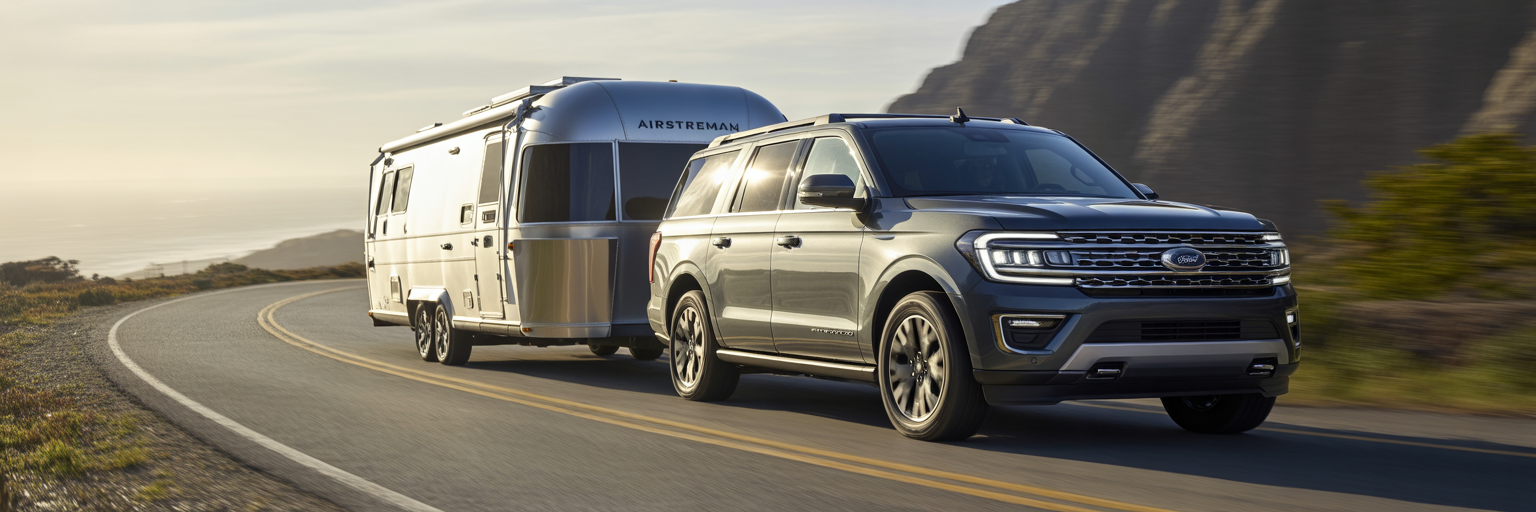
For many families, a full-size SUV is not just a people mover but also a workhorse, tasked with pulling a boat to the lake or a camper to a national park. In this critical measure of capability, the numbers and the engineering behind them reveal a clear hierarchy.
Maximum Towing Ratings: A Clear Winner
When comparing the Tahoe vs Expedition towing capacity, the specifications tell a straightforward story. When properly equipped with its Heavy-Duty Trailer Towing Package, the Ford Expedition can pull up to an impressive 9,300 pounds. The Chevrolet Tahoe, even with its Max Trailering Package, tops out at a respectable 8,400 pounds. While both figures are substantial, that 900-pound difference is significant for families with larger travel trailers or boats. For those pushing the limits of what a non-commercial vehicle can tow, the Expedition has a decisive edge.
The Engineering Behind the Numbers
This advantage for Ford is not accidental. It stems from a design philosophy that prioritizes hauling. The Expedition is built on a high-strength, fully boxed steel frame that is engineered to manage the immense stresses of heavy towing. This robust foundation, combined with the high-torque output of the EcoBoost engine which delivers its peak pulling power at low RPMs, creates a platform that feels stable and unstressed when a heavy trailer is attached. The Tahoe is certainly a competent tower, perfectly suited for moderate loads like a pair of jet skis or a small camper. However, its chassis is tuned with a greater emphasis on ride comfort, making it the second-best choice for truly demanding towing tasks. This is a point reinforced by industry analysis, with iSeeCars.com noting the Expedition’s chassis is better optimized for demanding towing.
Towing Technology and Driver Aids
Both manufacturers offer sophisticated technology suites designed to make the daunting task of towing safer and less stressful. These systems are a huge benefit for both novice and experienced towers.
- Ford: The star of Ford’s system is the available Pro Trailer Backup Assist. This feature is a genuine stress-reducer. Instead of trying to remember which way to turn the steering wheel when reversing, the driver simply turns a dial on the dashboard in the direction they want the trailer to go, and the SUV handles the steering inputs. It’s an incredibly intuitive system that can make anyone look like a pro at the boat ramp. This is complemented by an integrated trailer brake controller and 360-degree camera views.
- Chevrolet: Chevy’s Advanced Trailering System is more data-focused. It allows drivers to create custom trailer profiles, which can save settings for different trailers and adjust transmission shift points and braking accordingly. It also offers features like trailer tire pressure and temperature monitoring, along with up to 13 different camera views, including a “transparent trailer” view that uses cameras to stitch together an image that makes the trailer seem to disappear.
The final advice is actionable. If your family trailer weighs less than 6,000 pounds, both SUVs will handle the job with ease. However, if you are looking at a large travel trailer or a boat that approaches 8,000 pounds or more, the Ford Expedition is the more capable and confidence-inspiring choice. For those whose needs exceed even these SUVs, a look at heavy-duty trucks might be warranted, such as in this comparison of the F-350 and Silverado 3500HD.
Ride Quality and Long-Distance Highway Comfort
A full-size SUV’s character is largely defined by how it feels on the road, especially during the long hours of a family road trip. The difference between arriving refreshed and arriving fatigued often comes down to the sophistication of the suspension. Both the Tahoe and Expedition have made huge strides in this area, but their ultimate tuning priorities create two distinct on-road experiences.
A key advancement for both models is the use of an independent rear suspension (IRS). This modern design replaced the old solid-axle setups and was a monumental improvement for ride quality. An IRS allows each rear wheel to react to bumps and imperfections in the road independently of the other. Think of one wheel hitting a pothole without unsettling the entire rear of the vehicle. This results in a more stable, composed, and comfortable ride for all passengers, especially those sitting in the back.
Where the two vehicles truly diverge is in their optional, top-tier suspension systems. Chevrolet offers a formidable one-two punch with its Magnetic Ride Control (MRC) and four-corner Air Ride Adaptive Suspension. MRC is a marvel of engineering. It uses a special fluid filled with magnetic particles; by applying a magnetic charge, the system can change the fluid’s viscosity almost instantly, adjusting the stiffness of the dampers in milliseconds. It reads the road ahead and prepares the suspension for impacts before you even feel them. Paired with the air suspension, which can raise the vehicle for more ground clearance or lower it for easier entry and better aerodynamics, the Tahoe delivers an exceptionally cushioned and serene ride. It glides over rough pavement and isolates the cabin from road noise, making it the superior choice for minimizing fatigue on long highway journeys.
Ford equips the Expedition with its available Continuously Controlled Damping (CCD) suspension. This is also an adaptive system that monitors road conditions and driver inputs to adjust suspension firmness. However, it is generally tuned with a slightly firmer character. This tuning helps support the Expedition’s higher payload and towing ratings, providing excellent control when the vehicle is loaded down. The ride is comfortable and composed, but it doesn’t quite achieve the level of plushness found in the Tahoe. You feel a bit more connected to the road, which some drivers prefer, but it lacks that final layer of isolation that makes the Tahoe feel so luxurious on the highway.
Infotainment, Connectivity, and Cabin Technology
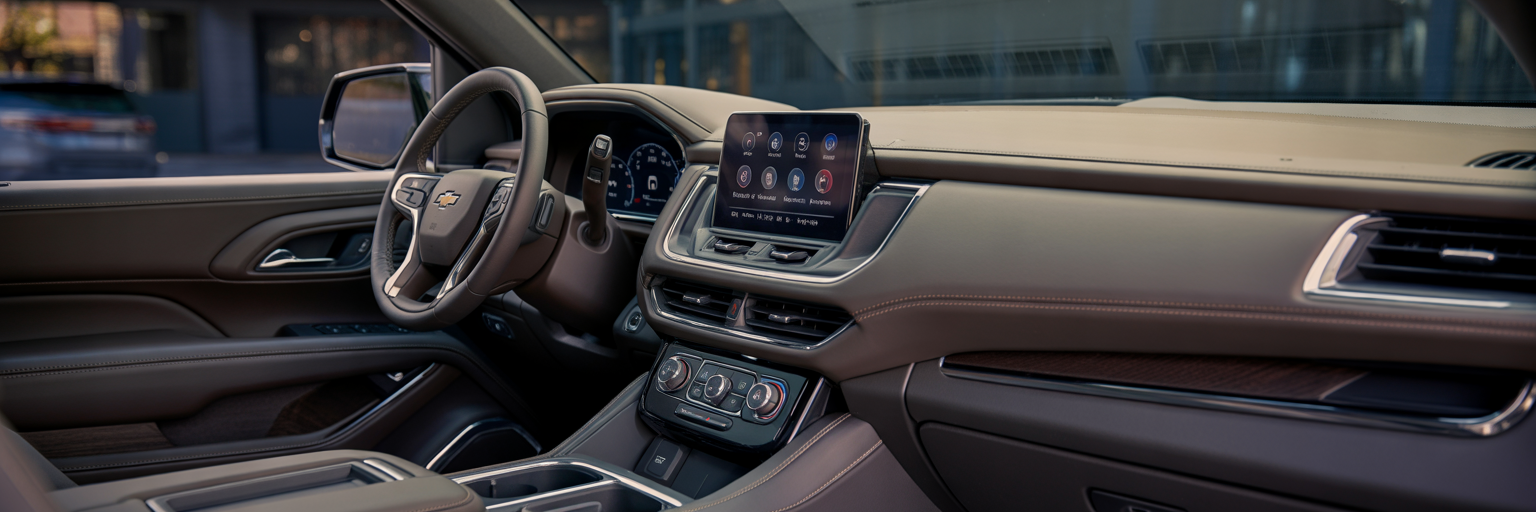
In 2026, the digital experience inside a vehicle is nearly as important as its mechanical performance. The central screen is the hub for navigation, entertainment, and communication, and for a family on the move, a user-friendly system is essential. Both the Tahoe and Expedition offer impressive tech suites, but they cater to slightly different user preferences.
The Chevrolet Tahoe’s standout feature is its infotainment system with Google Built-in. This is more than just a simple interface; it integrates familiar Google services directly into the vehicle. Having native Google Maps means you get best-in-class navigation, real-time traffic updates, and the ability to search for destinations with natural voice commands via Google Assistant, all without needing to connect your phone. For anyone who relies on the Google ecosystem, this seamless integration is a massive benefit. The system is intuitive, responsive, and reduces the need to fumble with a smartphone while driving.
The Ford Expedition counters with its powerful SYNC infotainment system. Known for its quick response times and clean layout, SYNC provides excellent integration with Apple CarPlay and Android Auto. For tech-forward buyers, the Expedition’s killer app is the available massive, vertically oriented touchscreen. This tablet-like display dominates the center stack and allows for a split-screen view, so you can see your navigation map and audio controls simultaneously. It’s a visually impressive piece of technology that makes the cabin feel thoroughly modern.
Beyond the main screen, both SUVs are packed with other important tech features that enhance the driving experience for everyone on board.
- Digital Instrument Clusters: Both vehicles offer large, customizable digital displays for the driver. They provide crisp graphics and allow you to prioritize information, whether it’s your speed, navigation directions, or trailering data.
- Head-Up Displays (HUDs): Available on higher trims, both the Tahoe and Expedition offer HUDs that project key information like speed and navigation turns onto the windshield. This allows the driver to stay informed without taking their eyes off the road.
- Rear-Seat Entertainment: To keep passengers in the back occupied, both offer advanced rear-seat entertainment systems. These typically feature large, high-definition screens with multiple inputs like HDMI and the ability to stream content, effectively turning the back seat into a mobile movie theater.
Finally, both SUVs can be equipped with comprehensive suites of advanced driver-assistance systems (ADAS), including adaptive cruise control, lane-keeping assist, and automatic emergency braking. For the ultimate in long-distance driving convenience, both also offer sophisticated hands-free highway driving systems: GM’s renowned Super Cruise and Ford’s competing BlueCruise. These systems represent the peak of current automotive technology, reducing driver fatigue on long stretches of approved highways.
Analyzing Ownership Costs and Long-Term Value
Purchasing a large SUV is a significant financial commitment, and the initial sticker price is only part of the story. The true cost of ownership unfolds over years, encompassing depreciation, fuel, maintenance, and insurance. When you analyze these long-term factors, a clear financial picture emerges for both the Tahoe and Expedition.
While the manufacturer’s suggested retail price (MSRP) for comparably equipped trims is often competitive, the long-term value proposition is where the two vehicles diverge. The most significant factor in this calculation is depreciation, the amount of value a vehicle loses over time. This is where the Chevy Tahoe ownership costs reveal a distinct advantage. Historically, the Chevrolet Tahoe has demonstrated exceptionally strong resale value. According to market data from sources like iSeeCars.com, the Tahoe consistently holds its value better than the Expedition. This means that after a typical three to five-year ownership period, a Tahoe owner is likely to get more of their initial investment back when they sell or trade in the vehicle. This lower depreciation can make the Tahoe the more financially sound choice over the long run.
When it comes to running costs, the equation is more nuanced. As mentioned, the Expedition’s EcoBoost V6 may offer a slight on-paper advantage in EPA-estimated fuel economy. However, this can be offset by real-world driving conditions, especially when towing. Furthermore, maintenance and reliability play a crucial role. The Tahoe’s V8 engines are a proven commodity, known for their durability and relatively straightforward maintenance, which can lead to lower unforeseen repair costs as the vehicle ages. The Tahoe has cultivated a strong reputation for dependability over decades.
Synthesizing this information for a potential buyer presents a clear financial trade-off. The Ford Expedition offers more interior space and superior towing capability. For a family that absolutely needs those attributes, its potentially higher depreciation might be a justifiable cost. On the other hand, the Chevrolet Tahoe often represents a more conservative and financially prudent investment. Its strong resale value and reputation for reliability make it an attractive option for families focused on maximizing long-term value retention. This is a good place to offer a general resource for car enthusiasts and buyers by linking to the CarPhanatics homepage.
The Final Verdict for Your Family’s Next SUV
After comparing everything from third-row legroom to long-term depreciation, we can draw a clear conclusion in the Chevrolet Tahoe vs Ford Expedition debate. The “better” SUV is not a one-size-fits-all answer; it depends entirely on your family’s specific priorities. The final choice comes down to a trade-off between maximum space and a superior ride.
The Ford Expedition stands out as the undisputed champion of interior utility. Its key strengths are a genuinely adult-friendly third row and superior towing capacity. The thoughtful design, like the second-row seat that slides forward with a child seat installed, shows a deep understanding of family needs. It is the most practical choice for those who need to maximize both passenger and gear-hauling capability on a regular basis.
The Chevrolet Tahoe’s primary advantages are its exceptional ride quality and stronger long-term value. The available Magnetic Ride Control and Air Ride suspension deliver a level of smoothness that makes long road trips significantly more comfortable. Combined with its historically lower depreciation and a sterling reputation for reliability, the Tahoe often represents the smarter financial decision for many families.
So, which one should you buy? Here is our direct recommendation:
- For families with heavy towing needs (large boats or travel trailers over 7,500 lbs) or those who regularly need to transport more than six people along with their luggage, the Ford Expedition is the recommended choice.
- For families prioritizing a smooth, quiet ride for long road trips and a lower total cost of ownership, the Chevrolet Tahoe is the smarter pick.
Ultimately, the best way to make your final decision is to experience them for yourself. We strongly advise you to test-drive both vehicles back-to-back, ideally with your family. Pay close attention to the attributes that matter most to you. Sit in the third row. Feel the engine response from a stoplight. Drive them on a bumpy road. Only then can you be certain which of these American giants is the perfect fit for your family’s next chapter.