
Defining Your Mission for an Affordable Off-Roader
Let’s start with the most important question: money. While it’s tempting to hunt for a sub-$10,000 bargain, the reality of the 2026 market is that the sweet spot for a dependable starting point sits in the $10,000 to $15,000 range. This is where you find vehicles that aren’t just surviving but have solid bones for adventure. Finding a truly affordable 4×4 SUV under $15000 means looking for value, not just a low price tag.
This guide is built on a core philosophy: prioritize mechanical resilience over digital conveniences. Think of it like this: a simple, older engine with a known issue is like a trusty mechanical watch. You know how to wind it, and a skilled person can fix it with basic tools. A modern, sensor-heavy engine is like a smartwatch. When it works, it’s brilliant, but when a single sensor fails in the middle of nowhere, you’re left with a dead screen and no way to tell time.
It’s also important to distinguish between “off-roading” and “overlanding.” Off-roading is often a short, intense sport focused on conquering difficult obstacles. Overlanding is about long-distance, self-reliant travel where the journey is the destination. For overlanding, you need cargo space for gear, water, and supplies, and long-term reliability is paramount. You’re not just trying to get over one rock; you’re trying to cross a state, or a continent.
Finally, accept this truth: a budget 4×4 is a starting platform, not a finished product. It will have quirks and will almost certainly require an initial investment in a thorough inspection and immediate maintenance. We’re not looking for perfection off the lot. We’re looking for potential.
The Six Pillars of a Great Budget 4×4
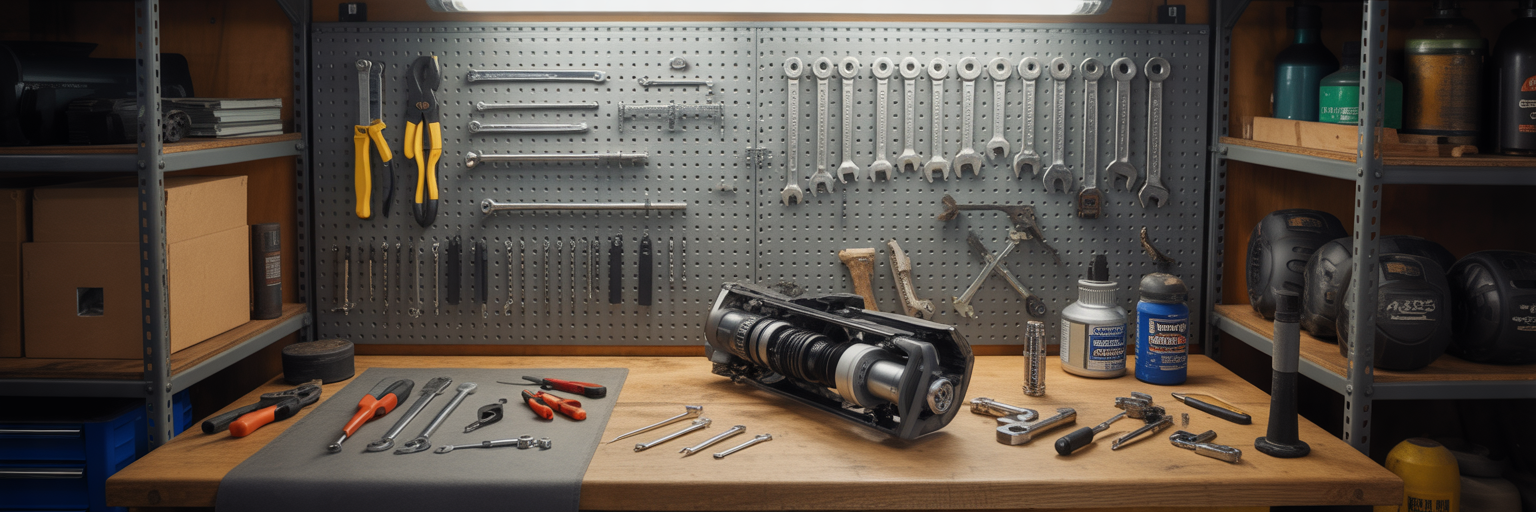
Before we name names, it’s essential to understand the “why” behind our recommendations. The best budget off-roaders aren’t just chosen by brand loyalty; they are measured against a specific set of principles. These six pillars define a vehicle that is not only capable but also a wise investment for adventure.
- Mechanical Simplicity
Fewer complex systems mean fewer potential failure points when you’re miles from the nearest town. A simple port-injected engine can often be diagnosed and sometimes even patched up in the field. In contrast, a modern direct-injection turbo engine, with its high-pressure fuel pumps and web of sensors, can be completely sidelined by a single electronic gremlin that requires specialized diagnostic tools. - Proven Durability
Durability in this context means the ability to withstand the constant stress of rough terrain and heavy loads. The foundation of this is a full ladder frame (body-on-frame) construction. Unlike a unibody chassis that flexes as one piece, a ladder frame provides a rigid backbone that handles torsional stress and supports heavy gear without fatiguing the body. Robust solid axles are another key feature, offering superior strength and simplicity over more complex independent suspension systems. - Modification-Friendly Design
A great budget 4×4 is a blank canvas. This means it has a simple suspension layout, like a solid axle with coil springs, that easily accepts lift kits to fit larger tires. More importantly, it has a massive community of builders who have already figured out what works. You want a vehicle that allows you to build it your way, not one that fights you at every turn. - Ample Cargo Room
This is about more than just cubic feet. A truly useful interior has a flat-folding rear seat area that can accommodate a sleeping platform. It needs enough vertical height to fit a portable fridge without blocking your rear view. And critically, it must have the payload capacity to safely carry all your gear, extra fuel, and water without overwhelming the suspension and brakes. - Strong Aftermarket and Parts Support
A vehicle’s value is directly tied to its ecosystem. A large, active community means a wealth of knowledge on forums and countless YouTube tutorials for almost any repair. It also guarantees a steady supply of OEM, aftermarket, and even junkyard parts. When a common part fails, you want to be able to find a replacement easily and affordably, not wait weeks for a special order. - Predictable Reliability
This is a counterintuitive but crucial point. The most reliable vehicle isn’t one that never breaks; it’s one whose common failure points are so well-documented that you can address them preemptively. This makes it a simple durable SUV. Knowing that a specific model’s radiator tends to fail around 100,000 miles allows you to replace it on your own terms, in your own garage. That is far more valuable than owning a complex vehicle that fails without warning. Understanding why some high-mileage cars age better than others helps in selecting a platform with good bones.
Top Contender: The Toyota 4Runner
When you balance all six pillars, one vehicle consistently rises to the top: the Toyota 4Runner. It has earned its reputation not through marketing, but through decades of real-world performance. For the budget-conscious buyer, the 4th Generation (2003-2009) represents the perfect intersection of modern engineering and old-school toughness.
The 4th Generation (2003-2009): The Sweet Spot
This generation is large enough for serious gear, comfortable enough for daily driving, and built before electronics became overly intrusive. It retains the legendary body-on-frame construction and offers two fantastic engine choices. According to Recharged, the Toyota 4Runner is highly recommended for its legendary durability and strong aftermarket support, making it an ideal choice for those looking for a used SUV under $15,000. It’s a platform that inspires confidence, whether you’re commuting to work or planning a trip down the Baja Peninsula.
Engine Choices: The Reliable V6 vs. The Powerful V8
The 4th Gen offered two excellent options. The 4.0L V6 (1GR-FE) is the workhorse. It uses a durable timing chain, which means no costly belt service, and provides more than enough power for most situations. The 4.7L V8 (2UZ-FE), shared with the Land Cruiser and Tundra, is known for its incredible smoothness and extra torque, making it the preferred choice for towing. Its one major consideration is the rubber timing belt, which requires replacement approximately every 90,000 miles. This is a non-negotiable maintenance item, as a failed belt will destroy the engine.
4×4 Systems: Part-Time vs. Full-Time
The V6 models came with a traditional part-time 4×4 system, which is perfectly capable for most off-road situations but should not be used on dry pavement. The V8 models, however, came standard with a full-time 4WD system featuring a Torsen center differential. This system can be driven on any surface and includes a button to lock the center differential, providing a 50/50 power split for serious traction. This makes the V8 particularly appealing for those living in snowy climates.
Common Issues and Inspection Points
No vehicle is perfect, and this used Toyota 4Runner buying guide would be incomplete without a clear-eyed look at its weaknesses. When inspecting a 4th Gen, focus on these areas:
- Frame Rust: This is the number one killer of these trucks, especially in the Snow Belt. Inspect the frame rails thoroughly, particularly behind the front wheels and around the rear suspension mounts.
- Cracked Dashboard: A common cosmetic issue on pre-2005 models due to sun exposure. It’s ugly but not a mechanical problem.
- Seized Brake Calipers: The front calipers are known to seize, causing uneven brake wear and pulling. Check for this during the test drive.
- Failing X-REAS Suspension: Higher-end Sport and Limited models came with a linked hydraulic suspension system. It’s great when new, but prone to leaks and expensive to repair. Many owners replace it with standard shocks.
Modification Potential and Aftermarket Support
The 4Runner’s modification potential is immense. It shares its platform with the Lexus GX470 and the Tacoma pickup, creating a massive pool of interchangeable parts and aftermarket support. From suspension lifts to roof racks and armor, you can build a 4Runner to handle nearly any adventure. This shared DNA is a key reason why it stands as an icon, much like the vehicles discussed in a comparison of the Ford Bronco vs. Toyota Land Cruiser. The ideal 4Runner buyer is someone who prioritizes ultimate reliability and resale value, viewing their vehicle as a long-term investment.
The Iconic Choice: Jeep Wrangler
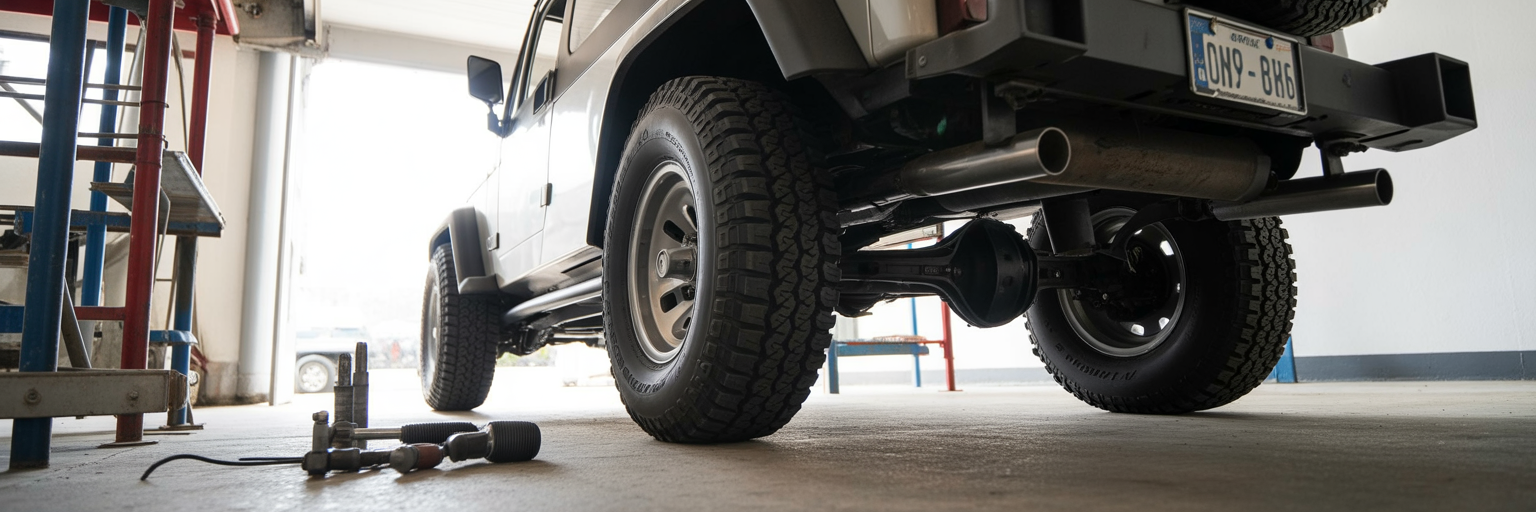
If the 4Runner is the well-rounded adventurer, the Jeep Wrangler is the specialist. It sacrifices on-road comfort, cargo space, and quietness for one purpose: unparalleled off-road capability. For the buyer who dreams of rock crawling and tight, technical trails, the Wrangler is often the only answer. We’ll focus on two key generations that fall into the budget category: the classic TJ and the early JK.
TJ (1997-2006) vs. Early JK (2007-2012)
The TJ Wrangler is the modern classic. With its round headlights, coil-spring suspension, and simple interior, it’s a raw, mechanical experience. It’s small, nimble, and feels directly connected to the trail. The early JK Wrangler brought the platform into the 21st century with a wider stance, more interior room, and modern features like power windows. The four-door Unlimited model also made the Wrangler a viable option for families for the first time.
Engine Analysis: The Legendary 4.0L vs. The 3.8L V6
The heart of the TJ’s appeal is its engine: the legendary 4.0L AMC inline-6. This motor is celebrated for its low-end torque and incredible simplicity. It’s not powerful by modern standards, but its grunt is perfect for crawling. The Jeep Wrangler TJ reliability is largely tied to this engine, though they are known for common (and usually minor) oil leaks. The early JK (2007-2011) used the 3.8L V6, an engine sourced from Chrysler’s minivans. It’s widely considered adequate but uninspiring, lacking the torque of the old 4.0L and the refinement of the later 3.6L Pentastar. It gets the job done, but it’s not the reason you buy a JK.
The Unmatched Advantage: Solid Axles and Articulation
Here is why die-hards choose Jeeps: they come standard with solid axles front and rear. While most SUVs use independent front suspension for better on-road manners, a solid front axle is stronger and provides superior suspension articulation. This is the ability of the suspension to droop and compress, keeping the tires in contact with the ground on uneven terrain. For difficult trails, this is a massive advantage that is expensive and difficult to replicate on other platforms.
Key Inspection Points for TJs and JKs
Jeeps are often used as intended, so a thorough inspection is critical.
- For TJs: Frame rust is the main enemy. Check the frame rails right behind the front wheels and near the rear control arm mounts. These areas trap mud and moisture.
- For JKs: The 3.8L V6 can have issues with oil consumption, so check the oil level and look for blue smoke on startup. Early models can also be prone to various electronic quirks.
The Double-Edged Sword of Unrivaled Aftermarket Support
No vehicle has a larger aftermarket than the Wrangler. You can build one into anything you can imagine. This is a huge pro, but it’s also a warning. Many used Wranglers have been modified, often poorly. Be wary of trucks with cheap lift kits, questionable wiring for lights, and oversized tires on stock gearing. A stock, well-maintained Wrangler is often a much better starting point than someone else’s abandoned project. For those interested in the Jeep brand’s capability in other forms, seeing how the Jeep Gladiator vs. Toyota Tacoma stack up offers great perspective. The ideal Wrangler buyer is an enthusiast who puts trail performance first and is willing to accept the compromises in daily usability.
The Crossover Alternative: Subaru Outback and Forester
What if you don’t need to conquer Moab, but you do need a reliable daily driver that can handle snowy mountain passes and muddy forest service roads on the weekend? For many, a body-on-frame SUV is overkill. This is where the unibody “soft-roader” shines, and no one does it better than Subaru. We’ll focus on models from roughly 2005-2014, which offer a great blend of value and capability.
The ‘Soft-Roader’ Philosophy: Comfort and Efficiency
The Subaru Outback and Forester are built on a car-like unibody platform with four-wheel independent suspension. The immediate benefits are superior on-road comfort, better handling, and significantly better fuel economy than a traditional 4×4. As noted by US News, vehicles like the Subaru Outback and Forester are often highlighted in rankings for their blend of reliability and all-weather capability, making them a smart choice for budget-conscious adventurers.
Understanding Symmetrical All-Wheel Drive
Subaru’s Symmetrical AWD is not a traditional 4×4 system. It’s always on, constantly distributing power between all four wheels. It is exceptionally good in rain, snow, and on dirt roads, providing a level of confidence that is hard to beat. However, it has its limits. Subarus lack the low-range transfer case needed for serious rock crawling and don’t have the ground clearance or suspension travel of a body-on-frame SUV. Know its strengths, but also respect its limitations.
Practical Advantages for Daily Life and Weekend Trips
The wagon body style of the Outback and the tall, airy cabin of the Forester offer incredibly practical and accessible cargo space. They are perfect for hauling bikes, skis, or camping gear. For the person who needs one vehicle to handle the weekday commute and the weekend escape, a Subaru is often the most logical choice. It’s the sensible shoe of the adventure world, and there’s nothing wrong with that.
Critical Maintenance: Head Gaskets, Timing Belts, and CVTs
Subaru ownership requires an awareness of a few key maintenance items. Ignoring them can lead to very expensive repairs.
- Head Gaskets: The older 2.5L “EJ-series” engines (found in models up to around 2012) are known for head gasket failures. Look for documented proof of replacement with quality multi-layer steel gaskets.
- Timing Belts: Like the V8 4Runner, these engines use a timing belt that needs to be replaced around the 100,000-mile mark. This is a critical service.
- CVT Transmissions: Later models introduced a Continuously Variable Transmission (CVT). Early versions can be problematic, so a thorough test drive and a check of the service history are essential.
The ‘Battlewagon’ Movement
A growing community has embraced the “battlewagon” culture, modifying Outbacks and Foresters for more serious duty. With the availability of modest lift kits, skid plates, and all-terrain tires, these vehicles can be made surprisingly capable for light overlanding, further blurring the lines between crossover and SUV.
Underrated Gems for the Savvy Buyer

The 4Runner and Wrangler get all the attention, which often keeps their prices high. The savvy buyer can find incredible value by looking at the capable, yet less popular, alternatives. These are the trucks that offer 90% of the capability for a fraction of the price, making them arguably the best used 4×4 for overlanding on a pure value basis.
The 4Runner Competitor: Nissan Xterra (2nd Gen)
The 2nd Generation Xterra (2005-2015) was a direct shot at the 4Runner. It features a strong V6 engine, a fully boxed ladder frame, and on the Pro-4X trim, a factory electronic rear locking differential—a feature Toyota never offered on the 4Runner. The big warning is the “SMOD” (Strawberry Milkshake of Death) issue on automatic models built before 2010, where the internal transmission cooler can crack and mix coolant with transmission fluid, destroying the transmission. A preventative bypass or an updated radiator is a must-have.
The Sophisticated Choice: Mitsubishi Montero (3rd Gen)
The 3rd Generation Montero (2001-2006) is a masterpiece of engineering. It uses a unique unibody with an integrated ladder frame, offering a brilliant compromise between on-road comfort and off-road strength. It also features four-wheel independent suspension and a very sophisticated AWD system. Its main drawback is a thinner aftermarket and parts supply compared to its rivals, making it a choice for a more self-sufficient owner.
The Smart Money Pick: Lexus GX470
This is the ultimate budget 4×4 hack. The Lexus GX470 (2003-2009) is, mechanically, a V8 4Runner with a more luxurious interior. Because of the Lexus badge, they are often overlooked by the off-road crowd and can sometimes be found for similar prices to a 4Runner, despite being a more premium vehicle. Its main “flaw,” a failure-prone rear air suspension, is easily and affordably replaced with a standard coil spring conversion kit. This makes it one of the best used luxury SUVs that won’t destroy you on repairs.
Deeper Cuts for the Enthusiast
For those who truly enjoy the hunt, there are other options. The Suzuki Grand Vitara (2006-2013) was one of the last small SUVs to offer a true low-range 4×4 system and a ladder frame. The Isuzu Trooper is another old-school legend with a cult following. These are choices for mechanically inclined buyers who see sourcing parts and information as part of the adventure itself.
Your Pre-Purchase Inspection Checklist
Finding the right model is only half the battle. A thorough inspection is what separates a great buy from a financial nightmare. You can do a lot of this yourself before committing to a professional opinion. Bring a good flashlight and be prepared to get a little dirty. This checklist is your guide, but it is not a substitute for a professional pre-purchase inspection (PPI).
Frame and Body: The Deal-Breaker
This is where you start and end. Surface rust is normal, but structural rot is a deal-breaker. Use a small hammer or the handle of a screwdriver to tap along the frame rails, especially in the wheel wells and near suspension mounts. A solid “ping” is good; a dull “thud” or flaking metal means trouble. Be very suspicious of fresh, thick undercoating, as it can hide serious rot.
Engine and Drivetrain Inspection
With the engine off, look for obvious fluid leaks on the engine, transmission, and differentials. Check the hoses for cracks and the belts for fraying. Pull the oil dipstick; the oil should not look milky, which indicates coolant contamination. Do the same for the transmission fluid; it should be reddish and not smell burnt.
Testing the 4×4 System
This must be done on a loose surface like gravel or dirt, never on dry pavement (unless it’s a full-time system). Come to a stop, shift into 4-High, and drive forward. You should feel the steering get a bit heavier. Then, stop again and shift into 4-Low. The vehicle should move much more slowly, with significantly more torque. Listen for any grinding or clunking noises.
Suspension, Brakes, and Tires
Look at the shocks for any signs of fluid leakage. Push down on each corner of the vehicle; it should bounce once and settle. Multiple bounces mean worn-out shocks. Look at the tires. Uneven wear patterns can diagnose underlying alignment or suspension problems before you even start the engine.
The All-Important Test Drive
During the test drive, turn the radio off and listen. Pay attention to how the transmission shifts. Does it hesitate or clunk? Does the vehicle pull to one side when braking? Drive over some bumps and listen for clunks or rattles from the suspension.
Invest in a Professional Opinion
If a vehicle passes your initial inspection, the final step is to pay for a pre-purchase inspection (PPI) from a trusted mechanic, ideally one who specializes in that brand. The $200 or so you spend here is the best insurance you can buy against thousands of dollars in hidden repairs.
| Area to Inspect | What to Look For | Red Flags |
|---|---|---|
| Frame | Check inside and outside frame rails, especially near suspension mounts and behind wheels. | Flaking, soft spots, or holes. Fresh undercoating can hide rot. |
| Engine | Signs of oil or coolant leaks (check under the oil cap for milky residue), cracked belts, frayed hoses. | Thick sludge, blue or white smoke from exhaust, loud knocking noises. |
| Transmission | Fluid should be reddish and not smell burnt. Check for smooth shifting during test drive. | Dark brown or black fluid, hesitation or clunking between gears. |
| 4×4 System | Indicator lights on the dash should confirm engagement. Listen for noises. | Grinding sounds, failure to engage/disengage, flashing 4WD lights. |
| Suspension | Leaking fluid from shocks, torn CV boots (on IFS), cracked bushings. | Vehicle sags to one side, excessive bouncing over bumps, clunking noises. |
| Tires & Brakes | Uneven tire wear patterns. Check brake pad thickness and rotor condition. | Scalloped or cupped tires indicate suspension issues. Spongy brake pedal or grinding sounds. |
This checklist summarizes the most critical inspection points for a used 4×4. It is designed to be used as a field guide during a vehicle walk-around, but it does not replace a comprehensive inspection by a qualified mechanic.
Budgeting Beyond the Purchase Price

A common mistake for first-time buyers of a budget off road SUV is thinking the purchase price is the total cost. The adventure truly begins after you get the keys, and that includes your budget. A responsible plan accounts for immediate needs, future upgrades, and the real cost of ownership.
The Immediate Maintenance Fund
Assume the vehicle you just bought needs everything. Set aside 10-20% of the purchase price for “baselining.” This fund is for immediately changing every single fluid: engine oil, transmission fluid, coolant, brake fluid, and differential fluid. Replace all filters and any questionable belts or hoses. This process gives you a known, fresh starting point for your maintenance history and uncovers any small issues before they become big ones.
The First Wave of Modifications
It’s easy to get carried away with a catalog of shiny parts. Focus on the “holy trinity” of first modifications that provide the most significant performance increase: tires, suspension, and armor. A set of quality all-terrain tires is the single most effective upgrade you can make. A modest suspension lift will provide the clearance for those tires and improve capability. Finally, a set of rock sliders protects your vehicle’s vulnerable rocker panels and serves as a solid foundation for future armor.
Calculating the True Cost of Ownership
Your budget doesn’t end with mods. These vehicles are often less fuel-efficient than a modern car, so factor that into your monthly expenses. Call your insurance agent; modified vehicles can sometimes carry higher premiums. And remember to keep a running fund for wear-and-tear items. Off-roading is harder on components, and things like brakes, bushings, and bearings will need more frequent attention.
DIY Savings vs. Shop Labor
One of the best ways to afford this hobby is to learn to do the work yourself. The simple, mechanical nature of these older trucks makes them great to learn on. Start with simple tasks like oil changes and brake jobs. Every job you do yourself is hundreds of dollars saved in labor costs. This journey of ownership, of learning and building your vehicle, is a core part of the adventure. For those looking to get started, learning how to keep your car’s engine running for years provides the foundational knowledge and confidence to take on your own maintenance.