
We’ve all seen them. The 20-year-old sedan that still hums along quietly in traffic and the five-year-old SUV that already sounds tired and worn out. The odometer reading is often the first number a used car shopper looks at, but it only tells a fraction of the story. The real difference between a vehicle that gracefully ages past 200,000 miles and one that becomes a mechanical nightmare comes down to a combination of design philosophy, manufacturing quality, and the life it has lived.
The Foundation of Durability: Engineering and Design Philosophy
Long before a car ever hits the assembly line, decisions are made that seal its fate. The engineering choices and design philosophy act as the vehicle’s DNA, predetermining its potential for a long and reliable service life. This is where durability begins, on the digital drawing board and in the minds of the engineers.
Naturally Aspirated vs. Forced Induction Engines
At the heart of any car is its engine, and not all are created equal. A naturally aspirated engine breathes on its own, drawing air in through simple physics. This design is mechanically straightforward, with fewer moving parts and lower internal stress. Think of it as a marathon runner, built for endurance with a steady, predictable pace.
In contrast, a forced induction engine, typically using a turbocharger, is like a sprinter. The turbo uses exhaust gases to spin a turbine that forces more air into the engine, creating more power from a smaller size. While efficient, this adds complexity, heat, and pressure. The turbo itself, with its delicate seals and bearings spinning at over 100,000 RPM, becomes another potential point of failure. This added stress requires a more robust cooling system and puts greater demands on engine oil, making the simpler, naturally aspirated design a common feature in cars known for longevity.
Transmission Technology and Longevity
The transmission is one of the most complex and expensive components in a modern vehicle. Its design has a massive impact on how a car feels to drive and how it holds up over time. Traditional torque converter automatics are the workhorses of the industry, known for their smooth operation and robust design that can absorb drivetrain shocks. Manual gearboxes are even simpler mechanically and can last almost indefinitely, with the clutch being the primary wear item dependent on the driver.
More recent technologies present a trade-off. Early or poorly maintained Continuously Variable Transmissions (CVTs) can be prone to expensive failures involving their internal steel belts and pulleys. Dual-Clutch Transmissions (DCTs) offer lightning-fast shifts but can be jerky in traffic and require complex, specialized service. For a high-mileage vehicle, a proven, traditional automatic or a simple manual often represents the safest bet.
| Transmission Type | Typical Longevity | Common Failure Points (High Mileage) | Maintenance Sensitivity |
|---|---|---|---|
| Traditional Automatic (Torque Converter) | Excellent (200,000+ miles) | Worn clutch packs, torque converter failure | Moderate (Requires regular fluid changes) |
| Manual Gearbox | Excellent (250,000+ miles) | Clutch wear (user dependent), synchro wear | Low (Requires occasional fluid changes) |
| Continuously Variable Transmission (CVT) | Fair to Good (120,000-180,000 miles) | Stretched/broken belt, pulley failure, overheating | High (Very sensitive to fluid type and interval) |
| Dual-Clutch Transmission (DCT) | Fair to Good (150,000-200,000 miles) | Clutch pack wear, mechatronic unit failure | High (Complex and requires specialized service) |
This table compares common transmission types based on their expected lifespan and failure modes in high-mileage scenarios. Longevity estimates are based on industry data for properly maintained vehicles and can vary significantly with use and care.
Chassis Construction and Corrosion Resistance
For anyone living in the American “Rust Belt,” the battle against corrosion is a familiar one. A car’s chassis is its skeleton, and rust is a cancer that can compromise its structural integrity. How a car is protected from the elements is a critical design choice. Manufacturers that use high-quality galvanized steel and apply protective layers through processes like e-coating create a formidable barrier against road salt and moisture. This is not just a cosmetic issue; a rusted-out subframe or shock tower can render a vehicle unsafe and lead to a terminal failure that no mechanical repair can fix.
The Philosophy of ‘Over-Engineering’
Some brands, particularly Toyota and Lexus, built their reputations on a philosophy of “over-engineering.” This means designing and building components to a standard that far exceeds their expected operational stress. It involves using thicker gauge steel for suspension arms, specifying more robust engine internals, or using higher-quality wiring harnesses than technically necessary. This approach creates a durability buffer. It’s why a 15-year-old Lexus can feel as solid and rattle-free as a much newer car. This shared commitment to building things better than they need to be is a core reason behind the legendary Toyota vs Honda longevity debate; both brands prioritize creating a product that endures.
The Manufacturer’s Role: Quality Control and Parts Ecosystem
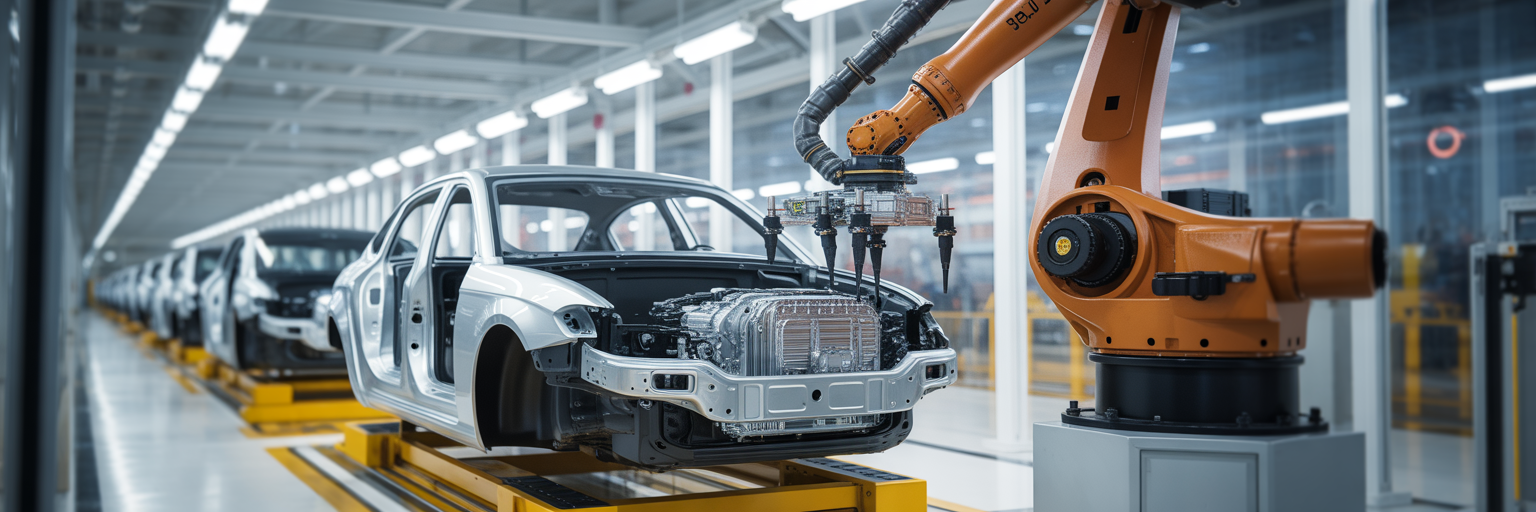
A great design is only a blueprint. The transition from blueprint to a physical car introduces another critical variable: the manufacturer’s execution and long-term support. This is why two cars with similar engineering can have vastly different long-term reliability. It comes down to how consistently they are built and how well they are supported after the sale.
Consistency in the Manufacturing Process
Imagine a robot tightening a critical suspension bolt. It applies the exact same torque, to the exact same angle, a million times in a row. The result is predictability. Now imagine that same bolt being tightened by different workers on different shifts with varying levels of precision. Some cars will be perfect, while others might have a bolt that loosens over time, leading to a premature failure. This is production variance. Brands known for their obsessive quality control minimize this variance, producing cars that are more consistently reliable from one vehicle to the next.
The Trade-Off Between Simplicity and Complexity
Modern cars are packed with features, but every feature is a potential future failure point. This “feature creep” is a major factor in high-mileage reliability. A base model sedan has far fewer things to break than a top-of-the-line luxury SUV. Consider the difference:
- Air suspension systems with compressors, air lines, and rubber bags that can dry rot and leak.
- Motorized running boards and panoramic sunroofs with complex track mechanisms that can fail.
- Multiple electronic control units (ECUs) governing everything from the seats to the headlights.
- Complex infotainment screens that can become unresponsive or fail completely.
A key part of any good used car reliability guide is this simple truth: the less complex a car is, the fewer expensive things can go wrong as it ages.
The Importance of a Strong Parts and Service Network
A car is only as durable as its weakest available part. For the American driver, the ability to easily and affordably find replacement parts is a huge factor in a car’s long-term viability. You can walk into any auto parts store and find a water pump for a Ford F-150 or an alternator for a Honda Civic. This vast ecosystem of OEM and quality aftermarket parts keeps these vehicles on the road.
Contrast that with the owner of a discontinued Saab or a niche European import. A single failed electronic module could trigger a weeks-long “parts hunt,” potentially costing thousands of dollars or even rendering the car undrivable. A strong parts and service network is a safety net that makes long-term ownership practical and affordable.
Benefits of Platform Sharing and Proven Components
When a manufacturer develops a new engine or transmission, the first generation is always the riskiest. Unforeseen issues often appear only after millions of miles of real-world use. Manufacturers mitigate this risk through platform sharing. For example, when an engine like Toyota’s venerable 2GR-FE V6 is used for over a decade in dozens of models from the Camry to the Highlander and Lexus RX, its weaknesses are identified and engineered out. Each new model year becomes more refined and reliable. This makes buying a later-model vehicle with a proven powertrain a much safer bet. Understanding these shared technologies, such as the similarities between models like the Lexus RX Hybrid vs. Toyota Highlander Hybrid, helps buyers choose vehicles built on a foundation of proven reliability.
The Owner’s Impact: Maintenance as the Deciding Factor
You can buy the most over-engineered, perfectly manufactured car in the world, but neglect will ruin it. Once a car leaves the factory, its destiny is placed squarely in the hands of its owner. Maintenance is the single most important factor in determining whether a car thrives or dies at high mileage. This is the “nurture” side of the argument, and it often outweighs a car’s inherent “nature.”
Preventive vs. Reactive Maintenance Mindsets
Think of car care like dental care. The preventive maintenance mindset is like brushing your teeth and getting regular cleanings to avoid problems. It involves changing fluids on time and replacing wear items before they fail. The reactive maintenance mindset is waiting for a toothache that requires a painful and expensive root canal. You wait for the check engine light to come on or for a strange noise to become a breakdown. Proactive care is always cheaper and less stressful in the long run, and it is the foundation of all good high mileage car maintenance tips.
Beyond the Oil Change: The Critical Role of Fluids
Fluids are the lifeblood of a vehicle. Ignoring them is a recipe for catastrophic failure. While engine oil gets the most attention, other fluids are just as critical:
- Engine Oil: It does more than lubricate. It cools critical components, cleans away contaminants, and prevents corrosion. Old, sludgy oil starves the engine of this protection, leading to rapid wear.
- Transmission Fluid: This specialized fluid cools and lubricates the intricate internals of the transmission. When it degrades, it can cause slipping, overheating, and ultimately, total failure.
- Coolant (Antifreeze): It prevents the engine from overheating in the summer and freezing in the winter. Just as importantly, it contains corrosion inhibitors that protect the radiator, water pump, and engine block from rusting from the inside out.
- Brake Fluid: This fluid is hygroscopic, meaning it naturally absorbs water from the air. This water contamination lowers its boiling point, which can lead to a spongy or completely ineffective brake pedal in a panic stop.
- Power Steering Fluid: Old, broken-down fluid can damage the delicate seals in the power steering pump and rack, leading to leaks and costly repairs.
Following the Service Schedule—and Knowing When to Exceed It
Every owner’s manual has a service schedule, but many drivers fail to realize it’s often based on “normal” or ideal conditions. Most Americans drive under what manufacturers define as “severe” conditions. This includes frequent short trips, stop-and-go city traffic, driving in extreme heat or cold, or operating in dusty environments. If your driving habits fit this description, you should follow the more frequent “severe” service schedule. For a high-mileage car, adopting this more cautious schedule is a wise investment in its future.
The Value of a Comprehensive Service History
When shopping for a used car, a thick folder of service receipts is one of the best signs you can find. It’s more than just paper; it’s a story of care. According to a guide from Consumer Reports on finding reliable used cars, a consistent service history is one of the most critical indicators of a vehicle’s future dependability. Look for records of consistent oil changes, documentation of major services like a timing belt replacement, and evidence that quality parts were used. This detailed history is the best proof that a car has been properly nurtured and is one of the best high mileage cars to buy.
Driving Habits and Environmental Influences

Beyond the factory and the maintenance schedule, a car’s daily life plays a huge role in its longevity. How and where a vehicle is driven determines the type and severity of wear it accumulates. Two identical cars can have wildly different outcomes based on their operational environment, which is a key part of understanding what makes a car last long.
The Myth of Mileage: Highway vs. City Miles
Not all miles are created equal. A car with 150,000 miles driven almost exclusively on the highway can be in far better mechanical shape than one with 80,000 miles of city driving. A highway mile typically involves one engine start, stable operating temperatures, minimal braking, and the transmission staying in top gear. It’s the easiest life a car can live.
A city mile is the opposite. It involves multiple cold starts, constant acceleration and braking, and frequent shifting. This endless cycle of heating and cooling, stopping and starting, puts immense stress on the engine, transmission, brakes, and suspension. When evaluating a used car, always ask about the type of driving it has seen. The odometer reading alone is misleading.
The Mechanical Cost of an Aggressive Driving Style
How you press the pedals has a direct impact on your car’s lifespan. An aggressive driving style is a form of mechanical abuse. Hard acceleration puts immense strain on the engine, transmission, and drivetrain components like CV joints. Jamming on the brakes generates excessive heat, which wears out pads and rotors faster and degrades the brake fluid. Constantly driving at high RPMs increases engine wear. A gentle, smooth driver is constantly extending the life of every component in their vehicle, saving money and preventing premature failures.
How Climate and Geography Take a Toll
The environment a car lives in can be a relentless enemy. Different regions of the US attack vehicles in different ways:
- The Rust Belt (Northeast/Midwest): Road salt used to melt ice is brutally corrosive. It attacks the undercarriage, eating away at the frame, subframes, brake lines, and fuel lines.
- The Sun Belt (Southwest/Florida): Intense UV radiation and high heat are the primary threats here. The sun bakes plastic trim until it becomes brittle, cracks dashboards, and causes rubber hoses, belts, and seals to degrade and fail prematurely.
- Mountainous Regions: The constant climbing and descending puts extra strain on the entire vehicle. Ascents tax the engine and transmission, while long descents can overheat the brakes.
The Hidden Wear from Towing and Hauling
Trucks and SUVs are often marketed with impressive towing capacities, but using that capacity always constitutes “severe use.” Towing a heavy trailer puts an enormous load on the engine and, most critically, the transmission. The extra work generates a tremendous amount of heat, which is the number one killer of automatic transmissions. When shopping for a used truck or large SUV, it’s crucial to ask about its towing history. A vehicle that has spent its life pulling a heavy trailer will have experienced accelerated wear, even if the mileage is low. For those considering such a vehicle, understanding the design differences is key, and a detailed guide on which heavy-duty truck is right for you, Titan XD or F-250, can highlight the trade-offs in durability and capability.
Actionable Advice for Used Car Shoppers
With a clear understanding of what makes a car durable, you can approach the used car market with confidence. This section provides a practical, step-by-step guide to help you separate the reliable gems from the money pits. This is your checklist for vetting a high-mileage vehicle.
Decoding a Vehicle History Report
A vehicle history report from a service like CarFax or AutoCheck is your first line of defense. But you need to know what to look for beyond just the accident history. Pay close attention to these red flags:
- Title Brands: A “salvage,” “rebuilt,” “flood,” or “lemon law” title is a major warning. These brands indicate the car has suffered significant damage or issues in the past and should almost always be a deal-breaker.
- Ownership History: A car with multiple owners in a short span of time can be a sign of a “problem car” that people are eager to get rid of.
- Location History: A car that has spent its entire life in the Rust Belt requires an extremely thorough underbody inspection for corrosion, no matter how clean it looks on top.
- Service Gaps: Long periods with no reported oil changes or maintenance events are a strong indicator of neglect.
The Non-Negotiable Pre-Purchase Inspection (PPI)
This is the single best investment you can make when buying a used car. For a few hundred dollars, a qualified, independent mechanic will put the car on a lift and give it a thorough examination. A good PPI is not just a quick look-over. It should include a full diagnostic scan for hidden trouble codes, an inspection of the undercarriage for leaks and rust, a check of all suspension and steering components for wear, and ideally, a compression test to gauge engine health. The cost of a PPI is cheap insurance against buying a car with thousands of dollars in hidden problems.
Learning to ‘Listen’ to the Car
During a test drive, turn the radio off and pay attention to the sounds the car makes. You don’t have to be a mechanic to spot potential issues. A high-pitched squeal on startup often points to a slipping serpentine belt. A rhythmic clunk or pop when going over bumps suggests worn suspension components like struts or ball joints. A humming or grinding noise that gets louder with speed is a classic symptom of a failing wheel bearing. These sounds are the car’s way of telling you something is wrong.
Using Cosmetic Condition as a Clue to Mechanical Care
The way a car is cared for on the outside often reflects how it was cared for mechanically. An owner who takes the time to keep the interior spotless, clear the headlights, and maintain the paint is likely the same type of person who changes the oil on time. Conversely, a car with a filthy interior, mismatched budget tires, and a trunk full of junk was probably owned by someone who viewed maintenance as an afterthought. A clean engine bay is a particularly good sign of a meticulous owner. For more in-depth guides and comparisons to aid your car shopping journey, exploring a comprehensive resource like CarPhanatics can provide valuable insights.
Making a Smart Choice for Long-Term Value
Choosing a high-mileage car is about more than just finding a cheap ride; it’s about finding lasting value. By synthesizing the principles of engineering, manufacturing, maintenance, and usage, you can make an informed decision that serves you well for years to come. This is the final step in moving from a shopper to a smart owner.
Balancing Brand Reputation with Individual History
This is the most important takeaway. While starting your search with brands known for reliability like Toyota or Honda is a sound strategy, you must not follow it blindly. The individual vehicle’s history is always more important than the badge on the hood. A meticulously maintained American or European car with a thick stack of service records is a far better purchase than a neglected Japanese car with a spotty history. The Toyota vs Honda longevity discussion is valid, but it’s overshadowed by the care given by previous owners.
Calculating the True Cost of Ownership
The price you see on the windshield is just the entry fee. The true cost of ownership includes fuel, insurance, and, most importantly for a used car, potential repairs. Before buying, do some research on the specific model you’re considering. Are there common failure points? Is the transmission known to be a weak spot? A $5,000 car that will likely need a $4,000 transmission repair in the near future is not a $5,000 car; it’s a $9,000 car. Budgeting for these potential costs is essential.
Identifying Models in the ‘Longevity Sweet Spot’
Some vehicles consistently prove to be among the best high mileage cars to buy because they hit a “longevity sweet spot.” These are often models that prioritize durability over cutting-edge features. Think of naturally aspirated, mid-size sedans like the Toyota Camry and Honda Accord, or simple, body-on-frame trucks and SUVs like the Toyota 4Runner or a Ford F-150 with a proven engine. They are reliable because their technology is simple, proven, and built to last. As these models evolve, it’s worth seeing how their legacy of durability continues, and a look at the 2026 hybrid sedan showdown: Honda Accord vs. Toyota Camry shows how buyers can weigh choices even within these reliable brands.
Your Role as the Next Caretaker
Once you’ve done your homework and made a smart purchase, the car’s future is in your hands. You become the next chapter in its service history. By applying a preventive maintenance mindset, using quality fluids and parts, and driving with mechanical sympathy, you take on the role of the caretaker. A well-chosen high-mileage car is not an ending; it’s an opportunity to continue a story of reliability and value for many more miles to come.