
Defining the Off-Road Philosophies
Toyota’s Hilux built a global reputation for indestructibility by surviving the world’s most punishing environments, becoming a symbol of unwavering reliability. In contrast, Jeep’s lineage traces directly back to the battlefields of World War II, where its vehicles were purpose-built tools for conquering any obstacle. This history defines the core conflict in the Jeep Gladiator vs Toyota Tacoma debate: legendary dependability versus uncompromising capability.
The Gladiator is the modern expression of the Wrangler’s ‘go-anywhere’ philosophy, applied to a pickup truck frame. Its engineering, from the solid front axle to the body-on-frame construction, is unapologetically focused on maximum trail performance. Think of it as a specialized tool designed to tackle extreme obstacles first. While on-road comfort has improved significantly over its ancestors, it remains a secondary consideration to its primary mission of off-road dominance.
On the other side, the Tacoma embodies balance. Toyota engineers its vehicles for exceptional durability and practicality, creating a truck that is both a formidable off-roader and a comfortable, dependable daily driver. It’s the versatile choice for the person who needs one vehicle to handle a weekday commute, a weekend hardware store run, and a backcountry adventure without compromise. This brand-wide commitment to dependable engineering is a philosophy we’ve explored in other comparisons, such as the one between the Lexus RX Hybrid and Toyota Highlander Hybrid.
To ensure a fair analysis, this comparison will focus on the premier off-road trims for the 2026 model year: the Jeep Gladiator Rubicon and Mojave versus the Toyota Tacoma TRD Pro and TRD Off-Road. We are comparing the best of what each brand offers directly from the factory, setting the stage for a definitive showdown.
A Technical Analysis of Suspension and Articulation
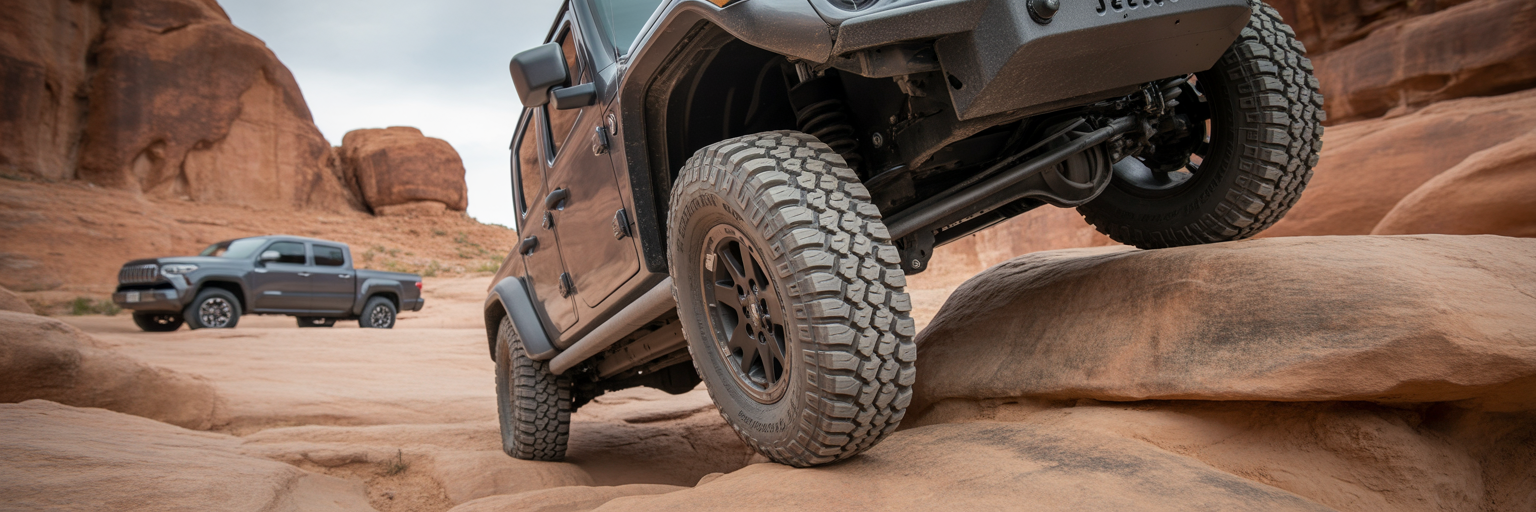
Beyond brand philosophies, the mechanical differences in suspension design dictate how these trucks perform when the pavement ends. This technical distinction is the most critical factor in their off-road behavior, and understanding it is key to choosing the right truck for your adventures.
The Gladiator’s Solid Front Axle Advantage
Articulation is a term you’ll hear often, and it simply means the suspension’s ability to droop and compress to keep the tires on the ground over uneven surfaces. The Gladiator uses a solid front axle, a design that physically links the two front wheels. This setup is inherently superior for truck suspension articulation in low-speed rock crawling. Imagine a seesaw: when one wheel is pushed up by a rock, the axle forces the other wheel down, maximizing ground contact and maintaining traction where other trucks would lift a tire.
The Tacoma’s Independent Front Suspension (IFS) Trade-Off
The Tacoma employs an Independent Front Suspension (IFS), where each front wheel moves independently. This is a massive advantage for a daily driver off road truck. The IFS provides superior on-road handling, a more comfortable ride, and better stability at higher speeds on dirt roads and washboard trails. The trade-off, however, is a more limited range of motion. On highly uneven terrain, an IFS system is more likely to lift a wheel off the ground, which can result in a momentary loss of traction and forward momentum.
Rear Suspension Design and Its Impact
In the rear, the differences continue. The Gladiator features a sophisticated five-link coil spring setup. This design offers excellent articulation that complements its solid front axle and provides a surprisingly smooth ride over sharp, bumpy obstacles. In contrast, the Tacoma uses a traditional leaf spring rear suspension. While not as flexible as the Gladiator’s coils, leaf springs are respected for their simplicity and durability, and they have a distinct advantage in handling heavy payloads and towing without significant sag.
The Electronic Sway Bar Disconnect Feature
The Gladiator Rubicon holds a trump card: an electronic sway bar disconnect. With the press of a button, the front sway bar is disengaged, allowing the front axle to articulate dramatically more. This feature transforms the truck’s capability on severe obstacles, providing a level of flexibility that is unmatched from the factory. The Tacoma, by contrast, requires manual tools and aftermarket parts to achieve a similar effect, positioning the Gladiator as the more trail-ready option right off the showroom floor.
Low-Speed Control and Crawling Capability
When navigating technical terrain, raw power takes a backseat to precise control. The ability to move at a snail’s pace, inching over obstacles without lurching or spinning tires, is what separates capable trucks from truly dominant ones. This is where gearing and traction aids come into play.
Understanding the Critical Role of Crawl Ratio
Crawl ratio is the ultimate gear reduction that multiplies engine torque, allowing a truck to move incredibly slowly without the driver needing to touch the gas or brakes. A lower (numerically higher) ratio is the benchmark for control. It’s the difference between carefully walking over a rock garden and accidentally lunging into it. This single metric is a powerful indicator of a truck’s low-speed prowess.
Gladiator Rubicon’s Gearing Dominance
In a direct Gladiator Rubicon vs Tacoma TRD Pro comparison, the Jeep’s gearing is in another league. The Rubicon trim comes with a 4.0:1 low-range transfer case, which combines with the transmission and axle gears to produce a factory crawl ratio that is best-in-class. The real-world result is effortless climbing and descending. The driver can simply let the gearing do the work, maintaining maximum control and focus on choosing the right line over an obstacle.
Tacoma’s Gearing and Electronic Assists
The Tacoma’s gearing is certainly capable and will get you through most trails, but its crawl ratio is not as aggressive as the Gladiator’s. To compensate, Toyota offers its innovative Crawl Control system. Think of it as an “off-road cruise control” that automatically manages the throttle and brakes at a set low speed. This allows the driver to focus solely on steering. It’s a smart electronic solution that makes difficult terrain more accessible, but it’s a fundamentally different, less mechanically pure approach than the Gladiator’s raw gearing advantage.
The Power of Locking Differentials
Both trucks offer a selectable rear locking differential, which forces both rear wheels to turn at the same speed for ultimate traction. The key differentiator is that the Gladiator Rubicon also includes a standard front locking differential. When engaged, it provides the absolute maximum traction possible by forcing both front wheels to spin equally, pulling the truck over obstacles even if one wheel is completely in the air. The Tacoma uses an electronic system called A-TRAC, which simulates a locker by braking a spinning wheel to send power to the wheel with grip. While effective, it is generally considered a step below a true mechanical locker in the most extreme scenarios. As off-road specialists at Expedition Vehicle Outfitters point out, the Gladiator’s superior hardware is complemented by advantages in ground clearance and wheelbase, making it a formidable platform for serious adventures.
| Feature | Jeep Gladiator Rubicon (2026) | Toyota Tacoma TRD Pro (2026) |
|---|---|---|
| Transfer Case (Low Range) | 4.0:1 Rock-Trac® | 2.57:1 |
| Crawl Ratio (Manual Est.) | ~84:1 | ~47:1 |
| Front Differential | Selectable Mechanical Locker | Automatic Limited-Slip (A-TRAC) |
| Rear Differential | Selectable Mechanical Locker | Selectable Mechanical Locker |
Durability and Factory Trail-Readiness
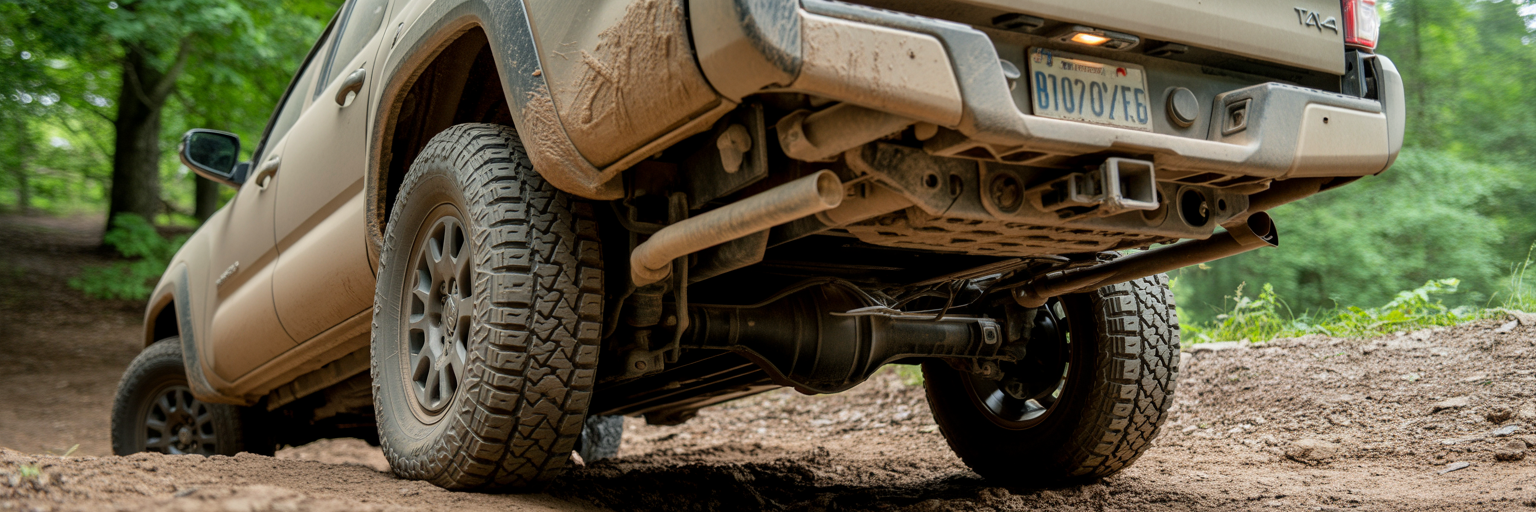
A truck’s off-road capability isn’t just about suspension and gearing; it’s also about its ability to withstand the abuse of the trail. Here, we examine which truck is tougher and better protected straight from the factory.
- Factory-Installed Armor
The Gladiator Rubicon is armed with extensive heavy-gauge steel skid plates that protect critical components like the fuel tank, transfer case, and automatic transmission oil pan. This robust underbody armor provides confidence when sliding over rocks and ledges. The Tacoma TRD Pro also comes with protection, but it often uses a mix of steel and composite materials and may offer less comprehensive coverage from the factory, sometimes leaving key areas more exposed. - Tire Size and Clearance
Factory tire size is a massive factor in trail-readiness. The Gladiator offers 33-inch all-terrain tires as standard on its top trims, with an option for massive 35-inch tires. This directly translates to superior ground clearance and improved approach and departure angles, allowing it to clear obstacles that would stop a Tacoma running its smaller stock tires. - Frame and Axle Robustness
The Gladiator is built on a fully boxed steel frame and features heavy-duty Dana 44 solid axles front and rear on the Rubicon trim. These components are engineered for severe, repeated impacts on punishing trails like those found in Moab. The Tacoma’s frame, a famously reliable combination of boxed and C-channel sections, and its robust rear axle are engineered more for long-term durability over the brute strength needed for extreme rock crawling. - Water Fording and Environmental Sealing
For those who venture into wet climates, water fording capability is a serious concern. Thanks to its Wrangler DNA, the Gladiator typically boasts a higher factory-rated water fording depth. Design elements like a high-mounted engine air intake, strategically placed axle breather tubes, and well-sealed electronics provide more confidence during water crossings common in regions like the Pacific Northwest or the Appalachians.
The On-Road and Daily Driving Experience
After a weekend on the trails, most of us have to face the Monday morning commute. This is where the off-road champion can become a daily chore, and the more balanced truck reveals its true value as a daily driver off road truck.
The Gladiator’s solid front axle, its greatest asset off-road, becomes a liability on the highway. It can lead to a slight wander at speed, requiring more constant steering input from the driver to stay centered in the lane. It’s not dangerous, but it can be fatiguing on long trips. In stark contrast, the Tacoma’s independent front suspension delivers a composed and almost car-like ride. It tracks straight and true, making long commutes and highway journeys far more relaxing.
Cabin refinement is another area where the two trucks diverge. The Tacoma’s fixed, unibody cab is engineered for quietness, effectively insulating occupants from wind and road noise. You can have a normal conversation without raising your voice. The Gladiator’s modular design, with its iconic removable roof and doors, is a core part of its charm but also inherently allows more noise into the cabin. It’s simply a louder vehicle for daily travel, a trade-off for its open-air freedom.
When it comes to fuel economy, neither of these trucks will be mistaken for a Prius. However, the Tacoma generally holds a slight edge. Its lower weight and more aerodynamic profile typically result in better MPG figures from its V6 engine. Over the course of thousands of miles, this small difference can add up to a significant long-term cost consideration for a daily commuter.
Finally, there’s the simple reality of navigating civilization. The Gladiator’s long wheelbase, which provides excellent stability on steep climbs, makes it more cumbersome in urban environments. With a larger turning circle, it’s noticeably more difficult to maneuver through tight city streets or into a crowded parking spot at the grocery store. The Tacoma feels more nimble and is simply easier to live with day-to-day.
Practicality, Customization, and Utility
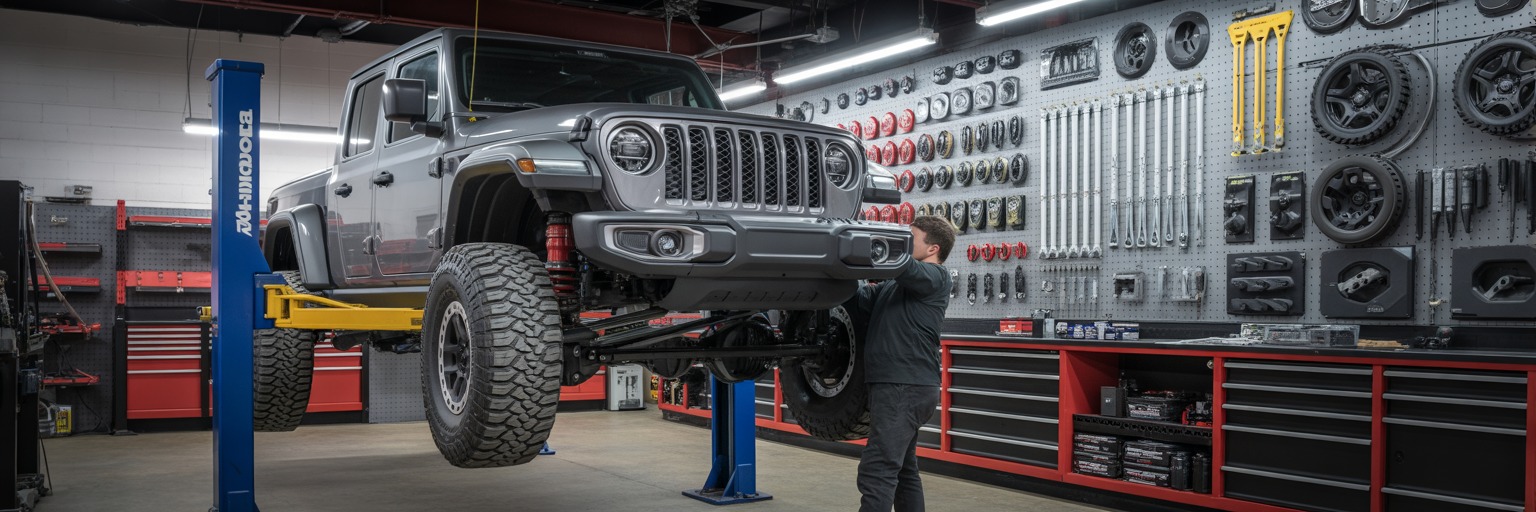
A truck is a tool, and its usefulness extends beyond the trail. How it hauls gear, carries passengers, and adapts to your lifestyle are crucial parts of the ownership experience. This is where practical considerations and customization potential come to the forefront.
In a direct comparison of towing and payload, the Gladiator often comes out ahead. Its robust frame and available powertrains frequently give it a higher maximum tow rating than a comparable Tacoma. For those hauling heavy trailers, boats, or campers, the Gladiator is often the superior choice in the mid-size class. Of course, users with even greater needs might look to the heavy-duty segment, a scenario we explore in our worksite truck showdown.
Inside the cabin, the story shifts. The Gladiator’s longer wheelbase translates directly into significantly more rear-seat legroom. It’s the clear winner for comfortably carrying adults in the back on a road trip. The Tacoma’s rear seating is more compact and better suited for shorter trips or smaller passengers, though its cabin may feature more refined ergonomics and clever storage solutions for daily items.
The aftermarket ecosystems for both trucks are massive, but they reflect different priorities. The Jeep aftermarket is heavily focused on extreme performance: long-travel suspensions, axle swaps, and heavy-duty armor for rock crawling. The Toyota aftermarket, while also offering performance parts, has a stronger emphasis on overlanding and long-term expedition use. You’ll find a vast array of bed racks, rooftop tents, camping accessories, and durable equipment designed for self-sufficient travel.
Finally, the Gladiator has a unique feature the Tacoma simply cannot match: the removable roof and doors. This isn’t a gimmick; it’s a core part of the ownership experience. The ability to have a completely open-air truck on a scenic trail or a sunny day offers a sense of freedom that is unparalleled in the pickup world. For more head-to-head analyses, you can explore our other vehicle comparisons.
The Final Verdict for Your Driving Style
After breaking down the engineering, performance, and daily usability of both trucks, the choice becomes less about which truck is better and more about which truck is better for you. The answer lies in an honest assessment of your priorities.
The Gladiator: The Choice for the Hardcore Enthusiast
The case for the Gladiator is clear and compelling. With its solid front axle, superior truck suspension articulation, front and rear mechanical lockers, and aggressive crawl ratio, it is the undisputed champion for the driver whose primary passion is conquering the most challenging terrain. If your weekends are spent seeking out rock gardens, steep ledges, and technical trails, the Gladiator is the best off road truck for pure, unadulterated performance. It’s a specialized tool built for the toughest jobs.
The Tacoma: The Smart Choice for the Versatile Adventurer
The Tacoma represents the more balanced and logical choice for the owner who needs one vehicle to do everything well. It offers excellent capability for the vast majority of off-road situations, from forest service roads to desert overlanding trips, while delivering far superior on-road comfort, a quieter cabin, and legendary reliability. This trade-off between daily comfort and ultimate capability is a common theme, one we’ve also examined in our comparison of heavy-duty trucks. It is the smarter, more versatile partner for a life of adventure.
Considering the Cost of Capability
A Gladiator Rubicon vs Tacoma TRD Pro price comparison often reveals the Jeep carries a higher sticker price. This isn’t just for the brand name; you are paying a premium for its specialized, uncompromising off-road hardware. That extra cost directly translates to the mechanical advantages discussed, from the Dana 44 axles to the 4:1 transfer case.
The Deciding Question: How Will You *Really* Use It?
So, which one should you buy? Before you decide, ask yourself a simple, honest question. What percentage of your time will be spent on extreme, rock-crawling trails versus commuting to work, driving on the highway, and running daily errands? Be realistic. The answer to that question doesn’t just suggest a choice; it reveals the right truck for you.