
The Electric Truck Showdown: A Clash of Philosophies
The American pickup truck has always been more than just a vehicle. It began as a simple workhorse, a tool for the farm and the job site. Over decades, it transformed into a family hauler, a weekend adventurer, and for many, a powerful symbol of capability. Now, this icon is being redefined by electric power, and two vehicles stand at the forefront of this shift: the Tesla Cybertruck and the Rivian R1T.
This is not just another electric pickup truck comparison. It is an exploration of two fundamentally different answers to the same question. What should a modern truck be? The Cybertruck is a radical statement, a brutalist sculpture of stainless steel born from a desire to rethink the truck from first principles. It prioritizes extreme durability and futuristic function, looking like a tool pulled from a sci-fi film. Its sharp angles and unpainted exoskeleton scream utility over comfort.
On the other side, the Rivian R1T presents itself as a refined electric adventure vehicle. It feels less like a radical reinvention and more like a meticulous evolution. It is the high end multi tool from a premium outdoor gear company, designed to blend rugged capability with thoughtful features and a welcoming interior. Its design is handsome and approachable, promising both power and polish.
The core question for any potential owner is simple. Beyond the polarizing looks and brand loyalty, which of these trucks is actually more useful in the real world? Which one better handles the chaotic mix of daily life, from school runs and grocery trips to towing a boat or finding a remote campsite? To find the answer, we need to look past the spec sheets and examine how each truck performs in the areas that truly matter: real world range, interior practicality, storage versatility, daily driving comfort, off road prowess, and towing reality.
Real-World Range and Charging Network Realities
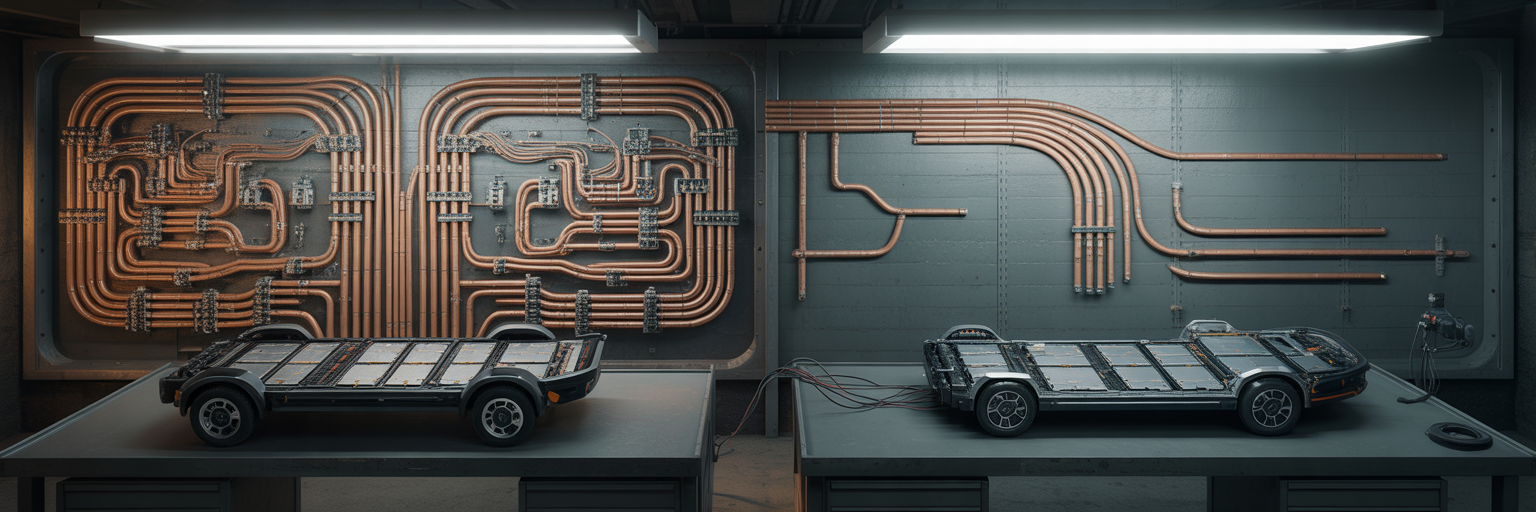
On paper, the range figures for these two trucks appear closely matched, fueling a heated debate. The Rivian R1T offers a maximum range of approximately 425 miles with its largest battery pack, while the top tier Cybertruck is rated for around 410 miles, according to a comparative analysis by Recharged. But any seasoned EV owner knows that these official numbers are just the beginning of the story. They represent ideal conditions that rarely exist in the real world.
On-Paper Promises vs. On-the-Road Reality
The moment you introduce variables like cold weather, sustained highway speeds, or a heavy payload, those impressive range estimates begin to shrink. The most dramatic impact comes from towing. Pulling a significant load can easily slash the effective range of either truck by 30 to 50 percent, sometimes even more. This reality shifts the focus of any serious electric truck range comparison from the size of the battery to the reliability of the charging network you depend on.
The Supercharger Network: Tesla’s Decisive Advantage
This is where Tesla holds an undeniable, almost overwhelming, advantage. The Supercharger network is the gold standard of EV charging in North America. It is vast, strategically located, and famously reliable. The user experience is seamless. You simply pull up, plug in, and the truck starts charging. For anyone planning frequent long distance travel, especially while towing, this network all but eliminates range anxiety and makes trip planning incredibly simple. It is a mature, proven system that just works.
Rivian’s Charging Strategy: A Growing Contender
Rivian is building its own Rivian Adventure Network, with chargers often placed near national parks and outdoor recreation areas, which is a smart strategy. However, for comprehensive coverage, R1T owners still rely heavily on third party networks like Electrify America. While access to Tesla’s network is improving for non Tesla vehicles, the experience is not always as seamless. In 2026, the reality is that the combined third party network lacks the sheer density and proven uptime of the Supercharger system. This means an R1T owner must be more deliberate and sometimes more patient when planning a long journey.
The Daily Charging Experience at Home
For the majority of miles driven by most owners, however, this public charging debate is less critical. When charging at home overnight with a Level 2 charger, both trucks are equally convenient. You wake up every morning with a full “tank,” ready for a day of commuting and errands. For local driving, the charging experience is virtually identical, making either truck a practical daily vehicle. The debate between revolutionary tech and refined execution is common in the auto world. A similar dynamic can be seen in other segments, as explored in how the Hyundai Ioniq 5 vs. Kia EV6 shows two vehicles on the same platform can have different philosophies.
A Tale of Two Cabins: Utilitarianism vs. Refinement
Stepping inside these two trucks reveals the starkest contrast in their design philosophies. One feels like a minimalist command center, the other a premium lounge. This is not just about aesthetics. It directly impacts the daily experience of living with the vehicle.
The Cybertruck’s Minimalist Command Center
The Cybertruck’s cabin is a study in extreme minimalism. Your attention is immediately drawn to the massive 18.5 inch central touchscreen, which controls nearly every function of the vehicle. There is no traditional instrument cluster behind the angular steering wheel, no physical buttons on the dashboard, not even conventional air vents. The materials are durable and industrial, designed to be wiped down and withstand abuse. It is a space built for pure function, resilient and spacious, but it is not a cabin designed to coddle or comfort in a conventional sense.
The R1T’s Premium and Inviting Interior
In contrast, the Rivian R1T’s cabin is warm and inviting. It uses materials like sustainable wood trim, high quality textiles, and soft touch surfaces to create an atmosphere that feels both upscale and connected to the outdoors. The layout is modern yet familiar, featuring a dedicated digital display for the driver and a separate central infotainment screen. It strikes a thoughtful balance between digital innovation and the satisfying tactility of physical controls for core functions. It is a space that immediately feels comfortable and intuitively designed.
Ergonomics: Screen-Centric vs. Tactile Controls
This difference in approach has significant ergonomic consequences. We all want a clean, futuristic dashboard. Yet have you ever tried to adjust your mirrors or change the wiper speed in a sudden downpour by navigating through touchscreen menus? The Cybertruck’s screen centric interface has a steep learning curve for these simple, on the move tasks. Even opening the glove box requires a tap on the screen. The R1T’s blend of screen and buttons is simply more intuitive for actions you perform without thinking, which is a critical aspect of safety and convenience.
Long-Haul Comfort for Driver and Passengers
When it comes to long journeys, the differences become even more pronounced. The R1T’s more traditionally supportive seats, premium materials, and quieter ambiance are purpose built for touring comfort. It is a superior choice for family road trips where passenger comfort is a priority. The Cybertruck’s cabin, while functional, can feel spartan and less engaging over several hours on the road. For anyone considering the best electric truck for daily use, especially if that use involves long commutes or travel with family, the R1T’s welcoming interior is a significant advantage.
Practicality in Storage and Hauling Versatility
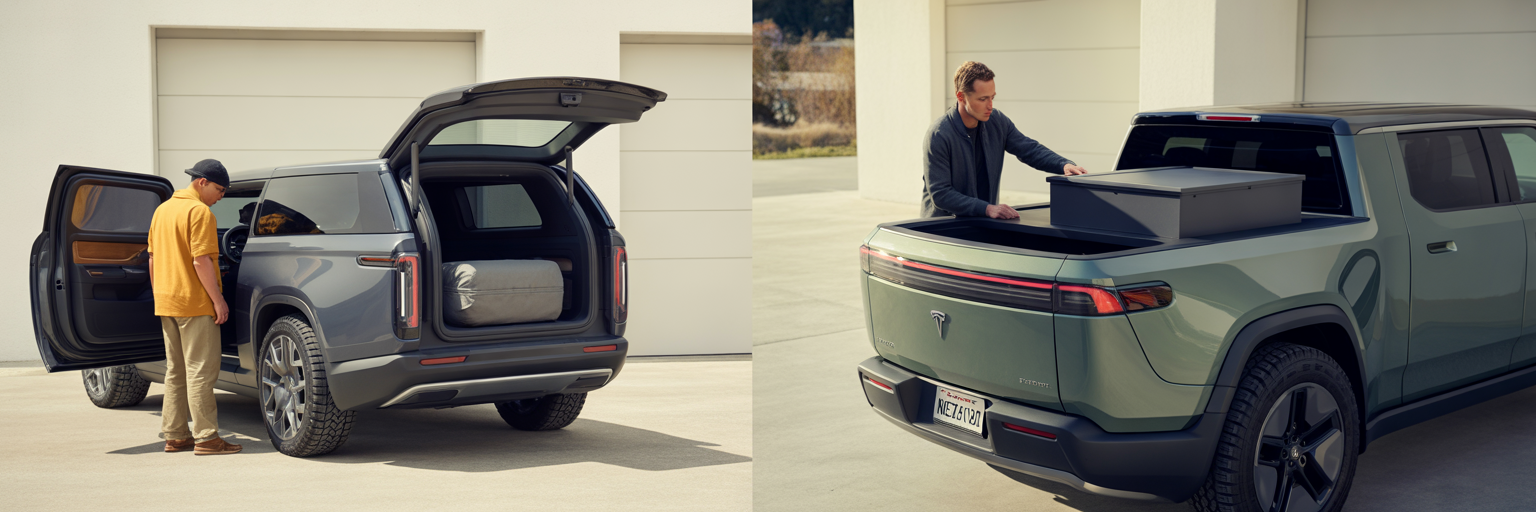
A truck’s soul is its utility, and a huge part of that comes down to how it stores and hauls your gear. Here, the Cybertruck and R1T offer brilliantly different solutions, each with distinct advantages for different kinds of owners.
The Bed: A Secure Vault vs. an Open Platform
The Cybertruck features a six foot long composite bed with an integrated, powered tonneau cover. Tesla calls it the “Vault,” and the name is fitting. When closed, it creates a massive, weather resistant, and lockable trunk that is perfect for securing expensive tools, luggage, or camping gear from both the elements and prying eyes. The Rivian R1T has a shorter 4.5 foot bed. While smaller, its open design and lower side rails can make it easier to load certain items, and it offers more flexibility for tall or awkwardly shaped cargo that would not fit under the Cybertruck’s cover.
Rivian’s Signature Feature: The Gear Tunnel
The R1T’s most celebrated feature is its Gear Tunnel, a unique 11.7 cubic foot storage compartment that runs the width of the truck between the cab and the bed. This pass through space is a masterstroke of practical design, perfect for stowing long, dirty, or delicate items you want to keep out of the cabin and the bed. Imagine tossing your muddy hiking boots or wet ski gear in there after a day on the mountain, keeping your premium interior pristine. Its uses are endless:
- Skis and snowboards
- Fishing rods and tackle
- Tripods and camera equipment
- Wet gear and muddy boots
Comparing the Front Trunks (‘Frunks’)
Both trucks take advantage of the absence of an engine by offering a front trunk, or “frunk.” The R1T’s frunk is deep and voluminous at 11.1 cubic feet, making it an ideal spot for weekly grocery runs or a couple of carry on suitcases. The Cybertruck’s frunk is a bit smaller at around 7.1 cubic feet and has a shallower, wider shape, but it is powered for easy opening and closing.
In-Cabin Storage for Everyday Items
Inside the cabin, the R1T’s more traditional design philosophy wins out for everyday practicality. It is filled with thoughtful storage solutions like large door pockets, a deep center console, and clever cubbies for phones, wallets, and water bottles. The Cybertruck’s minimalist interior offers large, open spaces but fewer dedicated spots for the small items that accumulate during daily life. For families, the R1T’s organized approach to in cabin storage is a clear advantage.
| Storage Feature | Tesla Cybertruck | Rivian R1T |
|---|---|---|
| Cargo Bed Length | 6 feet | 4.5 feet |
| Key Bed Feature | Integrated powered tonneau cover (‘Vault’) | Gear Guard security system, built-in air compressor |
| Unique Storage Solution | Large under-bed storage area | 11.7 cu. ft. Gear Tunnel (pass-through) |
| Front Trunk (Frunk) Volume | ~7.1 cu. ft. (powered) | 11.1 cu. ft. |
| In-Cabin Storage Philosophy | Minimalist, focused on large open areas | Numerous dedicated pockets, bins, and compartments |
On-Road Manners and Daily Driving Comfort
For a vehicle that will spend most of its life on paved roads, how it drives, rides, and maneuvers is just as important as its utility. Both trucks feature adaptive air suspension, but their on road character could not be more different, reflecting their core design goals.
Suspension Tuning: Firm and Utilitarian vs. Smooth and Compliant
The Rivian R1T’s suspension is tuned for a smooth, compliant ride that feels more like a premium SUV than a traditional pickup. It does an exceptional job of absorbing bumps and road imperfections, isolating the cabin and creating a serene driving experience. The Cybertruck’s setup is noticeably firmer and more rigid. While this provides a strong sense of connection to the road and reinforces its utilitarian nature, it also means more of the road surface texture is transmitted into the cabin. It is not uncomfortable, but it lacks the polished refinement of the Rivian.
Maneuverability in the Urban Jungle
Here, the Cybertruck reveals a counterintuitive trick up its sleeve. Despite its massive size, it is surprisingly agile in tight spaces. This is thanks to its revolutionary steer by wire system and four wheel steering. This technology gives the Cybertruck a turning radius smaller than a Tesla Model S, making U turns and tight parking maneuvers shockingly easy. The R1T’s steering is more conventional. It is well weighted and predictable, but it cannot match the Cybertruck’s nimble feeling in a crowded parking lot. The debate between revolutionary tech and refined execution is a familiar one, with a similar dynamic seen in the muscle car world as explored in the Camaro SS vs. Mustang Mach 1 showdown.
Cabin Noise and Highway Refinement
At highway speeds, the R1T pulls ahead decisively in overall refinement. Its superior noise, vibration, and harshness (NVH) insulation results in a significantly quieter cabin. Wind and road noise are better suppressed, making long commutes and road trips far more relaxing. The Cybertruck, with its flat panels and industrial build, allows more ambient noise into the cabin. For a driver whose primary use case is commuting and family transport, the R1T’s superior ride quality and quieter interior make it the more pleasant and comfortable daily companion, a key factor when deciding on the best electric truck for daily use.
Leaving the Pavement Behind: Off-Road Capability
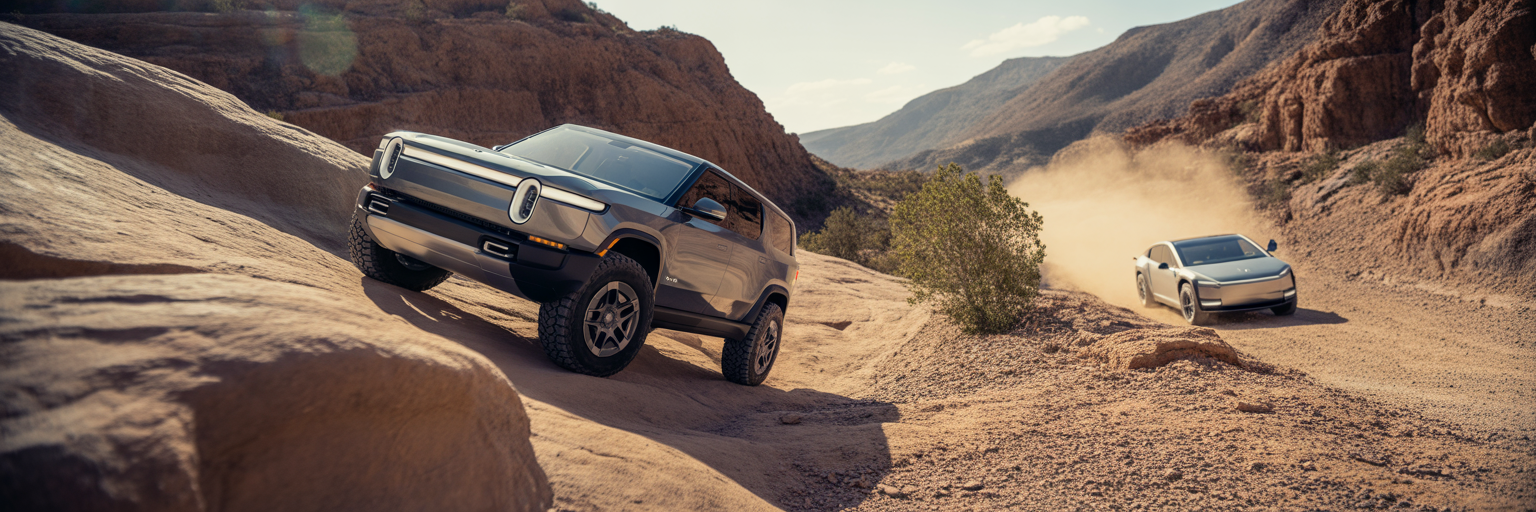
When the asphalt ends, a truck’s true mettle is tested. Both the Cybertruck and R1T are immensely capable off road, but they achieve their prowess through different means, appealing to different types of adventurers.
Hardware for the Trail: Motors and Suspension
The Rivian R1T’s top trims feature a quad motor setup, with one electric motor dedicated to each wheel. This hardware allows for instantaneous and incredibly precise torque vectoring, sending power exactly where it is needed for maximum traction. Combined with up to 14.9 inches of ground clearance and excellent suspension articulation, the R1T feels like a surgical tool on the trail. The Cybertruck off-road capability is rooted more in brute force and durability. Its nearly indestructible stainless steel exoskeleton can shrug off impacts that would cripple a normal truck. With up to 17 inches of ground clearance in its “Extract Mode,” it can clear massive obstacles, though its dual or tri motor setup offers less nuanced power delivery than the Rivian’s quad motor system.
Software and Drive Modes: Finesse vs. Force
This hardware difference is amplified by the software. The R1T comes with a comprehensive suite of specialized drive modes like Rock Crawl, Rally, and Conserve. These modes automatically adjust the suspension height, throttle response, and power distribution, giving the driver a powerful and easy to use toolkit for specific terrains. The Cybertruck offers a more generalized “Off-Road Mode” that provides fewer granular adjustments. It relies more on the vehicle’s raw physical advantages and the driver’s skill to navigate challenges.
The Verdict for the Off-Road Enthusiast
This leads to a clear distinction: finesse versus force. The R1T is designed for technical challenges, using its advanced systems to crawl over rocks and navigate tricky trails with precision and control. The Cybertruck is built to power through rough terrain, relying on its sheer toughness and ground clearance to overcome obstacles. For the dedicated off road enthusiast interested in technical trail driving, overlanding, and exploring challenging landscapes, the Rivian R1T is the more capable, confidence inspiring, and versatile tool right out of the box. Understanding how different models stack up for work and play is key, similar to how buyers evaluate heavy duty trucks in our Ford F-350 or Chevy Silverado 3500HD comparison.
The Workhorse Test: Towing and Real-World Payload
For many, a truck is not a truck if it cannot do real work. Towing a trailer and hauling heavy loads are fundamental requirements, and in the electric era, this is where practicality often clashes with potential.
Towing Capacity and On-Road Stability
On paper, both trucks are formidable workhorses. The Rivian R1T towing capacity and the Cybertruck’s rating are both around a massive 11,000 pounds. When pulling a heavy trailer, both vehicles feel stable and confident on the road. The R1T’s refined suspension helps manage the load smoothly, while the Cybertruck’s long wheelbase and low center of gravity provide an unshakable sense of control. Physically, both are more than up to the task.
The Elephant in the Room: Range Degradation While Towing
The real challenge, however, is energy consumption. Towing a heavy load can cut the effective range of either truck by 50 percent or more. This is the inconvenient truth of electric towing. Suddenly, a 400 mile range becomes less than 200 miles. This is where the discussion must circle back to the charging infrastructure. For anyone who needs to tow frequently over long distances, the Cybertruck’s exclusive access to the vast and reliable Tesla Supercharger network becomes a game changing advantage. As noted in a comprehensive comparison by MotorTrend, real world utility differences become starkly clear when towing, and the ease of finding a fast, reliable, and trailer friendly charger is paramount. Pulling a large trailer into a crowded, and possibly non functional, third party charging station is a stress R1T owners may face, while Cybertruck owners have a much simpler path.
Payload and Worksite Utility Features
When it comes to payload, the Cybertruck has a clear edge with a capacity of around 2,500 pounds, compared to the R1T’s 1,760 pounds. For worksite utility, each offers a unique feature. The R1T has a built in air compressor, perfect for airing up tires after off roading or inflating job site equipment. The Cybertruck, however, offers integrated 120V and 240V outlets in the bed, capable of powering heavy duty tools, running a campsite, or even charging another EV. For pure worksite functionality, this on demand power is a massive benefit.
Integrated Technology and Software Experience

Modern vehicles are as much about software as they are about hardware. The digital experience, from the central screen to driver assistance systems, defines a huge part of ownership. Here, Tesla’s years of experience give it a distinct edge in maturity and features.
The Software Ecosystem: Mature vs. Growing
Tesla’s software ecosystem is the most mature in the industry. The interface is incredibly fast, responsive, and deeply integrated into the vehicle. Its navigation system, which automatically plans routes with necessary Supercharger stops, is best in class. The system is also packed with entertainment apps like Netflix, YouTube, and a library of video games, perfect for passing the time while charging. Most importantly, Tesla has a proven track record of delivering meaningful over the air (OTA) updates that add significant features and improve the vehicle over time.
Rivian’s software is beautifully designed, with clean graphics and a user friendly layout for core driving functions. It is highly functional and polished. However, its feature set is less extensive than Tesla’s. The app ecosystem is smaller, and while Rivian also provides excellent OTA updates, the platform is younger and still building out its full potential. The experience is premium but not as feature rich.
Driver-Assistance Systems: Autopilot vs. Driver+
Both trucks offer excellent advanced driver assistance systems. Tesla’s standard Autopilot provides robust lane keeping and adaptive cruise control. The optional Full Self Driving package adds more advanced capabilities. Rivian’s standard Driver+ system offers similar hands free highway driving and is widely praised for its smooth, reliable, and intuitive operation. In 2026, both systems are highly competitive and provide a significant reduction in driver fatigue on long highway journeys.
Unique Tech Gadgets and Features
Finally, each truck includes clever tech gadgets that reflect its brand personality. The R1T has a removable Bluetooth speaker, called the Camp Speaker, that cleverly integrates into the center console and doubles as a lantern. It also has a flashlight neatly stored in the driver’s door. These are thoughtful, user focused touches. The Cybertruck’s unique tech is the vehicle itself. Its nearly indestructible stainless steel body panels and armored glass are technological talking points that deliver on its promise of futuristic durability.
The Final Verdict: Which Truck Is Truly More Useful?
After examining every angle of the Tesla Cybertruck vs Rivian R1T debate, a clear picture emerges. These are two exceptional trucks that cater to two very different owners. The choice between them comes down to a simple question: What do you truly value in a vehicle?
To make the decision easier, let’s recap their core strengths:
- Tesla Cybertruck Strengths: An unmatched charging network for stress free long distance travel, extreme durability for work or rugged lifestyles, a large and highly secure cargo bed, a mature and feature rich software ecosystem, and surprisingly agile urban maneuverability.
- Rivian R1T Strengths: Exceptional off road capability on technical terrain, a supremely comfortable and luxurious interior, a smoother and quieter on road ride, and incredibly versatile and clever storage solutions like the Gear Tunnel.
The ideal Cybertruck owner is a tech forward individual who values the Tesla ecosystem, requires extreme durability, and frequently travels long distances, especially while towing. They prioritize function, security, and the peace of mind that comes with the Supercharger network. The ideal R1T owner is an outdoor enthusiast who prioritizes daily driving comfort for their commute and family, ventures onto challenging off road trails, and appreciates a vehicle that seamlessly blends premium refinement with rugged, thoughtful practicality.
While the Cybertruck is a monumental engineering achievement that pushes the boundaries of what a truck can be, the final verdict on which is more useful for the broadest range of people in 2026 is clear. The Rivian R1T’s superior blend of on road refinement, off road mastery, interior comfort, and clever practicality makes it the more versatile and, ultimately, more useful electric pickup. For buyers also considering an SUV, it is worth noting this same brand philosophy battle is happening in that segment, which you can explore further in our Choosing Your 2026 Electric SUV: Tesla Model X or Rivian R1S? article.