
Two Paths to the All-Weather Family Wagon
The classic American station wagon, with its wood-paneled sides and sprawling bench seats, has largely faded from our highways. Yet, its spirit of blending passenger comfort with cargo utility lives on. Today, that legacy has split into two distinct philosophies, perfectly embodied by the Audi Allroad and the Subaru Outback. This is more than just a vehicle choice; it’s a decision between two different approaches to family transportation.
The Audi Allroad descends from a long line of European “Avant” wagons, engineered for those who appreciate sophisticated design and a refined driving experience. It’s a vehicle that feels at home on the autobahn, where quiet confidence and understated performance are paramount. The Allroad doesn’t shout about its capability. Instead, it delivers a polished, premium feel that suggests you can have family-friendly practicality without sacrificing the composure of a luxury sedan. It’s the choice for the driver who values the journey as much as the destination.
In the other corner stands the Subaru Outback, a vehicle that has become an icon in places like the Pacific Northwest and New England. Its identity was forged on muddy trails and snowy mountain passes, where all-weather capability is a daily necessity, not an optional extra. The Outback represents a more rugged, utilitarian approach. It’s built on a foundation of practicality and durability, designed to handle the realities of an active family life, from ski trips to soccer practice. It prioritizes function over form, earning its reputation through relentless dependability.
This Audi Allroad vs Subaru Outback matchup presents a fundamental question for modern families. Do you invest in the polished refinement and engineering prestige of the Audi, or do you opt for the proven, no-nonsense value of the Subaru? This AWD wagon comparison will break down the key differences in comfort, utility, and cost to help you decide whether the Allroad’s premium is justified or if the Outback is the smarter answer for your needs.
Comparing On-Road Manners and Ride Comfort
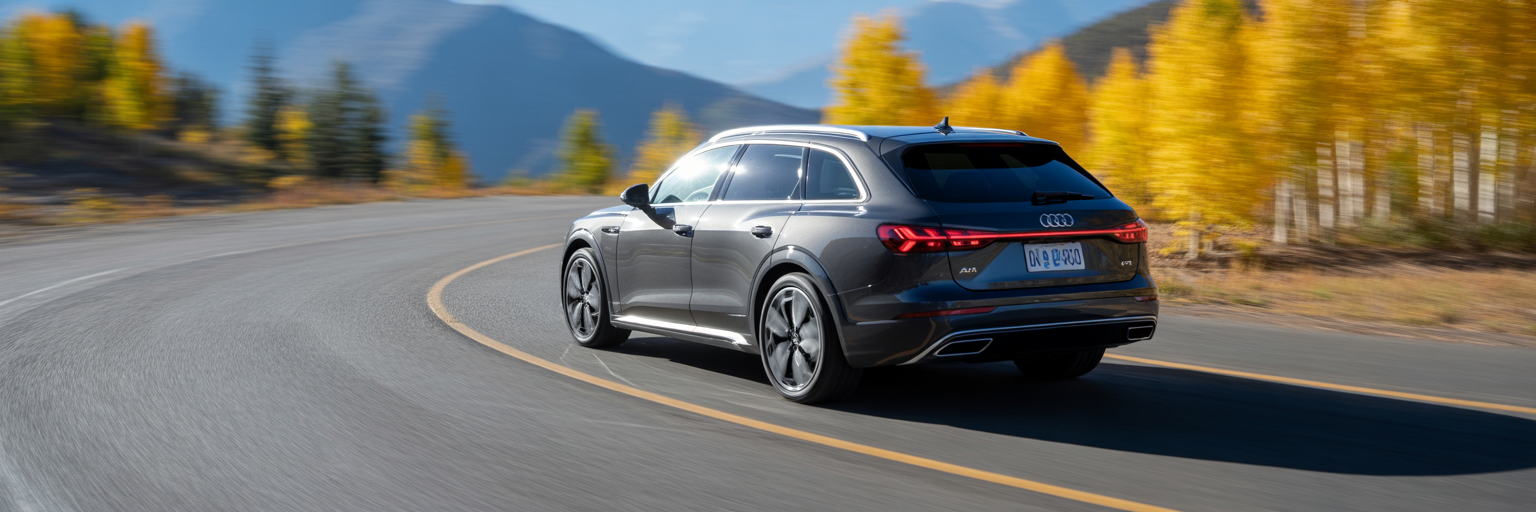
While both vehicles are designed to handle whatever the road throws at them, their personalities on paved surfaces are worlds apart. The daily commute and the long-haul road trip are where the core differences in their engineering philosophies become most apparent. One prioritizes serene isolation, while the other focuses on resilient stability.
The Serene Composure of the Audi Allroad
Driving the Audi Allroad feels less like operating a wagon and more like piloting a luxury sedan. The secret is its sophisticated chassis and available adaptive air suspension. This system doesn’t just passively absorb bumps; it actively reads the road surface and adjusts in milliseconds to counteract imperfections. The result is a ride that feels remarkably smooth and composed. Potholes and expansion joints that would send a jolt through a lesser vehicle are reduced to muted thumps.
On the highway, this translates to an exceptionally quiet and stable experience. The Allroad glides over pavement, with minimal body roll in corners, creating a calm environment that reduces driver and passenger fatigue on long journeys. It’s a car that isolates you from the harshness of the road, allowing you to enjoy the drive in quiet comfort. This level of refinement is a defining characteristic of the Audi brand and a major justification for its higher price point.
The Stable and Forgiving Ride of the Subaru Outback
The Subaru Outback’s suspension is tuned with a different goal in mind: absorption. It’s engineered to soak up the broken pavement, gravel roads, and unexpected potholes that are part of everyday driving in many regions. The ride is soft and forgiving, prioritizing passenger comfort by swallowing bumps before they can disturb the cabin. You feel more connected to the road than in the Audi, but in a way that communicates resilience rather than harshness.
The trade-off for this absorbent ride is more noticeable body roll during spirited cornering. The Outback leans into turns more than the Allroad, a clear signal that its priorities lie with stability and comfort over athletic handling. It’s a setup that feels secure and predictable, but it won’t inspire you to seek out winding back roads just for the fun of it. For families navigating rough city streets or rural lanes, this forgiving nature is a significant asset.
Driver Engagement: Precision vs. Ease of Use
The contrast in driving dynamics extends to the steering. The Allroad’s steering is precise, well-weighted, and offers clear feedback from the road. It gives the driver a strong sense of connection and control, which enthusiasts appreciate. You know exactly what the front wheels are doing, making the car feel agile and responsive.
The Outback’s steering, on the other hand, is lighter and more insulated. It’s designed for ease of use in daily situations like navigating tight parking lots or cruising down the interstate. While it’s perfectly competent and makes the car feel effortless to drive, it lacks the communicative feedback of the Audi. This distinction highlights the core difference: the Allroad is engineered for the driver, while the Outback is engineered for the journey. For those who enjoy a spirited drive but need space, it’s worth exploring how some of the best used hatchbacks we’ve reviewed offer a similar combination of fun and function.
An Inside Look at Cabin Quality and Technology
Stepping inside these two vehicles reveals the most dramatic difference between them. One is a showcase of modern luxury and digital integration, while the other is a testament to durable, user-centric design. An Audi Allroad interior review focuses on craftsmanship, while a look inside the Outback highlights its readiness for real-world family adventures.
Audi’s Craftsmanship and Digital Cockpit
The Allroad’s cabin is a sensory experience. Your fingers trace over open-pore wood trim and brushed aluminum accents. The available Valcona leather seats are both supple and supportive, and every switch clicks with a satisfying, mechanical precision. It’s an environment where material quality is the top priority. You don’t just see the quality; you feel it in every touchpoint, from the weighted gear selector to the solid thud of the closing doors.
This premium feel is amplified by Audi’s technology. The centerpiece is the Audi Virtual Cockpit, a customizable digital instrument cluster that can display full-screen navigation maps, media information, and vehicle data with stunning clarity. Paired with the dual-screen MMI infotainment system in the center stack, it creates a futuristic, driver-focused atmosphere. While this level of quality comes at a cost, many buyers find similar appeal in the used market, which is why we’ve put together a guide on the best used German cars that are actually worth owning.
Subaru’s Durable and Functional Interior
The Subaru Outback’s interior is built around a different set of principles: durability, functionality, and ease of use. The materials are chosen for their ability to withstand the rigors of an active lifestyle. The available StarTex water-repellent upholstery is a perfect example. It’s designed to handle muddy paws, spilled drinks, and wet ski gear without staining or damage. You won’t find the same level of soft-touch plastics or intricate trim as in the Audi, but every surface feels robust and built to last.
The design is straightforward and intuitive. Controls are logically placed and easy to find, prioritizing function over high-concept aesthetics. The focus is on creating a space that is comfortable and stress-free, where you don’t have to worry about scuffing a delicate surface. It’s a cabin designed for life, not just for show.
Infotainment: Feature-Rich vs. User-Friendly
The infotainment systems in both cars reflect their overall interior philosophies. Audi’s MMI system is visually impressive and packed with features, offering deep customization and a high-tech feel. However, the dual-screen setup can require a learning curve to navigate effectively while driving.
In contrast, the Outback features a large, vertically oriented touchscreen that dominates the center stack. While it may not have the graphical sophistication of the Audi’s system, its large icons and straightforward layout can make accessing core functions like climate control, navigation, and audio simpler for many users. As a recent report from U.S. News highlights, the significant differences in standard technology and cabin materials reinforce this luxury vs. utility argument. The choice comes down to whether you prefer a feature-rich, integrated experience or a simple, direct interface.
Practicality Check: Cargo, Passengers, and Utility
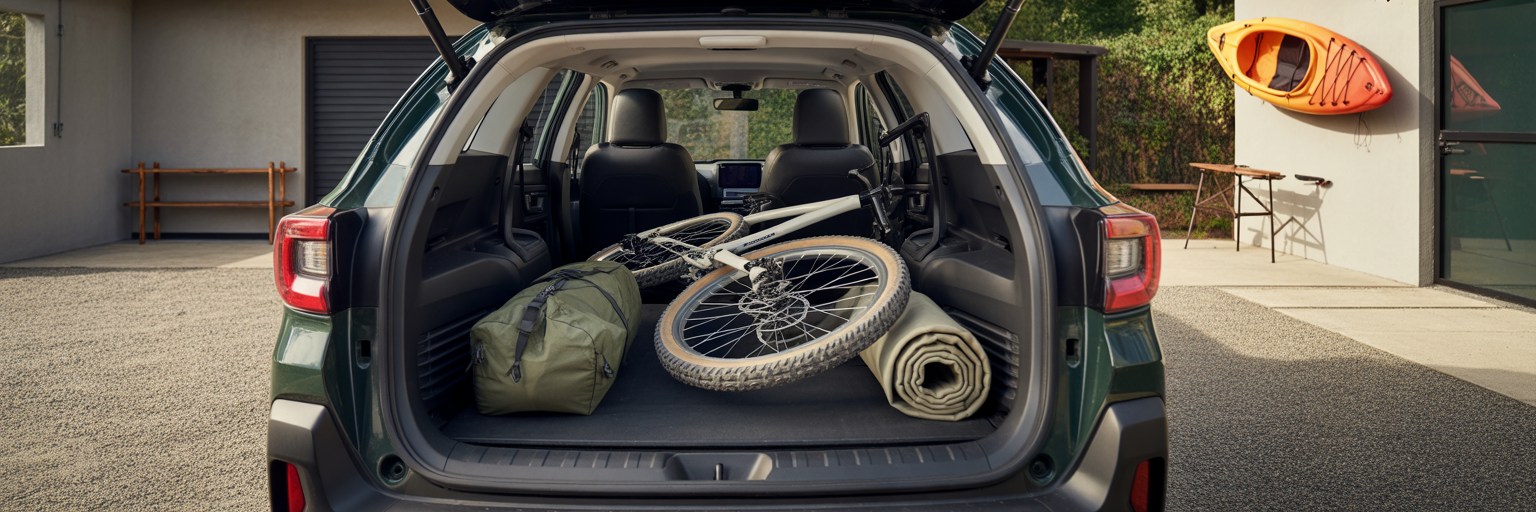
For a family hauler, practicality isn’t just a feature; it’s the entire point. Beyond the driving dynamics and interior feel, how these vehicles handle people and their gear is a critical part of the equation. Here, the Outback’s crossover-like design gives it some distinct, real-world advantages.
On paper, the cargo capacities are competitive, but the numbers don’t tell the whole story. The Outback generally offers more cargo volume, both with the rear seats up and folded down. That slight edge can be the difference between fitting that last duffel bag inside for a family vacation or having to leave it behind. But the shape of the space is just as important. The Outback’s cargo area is wider and more box-like, making it better suited for bulky items like coolers or large dog crates. The Allroad’s space, while generous, is more sculpted and tapered, prioritizing style over maximum volume.
Passenger comfort, especially in the back seat, is another area where the Subaru shines. Its more upright seating position and taller roofline provide ample headroom and legroom for adults on long trips. While the Allroad is comfortable, taller passengers may find the rear quarters a bit more snug due to its sleeker, more car-like profile. These wagons are excellent choices, but it’s worth seeing how they stack up against other options in our list of the best family road trip vehicles that are not boring.
The most telling differences are found in the built-in utility features, where Subaru’s focus on practical innovation becomes clear.
- Roof Rack System: The Subaru Outback features ingenious integrated crossbars that can be swung into place when needed and stowed away when not in use, reducing wind noise and preserving fuel economy. The Audi Allroad has sleek roof rails, but functional crossbars are an additional, often costly, accessory purchase.
- Cargo Area Shape: As mentioned, the Outback’s wide, square opening is ideal for loading cumbersome gear. The Allroad’s opening is slightly narrower and more stylized, which can make loading large boxes a bit more challenging.
- Rear Seat Room: The Outback consistently offers more rear legroom and headroom, making it a more comfortable space for growing teenagers or adult friends.
- Small Item Storage: Both vehicles offer well-thought-out storage cubbies, but the Outback’s tend to be larger and more accommodating, reflecting its role as a do-it-all family vehicle.
Mastering the Elements: Winter and All-Weather Performance
When the weather turns foul, both of these vehicles inspire confidence, but they achieve it through different means. For many buyers, the decision between them comes down to which is the best family car for snow and slippery conditions. Their all-wheel-drive systems and off-pavement capabilities reveal two distinct engineering philosophies.
Subaru’s Symmetrical All-Wheel Drive Legacy
Subaru has built its brand on the reputation of its Symmetrical All-Wheel Drive system. The key to its success is its full-time, always-on nature. Power is continuously sent to all four wheels, providing immediate traction from a standstill and maintaining stability in slippery corners. The “symmetrical” part of the name refers to the layout of the drivetrain, which is balanced along the centerline of the vehicle. This inherent balance contributes to its predictable and sure-footed handling in snow, ice, and rain. It’s a simple, robust system that has been proven over decades, giving drivers a powerful sense of security.
Audi’s Predictive Quattro with Ultra Technology
The modern Audi Allroad features Quattro with Ultra Technology, which represents a different, more efficiency-focused approach. Under normal driving conditions, the system powers the front wheels to maximize fuel economy. However, it uses a network of sensors to predict when all-wheel drive will be needed. It analyzes factors like steering angle, throttle position, and wheel slip to proactively engage the rear axle, often before the driver even notices a loss of traction. While this predictive system is incredibly fast and effective, it is fundamentally a front-wheel-drive-biased system, unlike Subaru’s full-time engagement. It’s a smart system, but some purists prefer the constant connection of the Subaru.
The Ground Clearance Advantage
Perhaps the single most important metric for deep snow and rough roads is ground clearance. Here, the Subaru Outback has a clear and undeniable advantage. With 8.7 inches of ground clearance (and even more in Wilderness trims), the Outback sits significantly higher than the Allroad, whose adjustable air suspension typically offers a maximum height that is still lower. That extra inch or two is what allows the Outback to power through unplowed streets or navigate rutted dirt roads without scraping its underbelly. In a blizzard, ground clearance is often more important than the specifics of the AWD system.
Finally, both vehicles offer electronic aids for low-traction situations. The Outback’s dual-function X-MODE includes settings for “Snow/Dirt” and “Deep Snow/Mud,” which optimize the AWD system, throttle response, and traction control for specific challenges. The Allroad features an “Offroad” drive mode that raises the air suspension and adjusts the drivetrain parameters. For extreme, low-speed, and truly challenging conditions, the Subaru’s purpose-built system and superior ground clearance give it the edge.
The Financial Equation: Ownership Costs and Reliability

For most buyers, the decision between the Audi Allroad and Subaru Outback comes down to the numbers. The initial price difference is significant, but the true financial picture emerges over years of ownership. Evaluating factors like depreciation, fuel, and maintenance reveals the long-term commitment each vehicle requires.
The most immediate factor is the starting MSRP, where the Outback is considerably more accessible. However, the Subaru Outback ownership costs continue to be lower across the board. Luxury vehicles like the Audi typically experience faster depreciation, meaning they lose a larger percentage of their value in the first few years. This is a critical factor if you plan to sell or trade in the vehicle down the line.
Daily running costs also diverge. The Audi Allroad’s turbocharged engine requires premium 91-octane gasoline, adding a persistent extra expense at every fill-up. The Outback is designed to run perfectly on regular 87-octane fuel. Over the course of a year, this difference can add up to hundreds of dollars. Insurance premiums for the Audi are also typically higher due to its higher value and repair costs.
The biggest financial differentiator, however, is maintenance and repairs. The Allroad’s sophisticated engineering, including components like the air suspension and complex electronics, requires specialized tools and expertise. This often means higher labor rates and more expensive parts, usually sourced from a dealership. The Subaru, with its simpler mechanicals and widespread network of independent mechanics, is generally less expensive to service and repair. This is a key reason why some high-mileage cars age better than others; simplicity and parts availability are crucial for long-term affordability.
| Cost Factor | Audi Allroad | Subaru Outback |
|---|---|---|
| Starting MSRP (Approx.) | ~$50,000 – $70,000+ | ~$30,000 – $45,000 |
| 5-Year Depreciation Rate | Higher | Lower |
| Fuel Requirement | Premium (91 Octane) | Regular (87 Octane) |
| Average Annual Maintenance | High ($1,000 – $2,000+) | Moderate ($600 – $900) |
| Insurance Premiums | Higher | Lower |
| Key Repair Risk | Air Suspension, Electronics | CVT, Head Gaskets (older models) |
Note: Cost estimates are based on industry averages and can vary based on location, driving habits, and specific model year. The table illustrates the general financial commitment associated with each vehicle over its lifespan.
The Final Verdict: Which Hauler Fits Your Family?
After comparing ride comfort, interior quality, practicality, and cost, a clear picture emerges. The choice between the Audi Allroad and Subaru Outback isn’t about which car is better, but about which car is better for you. It’s a classic head-versus-heart decision, a luxury wagon vs crossover showdown where your personal priorities will determine the winner.
The ideal Audi Allroad owner is someone who deeply values the daily driving experience. They appreciate the serene ride, the high-tech, luxurious cabin, and the prestige of the Audi brand. They see their vehicle as more than just a tool for transportation; it’s a source of enjoyment and comfort. This buyer is willing and able to pay a premium for that refinement, both at the time of purchase and over the long term for maintenance. Their lifestyle may not demand extreme off-road capability, but they want the security of all-wheel drive in a polished, sophisticated package.
The ideal Subaru Outback owner is a pragmatist. Their focus is on reliability, safety, low ownership costs, and ultimate utility. Their lifestyle likely involves outdoor adventures, challenging weather, or the messy reality of hauling kids and pets. They need a vehicle that can handle it all without complaint and without expensive repair bills. For them, the Outback’s superior ground clearance, durable interior, and proven dependability are far more valuable than premium leather or a digital cockpit. It’s the smart, logical choice for an active family on a real-world budget.
To find your definitive winner, ask yourself these five questions:
- What is my realistic total budget, including maintenance and fuel for the next five years?
- How important is a premium, high-tech interior to my daily happiness?
- Do I frequently drive in deep snow or on unpaved, rutted roads?
- Will I be hauling bulky gear, pets, or messy kids on a regular basis?
- Is a sporty, engaging driving feel a top priority for me on my daily commute?
Your answers will point you clearly toward either the refined Allroad or the rugged Outback. Once you’ve made your choice, you can explore more of our vehicle comparisons to find the perfect fit for all your needs.