The Frustration of a Repeatedly Dead New Battery
There are few automotive frustrations quite like turning the key and hearing nothing but a click. That feeling is amplified when you just installed a new battery last week. You spent the money and did the work, yet you’re back in the same situation, wondering why my car won’t start with a new battery. It’s a confusing and costly problem that can make you want to give up on the car entirely.
Here’s the truth that most people miss: a new car battery keeps dying almost never because the battery itself is the problem. Think of your new battery as the victim, not the culprit. A battery is a storage tank for electricity. It can hold power and deliver it, but it has no control over how it’s refilled or what might be secretly draining it while you’re away. The issue lies somewhere else within your vehicle’s electrical ecosystem.
When a fresh battery fails, it’s a clear signal that an underlying issue is at play. The problem almost always falls into one of three categories. First, a faulty charging system might not be replenishing the battery as you drive. Second, a parasitic electrical drain could be silently stealing power when the car is parked. Or third, poor connections might be preventing power from getting into or out of the battery effectively. By following a methodical approach, you can move past the frustration, find the real source of the problem, and finally put an end to the cycle of dead batteries.
Discharged, Defective, or Something Else Entirely?

Before you can diagnose the problem, it’s important to understand the difference between a battery that is simply discharged and one that is truly defective. A discharged battery is a healthy component that has run out of energy. It’s like an empty fuel tank that just needs to be refilled. Given a proper, full charge from an external charger, it will return to normal operation and hold its power.
A defective battery, on the other hand, has an internal failure, such as a shorted cell or a manufacturing flaw. No amount of charging can fix it. Even if it seems to take a charge, it will lose it rapidly or fail to deliver the necessary power to start the engine. While it is possible to get a defective battery straight from the factory, it is uncommon. The more likely scenario when a new car battery keeps dying is that an external factor is at work.
These external factors can be grouped into three main areas. A charging system failure means the alternator isn’t doing its job to recharge the battery while you drive. A parasitic drain means something is using power after you’ve turned the car off, causing the car battery drains overnight. Finally, connection issues like loose or corroded terminals can prevent the battery from receiving or delivering a proper charge. As a starting point, a healthy, fully charged 12-volt battery should show a resting voltage of around 12.6 volts. A reading below 12.2 volts suggests it is significantly discharged. However, voltage alone is just one piece of the puzzle.
| Symptom / Test | Discharged Battery | Defective Battery |
|---|---|---|
| Resting Voltage (After Sitting) | Below 12.4V, but may hold a charge temporarily | Will not hold 12.6V even after a full charge; drops quickly |
| Behavior After Charging | Accepts and holds a full charge (12.6V+) | Fails to reach a full charge or loses it rapidly |
| Load Test Result | Passes the test once fully recharged | Fails the test, unable to deliver required amperage |
| Common Cause | Alternator failure, parasitic drain, short trips | Internal short, bad cell, manufacturing flaw |
This table outlines the general indicators to differentiate between a battery that is simply out of energy and one that is faulty. A professional load test is the most definitive method for confirming a battery’s true health.
Is Your Car’s Charging System the Culprit?
If your battery is healthy but keeps ending up drained, the first place to investigate is the system responsible for keeping it charged: the charging system. This collection of components works together to generate electricity while the engine is running, powering all your accessories and topping off the battery. If any part of this system fails, your battery will slowly but surely run out of juice, no matter how new it is.
The Alternator: Your Car’s Power Plant
The alternator is the heart of the charging system. It’s a small generator driven by the engine that converts mechanical energy into the electrical energy your car needs. When it’s working correctly, it produces more than enough power for everything. When it starts to fail, the battery is forced to pick up the slack, a job it wasn’t designed to do for long. The classic signs of a bad alternator are hard to miss if you know what to look for.
- Battery Warning Light: This is the most obvious sign. A light shaped like a battery or with “ALT” or “GEN” indicates a charging system problem.
- Dim or Flickering Lights: Headlights and dashboard lights that dim, flicker, or get brighter as you rev the engine are a telltale symptom.
- Slow or Malfunctioning Accessories: Your power windows might move slower, or your radio might cut out as the alternator struggles to provide consistent power.
- Engine Dies After a Jump-Start: If you jump-start the car and it dies as soon as the jumper cables are removed, the alternator is almost certainly the problem.
The Voltage Regulator: The Unseen Gatekeeper
Inside or attached to the alternator is the voltage regulator. Its job is to act as a gatekeeper, ensuring the voltage sent to the battery and electrical system stays within a safe range, typically between 13.5 and 14.8 volts. If the regulator fails, it can cause two different problems. It might fail to allow enough voltage, leading to a chronically undercharged battery that eventually dies. Or, it could fail in the “open” position, allowing too much voltage. This overcharging condition can boil the electrolyte in the battery, severely damaging it and other sensitive electronics.
The Serpentine Belt: The Critical Link
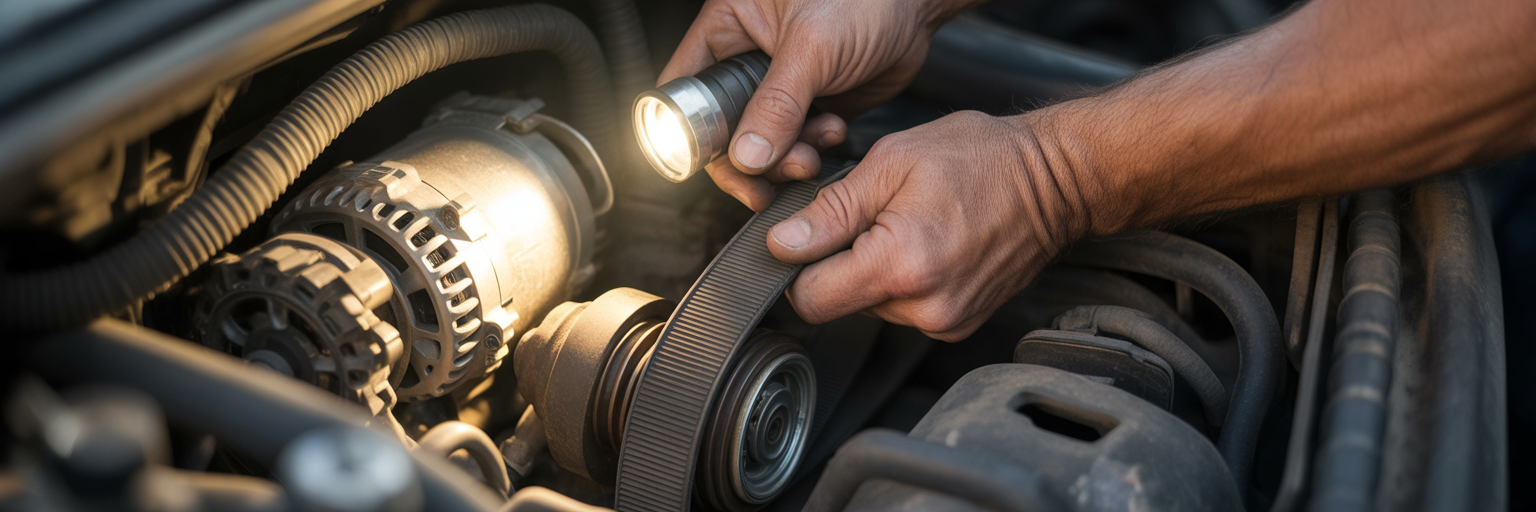
The alternator doesn’t spin on its own. It’s driven by the serpentine belt, which snakes around several pulleys on the front of the engine. This belt is the physical link that transfers power from the engine’s crankshaft to the alternator. If this belt is worn, cracked, glazed, or stretched, it can slip on the alternator pulley. You might hear a high-pitched squealing sound, especially when you first start the car or turn on accessories like the air conditioning. A slipping belt means the alternator isn’t spinning fast enough to produce its rated output, leaving your battery undercharged. Ensuring these engine components work in harmony is key, which is why we’ve detailed more on how to keep your car’s engine running for years in our other guides.
Hunting Down Parasitic Electrical Drains

If your charging system checks out but your battery is still dead every morning, you are likely dealing with a parasitic drain. This is when an electrical component continues to draw power after you’ve turned off the ignition and locked the doors. It’s one of the most common reasons a car battery drains overnight and can be one of the most frustrating issues to track down.
What is a Parasitic Drain?
Every modern vehicle has a small, normal parasitic drain. This minimal power draw, typically between 25 and 100 milliamps, is necessary to maintain things like your radio presets, clock, and the memory for your car’s onboard computers and security system. A problem arises when the drain becomes excessive. A faulty component or a wiring issue can cause the draw to spike, pulling enough energy to drain a healthy battery in a matter of hours or days.
Common Culprits: From Lights to Modules
The sources of a parasitic drain can range from the painfully obvious to the deeply hidden. The first things to check are the simple ones. A glove box light, trunk light, or even a vanity mirror light that fails to turn off is a classic culprit. But often, the problem is more complex. A stuck relay, a faulty ignition switch that doesn’t fully disengage, or a computer control module that fails to enter its low-power “sleep mode” can all be responsible. These hidden drains are what make diagnosing the issue so tricky without a methodical approach.
The Trouble with Aftermarket Accessories
One of the most frequent causes of parasitic drains is improperly installed aftermarket equipment. That powerful new stereo, remote starter, dash camera, or alarm system can be a major power hog if not wired correctly. Installers sometimes take a shortcut and wire an accessory directly to a constant power source instead of a switched one that turns off with the ignition. This means the device is drawing power 24/7. Before you start pulling fuses, take a close look at any non-factory electronics. The problem often starts there. When dealing with the complexities of modern vehicle electronics, it’s helpful to have a broad understanding, which is why we at Car Phanatics cover a wide range of automotive topics.
A crucial concept to understand is “sleep mode.” In modern cars, it can take anywhere from 15 to 45 minutes after you lock the doors for all the electronic modules to shut down and enter a low-power state. If you try to how to test for parasitic draw too soon, you’ll get a high reading that looks like a problem but is just the car’s normal shutdown sequence.
Overlooked Causes: Connections, Habits, and Environment
Sometimes the reason a new car battery keeps dying isn’t a failed component at all. The problem can be simpler and more subtle, stemming from poor connections, your driving habits, or even the weather. These overlooked factors can create the same frustrating symptoms as a bad alternator or a parasitic drain.
First, let’s talk about connections. Electricity needs a clean, clear path to flow. Loose or corroded battery terminals act like a bottleneck, restricting the flow of current. Your alternator might be producing a perfect charge, but if the connection at the battery post is fuzzy with white or blue corrosion, that power can’t get into the battery effectively. The same goes for delivering power. A corroded terminal can prevent the battery from sending enough amperage to the starter. Think of it like a clogged water pipe; the pressure is there, but the flow is just a trickle. This same principle applies to the engine and chassis ground straps. A dirty or loose ground connection can cause all sorts of bizarre electrical gremlins, including charging problems.
Next, consider your driving habits. Are you someone who only makes short, 5-10 minute trips around town? If so, you may have found your culprit. Starting an engine requires a massive amount of energy from the battery. A short drive simply isn’t long enough for the alternator to replenish that energy, let alone add any extra charge. Over time, this creates a net deficit, and the battery’s state of charge slowly dwindles until it can no longer start the car. It’s a common issue that highlights how different factors affect a vehicle’s reliability, a topic we explore further in our article on why some high mileage cars age better than others.
Finally, environment and specifications matter. Extreme cold slows down the chemical reactions inside a battery, reducing its available power. Extreme heat, on the other hand, accelerates internal degradation and can shorten a battery’s lifespan. It’s also critical to ensure you have the correct battery for your vehicle. Using a battery with a lower Cold Cranking Amps (CCA) rating than what the manufacturer specifies means it will struggle on cold mornings and wear out faster.
A Systematic Diagnostic Checklist to Find the Fault
When you’re faced with a dead battery, the temptation is to start replacing parts. But that approach gets expensive quickly. A methodical diagnostic process is the key to finding the true cause without wasting money. Here are the car battery diagnostic steps you should follow, starting with the simplest checks.
- Confirm Battery State of Charge: Before you do anything else, you need to know the battery’s starting point. With the car off, use a digital multimeter set to DC volts to test the voltage across the battery terminals. A fully charged battery should read around 12.6V. If it’s below 12.4V, the first step is to remove it and fully charge it with a proper external battery charger. You cannot accurately test other systems with a discharged battery.
- Inspect and Clean Connections: This is a simple visual and physical check. Can you wiggle the battery terminal clamps by hand? If so, they’re too loose. Look for any white, blue, or greenish powder (corrosion) on the terminals, clamps, or cable ends. If you see any, disconnect the terminals (negative first) and clean them with a wire brush or a dedicated battery terminal cleaning tool. A paste of baking soda and water can help neutralize the acid.
- Test the Charging System: With the battery fully charged and reconnected, start the engine. Now, test the voltage at the battery terminals again. With the engine running, the reading should jump up to between 13.5V and 14.8V. If the voltage stays down near 12.6V or starts to drop, your alternator, voltage regulator, or serpentine belt is the prime suspect.
- Perform a Battery Load Test: Voltage tells you the state of charge, but a load test tells you the battery’s actual health. This test puts the battery under a heavy, simulated starting load to see if it can deliver the required amperage without its voltage dropping too low. Most auto parts stores will perform a load test for free. This is the definitive way to confirm if your new battery is actually defective or if it’s a healthy victim.
- Look for Obvious Drains and Perform a Parasitic Draw Test: With the car off, check for any lights that might be staying on in the glove box, trunk, or under the hood. To find a hidden drain, you’ll need to learn how to test for parasitic draw. Set your multimeter to measure DC amps (usually the 10A setting). Disconnect the negative battery cable. Connect the multimeter in series between the disconnected cable and the negative battery post. Wait for the car to enter sleep mode (up to 45 minutes). A normal reading is under 100 milliamps (0.10A). If it’s higher, start pulling fuses one by one until the reading drops. The fuse that causes the drop is on the problem circuit.
- Inspect Aftermarket Electronics and Test the Starter: If you have any aftermarket accessories, carefully inspect their wiring. Look for wires tapped into the wrong circuits or poor connections. Finally, remember that a failing starter can draw excessive current while cranking, which can drain a battery very quickly. This usually requires a professional bench test to confirm.
Why Quick Fixes Fail and When It’s Unsafe to Drive
When you’re stranded with a dead battery, the immediate goal is just to get the car started. A jump-start seems like a quick and easy solution, but relying on it repeatedly is a mistake that can lead to more significant problems. It’s not a permanent fix; it’s a temporary bypass that ignores the root cause of your issue. Every time you jump-start the car, you are guaranteeing that you will be stranded again.
Furthermore, repeated jump-starting puts immense strain on the electrical systems of both vehicles. The alternator in the “good” car is forced to work overtime to charge two batteries at once, which can lead to its premature failure. The sudden surge of voltage can also damage sensitive computer modules and electronics in your car, turning a simple battery problem into a very expensive repair.
Many people believe that letting the car idle in the driveway for 15 minutes is enough to recharge the battery. This is a common misconception. At idle, the alternator produces only a fraction of its total output. To make any significant progress in recharging a depleted battery, you need to drive the car for at least 20 to 30 minutes at sustained speeds, where the engine RPMs are higher. Anything less, and you’re likely to have a dead battery again the next morning.
Knowing when the vehicle is unsafe to drive is critical. If your battery warning light comes on while you are driving, or if you notice the headlights dimming and electronics acting strangely, you are running on borrowed time. This indicates a critical charging system failure. The car is running solely on the battery’s reserve power, and it could shut down completely at any moment, potentially in the middle of traffic. In this situation, you should pull over to a safe location as soon as possible. However, if the issue is a parasitic drain, the car is generally safe to drive to a repair shop once you get it started.
Common Questions About Battery Drain Issues
Navigating battery problems can be confusing. Here are some quick answers to the most common questions we hear.
How do I know for sure if it’s the alternator?
The most definitive signs are a battery warning light on your dash while the engine is running, and a voltage test at the battery that doesn’t rise to the 13.5V-14.8V range when the car is on. If the car starts with a jump but dies immediately after the cables are removed, that’s another strong indicator of a failed alternator.
What is a normal parasitic drain?
For most modern cars, a normal draw is between 25 and 100 milliamps (0.025 – 0.100 amps). This small amount of power is needed to maintain computer memory, clock settings, and the security system. A reading significantly higher than this points to a problematic drain that needs to be located.
Will my new battery’s warranty cover this?
Probably not. Battery warranties cover manufacturing defects in the battery itself. If your new battery is tested and found to be healthy but simply discharged, the warranty will not apply. The fault lies with the vehicle’s charging or electrical system, not the battery.
If I only take short trips, what can I do?
Short trips are a known battery killer. The best solution is to invest in a quality battery tender or smart charger. Connecting it to your car once a week, or even overnight, will keep the battery fully topped off and prevent the long-term damage caused by chronic undercharging.
Should I disconnect my battery if I park my car for a long time?
While this will stop any parasitic drains, it’s not the ideal solution. Disconnecting the battery resets all your car’s onboard computers, radio presets, and emissions system monitors. A much better approach for long-term storage is to use a battery tender. Being aware of these maintenance needs is especially important for new owners, which is why we often recommend guides like our list of the best used cars for first-time buyers under $12,000 to help them start on the right foot.