
In the world of affordable transportation, few decisions are as common as choosing between practicality and style. General Motors has perfectly captured this dilemma with two of its most popular small crossovers. This Chevrolet Trax vs Buick Envista comparison explores two vehicles built on the same bones but dressed for entirely different occasions. They share a mechanical soul, yet their personalities could not be more distinct, forcing buyers to ask themselves what they truly value in an affordable compact SUV.
A Shared Foundation of Engineering
At their core, the Chevrolet Trax and Buick Envista are fraternal twins. Both are born from the General Motors VSS-F platform, a modern architecture that defines their fundamental size, proportions, and mechanical layout. This shared DNA means that underneath the sheet metal, the driving experience starts from an identical point. If you’re looking for major differences in power or handling basics, you won’t find them here.
Both crossovers are powered by the same 1.2-liter turbocharged three-cylinder engine. As confirmed by industry analysis from Driving.ca, this power plant produces 137 horsepower and is paired with a six-speed automatic transmission. In real-world driving, this combination feels perfectly adequate for the daily grind. It provides enough punch for city commuting and confidently merging onto highways. However, it’s not engineered for thrilling acceleration; its purpose is efficiency and reliability, not performance. The six-speed automatic is a proven, cost-effective choice that operates smoothly in the background, contributing to the vehicles’ overall affordability.
A critical aspect of their shared design is the front-wheel-drive-only configuration. Neither the Trax nor the Envista offers an all-wheel-drive option. This decision was intentional, aimed at maximizing fuel economy and keeping the purchase price low. For drivers in sunny climates or urban environments, this is a non-issue. The setup is efficient and provides predictable handling for most daily situations. However, for those living in regions with heavy snow or frequent icy conditions, this limitation is significant. Buyers needing confident all-weather traction might find that other options in the segment better suit their needs, such as those we explored in our look at popular AWD crossovers. Ultimately, the mechanical similarities establish a level playing field, making the differences in design and execution all the more important.
Divergent Designs for Different Tastes
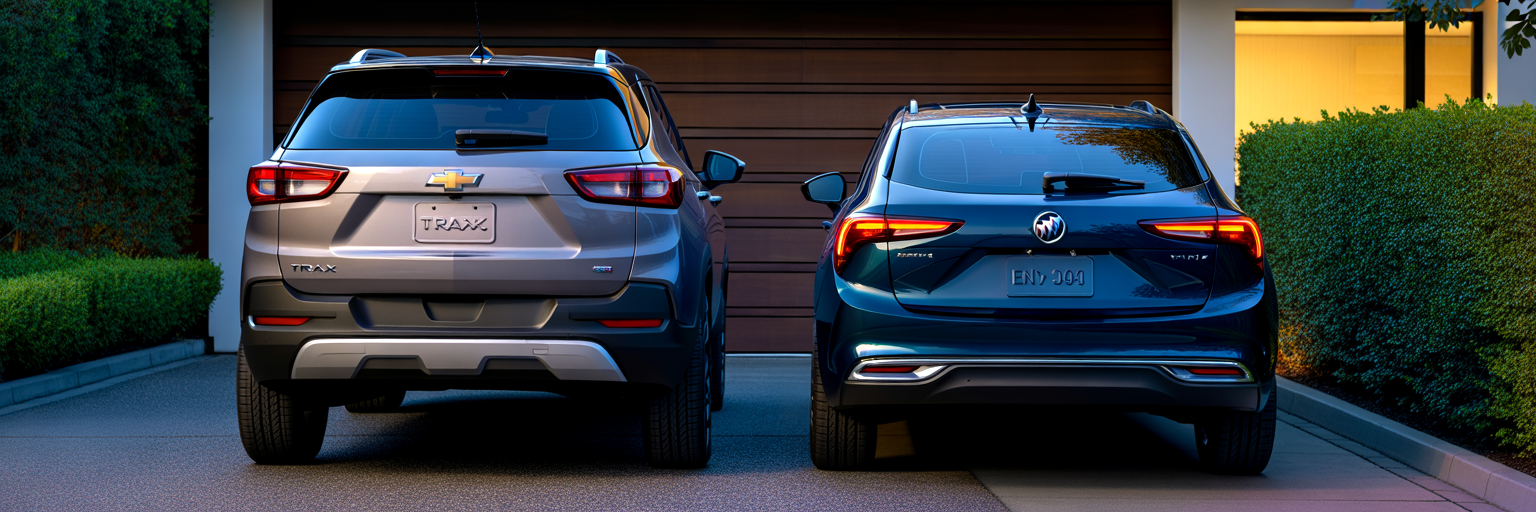
While their mechanical underpinnings are identical, the Trax and Envista present two completely different visual philosophies. This is where the family resemblance ends and their individual characters begin to shine. Chevrolet and Buick have sculpted these vehicles to appeal to entirely separate buyer sensibilities, creating a clear choice between function and fashion.
The Chevrolet Trax embraces a traditional, upright SUV aesthetic. Its design is characterized by a boxy silhouette, a relatively flat roofline, and rugged styling cues like pronounced wheel arches and a confident front grille. This is a function-over-form approach. The shape isn’t just for looks; it’s a direct contributor to the vehicle’s practicality. The tall glasshouse and squared-off rear end create excellent outward visibility and make it easier for passengers to get in and out. The Trax looks like a tool ready for any task, from a weekend hardware store run to packing up for a family road trip. It projects an image of durability and utility.
In stark contrast, the Buick Envista adopts the sleek, flowing lines of a “coupe-over.” Its defining feature is a dramatic, sloping roofline that cascades toward the rear, mimicking the profile of far more expensive luxury sportback models. The design prioritizes elegance and sophistication, with smooth body panels and a refined, premium appearance. The Envista is crafted to be a style statement, a vehicle that looks more expensive than it is and stands out in a crowded parking lot. It trades the ruggedness of a traditional SUV for a more car-like, aerodynamic grace.
This divergence in design leads to tangible, real-world trade-offs. The Trax’s practical shape results in superior rear headroom and a larger, more accessible cargo area. The Envista’s stylish fastback profile, while visually appealing, directly compromises that utility. Rear visibility is more restricted, taller passengers may find the back seat confining, and the cargo opening is less accommodating for bulky items. The choice is clear: the Trax appeals to the pragmatist who needs maximum versatility, while the Envista targets the driver who prioritizes a sophisticated aesthetic and is willing to sacrifice some practicality to get it.
The Cabin Experience: Utility Versus Ambiance
Stepping inside the Trax and Envista reveals interior philosophies that are as different as their exteriors. While both cabins are built around the same digital architecture, the materials, design, and overall atmosphere cater to opposing priorities. One is built for durability and ease of use, the other for comfort and a sense of occasion.
The Chevrolet Trax’s interior is a study in functional design. The dashboard is straightforward and user-friendly, with an emphasis on physical knobs and buttons for climate and audio controls. This tactile approach is appreciated when you need to adjust the temperature or volume without taking your eyes off the road. The materials are primarily hard-wearing plastics, chosen for their longevity and ability to withstand the rigors of daily use, from spilled coffee to muddy shoes. The cloth seats are durable and comfortable, reinforcing the cabin’s purpose as a practical, no-fuss environment. It’s a space designed to work well and last long, not necessarily to impress.
The Buick Envista, on the other hand, immediately signals its premium aspirations. Soft-touch materials adorn the dashboard and door panels, and available leatherette upholstery with contrast stitching adds a layer of sophistication. The dashboard design is more integrated and flowing, creating a cockpit that feels more enveloping and upscale. The centerpiece of the Envista’s premium feel is Buick’s “QuietTuning” technology. This isn’t just a marketing term; it’s a suite of engineering enhancements including acoustic laminated glass, triple-sealed doors, and additional sound-deadening insulation. The result is a cabin that is noticeably quieter, filtering out much of the wind and road noise that is more present in the Trax. This creates a serene and relaxing atmosphere that feels a class above.
While the Envista’s cabin is impressive for its price point, it’s important to frame it as premium-aspirational rather than true luxury. For buyers curious about what separates it from high-end models, our guide on used luxury SUVs offers valuable context. Even with similar screen sizes, the Envista’s infotainment software often features more polished graphics and smoother animations, further reinforcing its upscale positioning. The choice here is between the Trax’s honest utility and the Envista’s curated, comfortable ambiance.
Practicality Measured in Liters and Legroom
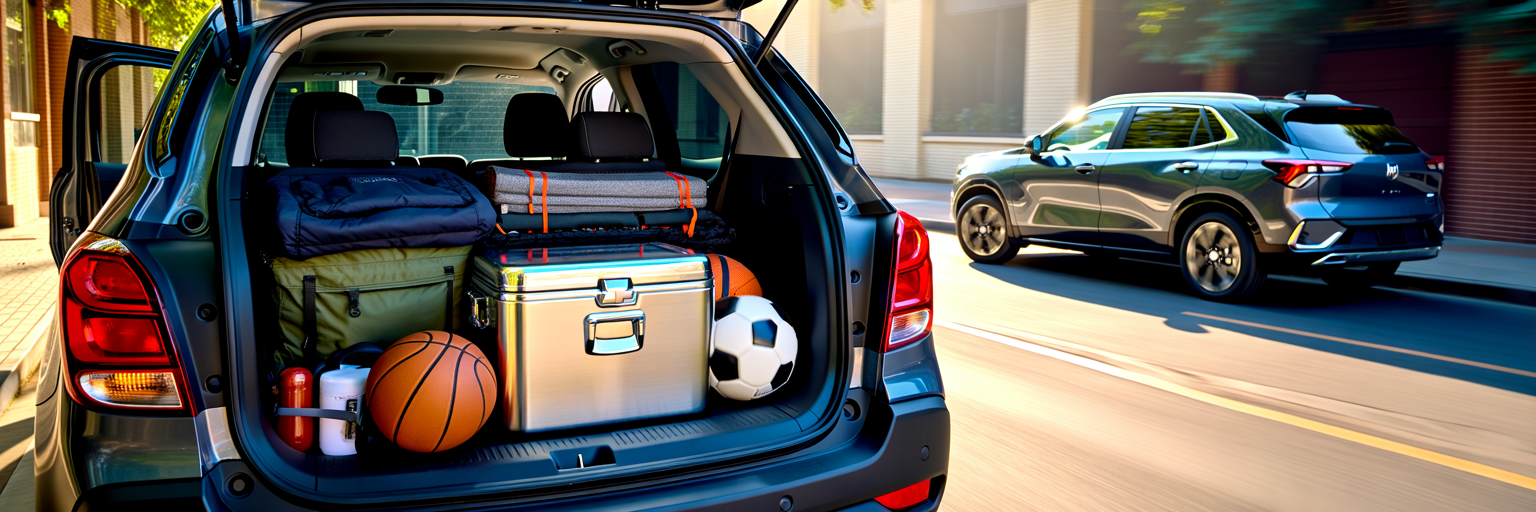
When it comes to pure utility, the numbers tell a compelling story. The design choices made on the exterior directly translate into significant differences in space and practicality, making this a critical part of any small crossover comparison. For many buyers, how much a vehicle can hold is just as important as how it drives.
The most dramatic difference is in cargo capacity. The Chevrolet Trax cargo space is a standout feature, offering up to 1,532 liters with the rear seats folded down. The Buick Envista, due to its sloping roofline, provides a more modest 1,189 liters. To put that into perspective, the Trax’s cavernous hold can easily swallow a flat-pack bookshelf or a couple of large suitcases, while the Envista is better suited for weekly grocery runs and carry-on luggage. It’s not just about volume; it’s about accessibility. The Trax features a wide, tall rear opening and a low load floor, which makes lifting heavy or awkward items like a stroller much simpler. The Envista’s stylish rear glass cuts into the opening, making it difficult to load taller objects.
Passenger space also reflects these design priorities. Because they share the same platform, front and rear legroom are nearly identical in both vehicles, offering generous space for an affordable compact SUV. The critical differentiator is rear headroom. Taller adults will find the back seat of the Trax significantly more comfortable and airy. The Envista’s stylish roofline creates a cozier environment that can feel cramped for anyone over six feet tall, especially on longer journeys. It’s a direct trade-off: the Envista’s sleek look comes at the expense of rear passenger comfort.
Finally, small-item storage reveals a focus on different user needs. The Trax, designed with families and active individuals in mind, tends to offer more thoughtfully placed cubbies, larger door pockets, and a more versatile center console bin. These small details add up, making it a more convenient daily driver for those who carry a lot of gear. Its focus on versatile storage is a key consideration for anyone needing a do-it-all vehicle, similar to the larger options in our full-size SUV comparison. The Envista provides adequate storage, but it’s clear that maximizing every square inch was secondary to creating a clean, uncluttered design.
Decoding Trim Levels and Standard Features
Analyzing the pricing and feature packaging of the Chevrolet Trax vs Buick Envista is key to understanding their true value proposition. Both vehicles offer compelling features for the money, but they go about it in different ways. Chevrolet focuses on accessibility and choice, while Buick bundles more features into a higher starting price.
The Chevrolet Trax employs a five-trim strategy: LS, 1RS, LT, 2RS, and ACTIV. This structure allows Chevrolet to advertise a very low starting price for the base LS model, making it an attractive option for the most budget-conscious buyers. As you move up the trim ladder, you can add more features and distinct styling packages, like the sporty RS or the rugged ACTIV. This gives buyers flexibility to pay only for what they want.
The Buick Envista simplifies things with a three-trim lineup: Preferred, Sport Touring, and Avenir. The entry-level Preferred starts at a higher price than the base Trax, but it justifies that cost with a richer list of standard equipment. For example, features like automatic climate control and more premium upholstery might be standard on the base Envista, while requiring a step up to a mid-tier Trax. The top-tier Avenir trim pushes the Envista into near-luxury territory with exclusive features like perforated leatherette seats, unique interior accents, and a more sophisticated overall finish.
To make this clearer, a direct comparison is helpful.
| Feature | Chevrolet Trax LT | Buick Envista Preferred |
|---|---|---|
| Approx. Starting MSRP | ~$24,000 | ~$25,000 |
| Standard Infotainment Screen | 11-inch touchscreen | 11-inch touchscreen |
| Upholstery | Cloth / Evotex trim | Cloth with Leatherette bolsters |
| Wheels | 17-inch machine-faced aluminum | 17-inch bright silver aluminum |
| Key Standard Feature | Remote Start | Automatic Climate Control |
| Key Available Option | Sunroof, Wireless Charging | Power Liftgate, Sunroof |
Note: Prices and features are illustrative based on current model year data and are subject to change. This table highlights how the Envista’s slightly higher entry price includes more premium-feeling standard materials and features.
One of the most important value points is that General Motors has made core safety non-negotiable. Both the Trax and Envista come standard with a suite of active safety features, including Automatic Emergency Braking, Front Pedestrian Braking, and Lane Keep Assist with Lane Departure Warning. This commitment to safety across all trim levels makes both models a strong contender for the best budget crossover 2026.
On-Road Manners and Driving Comfort
While the engine and transmission are identical, the way the Chevrolet Trax and Buick Envista feel from behind the wheel is remarkably different. Engineers at Chevrolet and Buick have tuned the suspension and chassis to deliver distinct driving experiences that align perfectly with each brand’s identity. This section of the Buick Envista review and Trax comparison focuses purely on those dynamic, on-road sensations.
The Chevrolet Trax offers a ride that can be described as firm and connected. Its suspension is tuned to provide a good sense of control, keeping the body relatively flat through corners and responding directly to steering inputs. The trade-off for this controlled feel is that you will notice more of the road’s imperfections. Bumps, cracks, and rough pavement are more readily transmitted into the cabin. This isn’t necessarily a harsh ride, but it is one that keeps the driver aware of the road surface, fitting its utilitarian and slightly rugged character.
In contrast, the Buick Envista is engineered for serenity. Its suspension is noticeably softer and more compliant, designed specifically to absorb bumps and isolate occupants from the harshness of the road. Driving over the same imperfect pavement in the Envista is a much smoother experience. The car glides over minor disturbances, delivering a more premium and relaxed ride quality. This is where Buick’s focus on comfort truly pays off.
This difference is amplified by Buick’s QuietTuning. From a dynamic perspective, the extra insulation and acoustic glass work to filter out the drone of the engine under acceleration and significantly reduce wind and road noise at highway speeds. This makes the Envista a far more relaxing vehicle for long commutes or road trips. The lack of intrusive noise reduces driver fatigue and creates a peaceful environment. While the Trax is perfectly competent on the highway, the Envista provides a level of quiet refinement that is rare in this price segment. The subjective experience is clear: the Trax offers a direct, competent drive, while the Envista delivers a detached, serene, and comfortable journey.
The Final Verdict: Which Crossover Suits You?
After examining the details, the Chevrolet Trax vs Buick Envista decision comes down to a simple question of personal priorities. Because both vehicles share the same reliable engine, transmission, and comprehensive GM warranty, long-term ownership costs and reliability should be nearly identical. This removes financial risk from the equation and frames the choice as one of lifestyle and taste, not a gamble on mechanical soundness.
For the budget-focused buyer who prioritizes utility above all else, the Chevrolet Trax is the undeniable winner. It offers a massive cargo area, superior passenger headroom, and a practical, durable interior designed to handle the demands of an active life. Its lower starting price and wider range of affordable trims make it the champion of value for those who see their vehicle as a versatile tool. It delivers the most space and capability for the dollar.
Conversely, the Buick Envista is worth the premium for the buyer who values style, refinement, and a quiet, comfortable ride. Its sleek, coupe-like design makes a sophisticated statement, and its upscale interior materials and QuietTuning technology create a driving experience that feels more expensive than it is. It’s the ideal choice for commuters or couples who are willing to trade maximum utility for a more pleasant and polished daily journey. This is the core of our Buick Envista review: it offers a taste of luxury without the luxury price tag.
To help you decide, consider which of these profiles best describes you:
- The Practical Maximizer: You need space for sports gear, home improvement projects, or family outings. You see your vehicle as a functional tool and want the most utility and versatility for your money. You aren’t concerned with premium materials, but with durability and capacity. You should choose the Chevrolet Trax.
- The Style-Conscious Commuter: You want a vehicle that looks sharp and feels refined. Your daily drive is important, and you value a quiet, comfortable cabin for your commute. You rarely need to haul bulky items and are willing to sacrifice some space for a more sophisticated experience. You should choose the Buick Envista.
Ultimately, both are excellent vehicles that prove an affordable compact SUV can still be desirable. For more head-to-head analyses to help you find your next car, you can explore our other vehicle comparisons.