
Modern full-size pickups are more capable than ever, but this capability has come with a literal increase in size. This growth presents a practical challenge for many owners who need to find the easiest pickup bed to reach for daily tasks.
For a driver who is 5-foot-4, retrieving grocery bags, a cooler, or loose tools from the front of the bed can feel like an athletic event. Climbing into the bed for every small item is simply not a practical solution during a busy day. This reality has pushed manufacturers to develop innovative solutions, from integrated steps to complex tailgates, all aimed at improving access. But which systems actually work, and which are just clever marketing?
This article provides a detailed, real-world comparison of the 2026 full-size half-ton truck lineup. We will analyze the Ford F-150, Chevrolet Silverado 1500, GMC Sierra 1500, Ram 1500, and Toyota Tundra. Our focus is not on towing capacity or horsepower, but on the practical ergonomics of bed accessibility. We will examine fundamental measurements like bed-rail height, the design of factory-installed steps, and the usability of multi-function tailgates. The goal is to offer a definitive guide for shorter buyers, helping them identify the best truck for a short person based on everyday use.
The Challenge of Finding the Easiest Pickup Bed to Reach
Modern full-size pickups have become more capable than ever, but this capability has come with a literal increase in size. This growth creates a practical challenge for many owners who use their trucks for daily tasks.
For a 5-foot-4 person, the simple act of retrieving grocery bags, a cooler, or tools from the bed of a new truck can be a frustrating exercise. Climbing into the bed for every small item is not a practical solution. This article’s purpose is to conduct a detailed comparison of the 2026 Ford F-150, Chevrolet Silverado 1500, GMC Sierra 1500, Ram 1500, and Toyota Tundra, focusing specifically on finding the easiest pickup bed to reach. Our analysis will cover everything from fundamental measurements like bed-rail height to the design and usability of factory-installed steps and innovative tailgate systems. The goal is to provide a definitive guide for shorter buyers, helping them find the best truck for a short person based on practical, daily use.
Defining the Key Metrics for Bed Accessibility
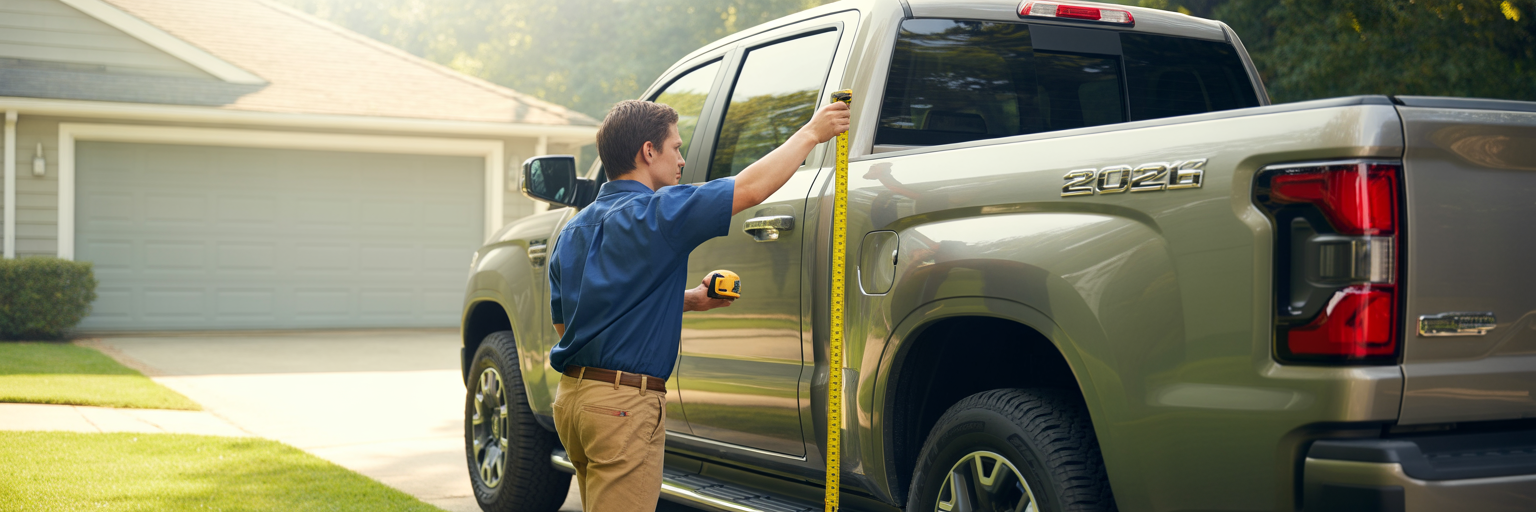
To properly compare these trucks, we need to establish a clear set of metrics. Bed accessibility is more than just one measurement; it is a combination of dimensions and features that work together. Understanding these factors will help you evaluate any truck on a dealer lot.
First is the relationship between bed-floor and bed-rail height. While manufacturers often advertise bed depth, which is the distance from the floor to the top of the rail, the more critical number is the bed-rail height from the ground. This is the true barrier to reaching over the side. Think of it like reaching for an item on a high shelf; a few inches in height makes a significant difference in what you can comfortably grab.
Next is the reach-over distance. This often-overlooked metric is the horizontal distance from the outermost edge of the bedside to the inner wall of the bed. A truck with wide, flat bed rails forces you to lean farther over to retrieve items, even if the rail height itself is manageable. A narrower rail top can make access much easier.
We must also analyze the various factory step systems. These are not all created equal. Corner steps are integrated into the corners of the rear bumper, allowing access from the side. Bumper steps are typically mounted in the center and deploy downward. Side steps are located either behind the cab or in front of the rear wheel well to help access the front of the bed. Finally, tailgate steps are built into the tailgate itself and deploy when it is lowered.
The last key area is the rise of multi-function tailgates. These systems offer more than just a simple fold-down surface. Some split open like barn doors, while others contain smaller, secondary tailgates or integrated steps. We will evaluate whether these complex designs offer a genuine advantage for a shorter user or if they are solutions in search of a problem.
Analysis: 2026 Chevrolet Silverado and GMC Sierra
The General Motors twins, the Chevrolet Silverado and GMC Sierra, approach bed accessibility with a focus on a simple, effective, and standard feature. While they offer more complex solutions, their core strength lies in a design that works for everyone, every day.
The CornerStep Bumper: A Standard Feature That Wins
The standout feature on both the Silverado and Sierra is the CornerStep rear bumper. This design integrates a large, boot-sized step into each corner of the rear bumper, complete with a textured, non-slip surface. This simple feature is a masterclass in practical design. It allows a user to step up securely to reach into the bed from the corner, even with the tailgate closed. This is invaluable for grabbing an item that has slid to the back without having to open the tailgate in a tight parking spot. Our Silverado corner step review finds it to be the most intuitive and frequently used access feature in daily driving. Crucially, its placement at the corners means it remains fully accessible even when towing most conventional trailers, a significant advantage over tailgate-dependent systems.
Multi-Flex and MultiPro Tailgates: Helpful Addition or Overkill?
Both brands offer an optional multi-function tailgate, called Multi-Flex on the Chevy and MultiPro on the GMC. These tailgates offer six distinct functions, including a load stop, a work surface, and an integrated step. While the step feature is sturdy, its necessity is questionable for a shorter owner. The standard CornerStep is so effective for reaching into the bed that deploying a more complex tailgate step often feels like an unnecessary extra motion. For users who need to climb fully into the bed frequently, it is a helpful addition, but for quick retrieval tasks, the bumper is superior.
The Impact of Trim Levels: Why a Trail Boss is a Tall Order
It is critical to note how trim selection affects accessibility. Popular off-road trims like the Silverado Trail Boss and Sierra AT4 add a factory suspension lift of two inches or more, plus larger all-terrain tires. This combination significantly raises the bed-rail height, undoing all the benefits of the well-designed bumper. For any buyer prioritizing bed access, these lifted trims are a poor choice and should be avoided. The same logic applies to other truck comparisons, as we’ve noted in our analysis of models like the Nissan Frontier and Chevrolet Colorado, where off-road packages always come with an accessibility trade-off.
Analysis: 2026 Ford F-150
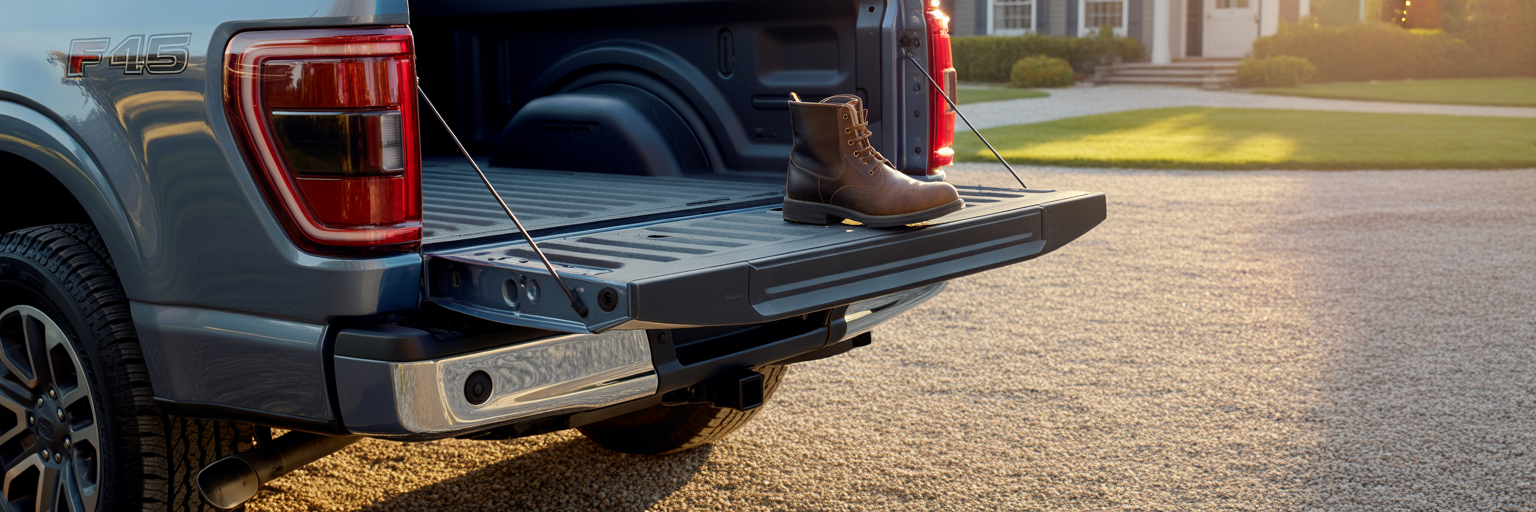
Ford has a long history of offering innovative features on the F-150, and its approach to bed access is no exception. Instead of a simple bumper solution, Ford focuses on features integrated directly into the tailgate, offering a different set of advantages and disadvantages.
The Tailgate Step and Handle: Secure but Situational
The most well-known feature for Ford F-150 bed access is the optional integrated tailgate step. This clever system involves a step that pulls out from the top edge of the lowered tailgate, along with a telescoping grab handle that pops up for stability. When deployed, it is arguably the most secure system on the market for climbing fully into the bed. The handle provides a level of confidence that no other system matches. However, its design comes with a major limitation: it is completely unusable unless the tailgate is fully lowered. This makes it impractical for grabbing a quick item in a tight garage, a parallel parking spot, or when hitched to a trailer. It is a great solution for a specific problem, but not for everyday, casual access.
Pro Access Tailgate: A New Angle on Access
For 2026, Ford continues to offer its Pro Access Tailgate. This feature adds a side-hinged, 37-inch-wide swing door to the center of the traditional drop-down tailgate. The promise is that by opening this door, a user can stand closer to the bed’s interior, reducing the reach needed to grab items. For a 5-foot-4 person, this does provide a marginal improvement for items located directly behind the swing door. However, it does little to help reach cargo at the far front of the bed near the cab. It is a useful feature but not a complete solution to the reach problem.
Side Access Solutions
Ford also offers an optional, deployable side step that extends from underneath the bed just behind the cab. This is specifically designed to help with accessing the front half of the bed. It is effective and provides a much-needed solution for reaching items that have slid forward. However, like the tailgate step, it is an optional extra that adds to the cost of the truck. Without this option, side access on the F-150 is challenging due to its relatively high bed sides on many trims.
Analysis: 2026 Ram 1500
The Ram 1500 has built its reputation on ride comfort and interior luxury, but it also brings unique ideas to the bed accessibility challenge. Its solutions center on a different kind of multi-function tailgate and an optional suspension system that directly addresses vehicle height.
The Multifunction Tailgate: Swinging for the Fences
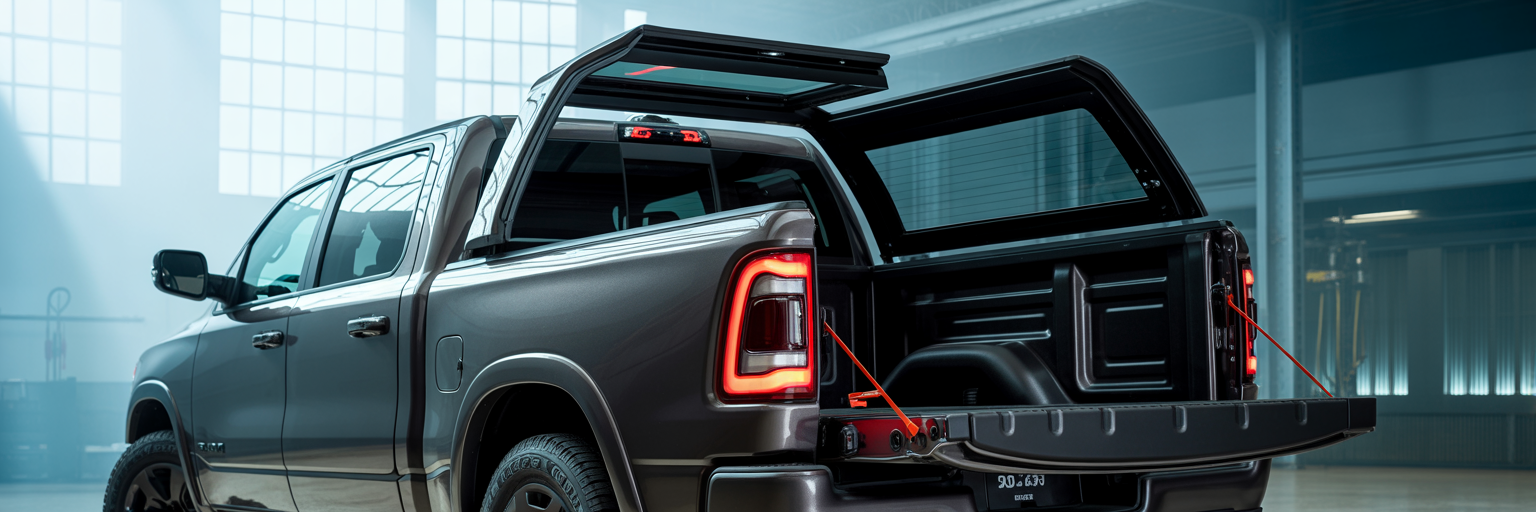
Ram’s primary access feature is its optional Multifunction Tailgate. Unlike a traditional tailgate, it can also open as a pair of 60/40 split, side-hinged doors. The core idea is to let you walk right up to the bed floor without having to lean over a lowered tailgate. For a shorter person, this design has a distinct advantage. Standing in the space normally occupied by the tailgate significantly improves the ability to reach cargo deeper inside the bed. This makes the Ram multifunction tailgate for short people a genuinely helpful feature, especially when compared to reaching over a tall, flat tailgate. It directly shortens the horizontal distance to your target.
The Center Bumper Step: A Different Approach
To supplement its tailgate, Ram offers an optional retractable bed step. This step deploys from under the center of the rear bumper with a push of your foot. While it provides a helpful boost, its central location is less versatile than the corner placement on the GM trucks. It cannot be used as effectively from the side and can be awkward to use when trying to reach into the corners of the bed. It is a solid, sturdy step but lacks the intuitive, always-on convenience of the CornerStep design.
Suspension’s Role in Accessibility
A key differentiator for the Ram 1500 is its suspension. It comes standard with a coil-spring rear suspension that provides a comfortable ride, but the real advantage for shorter owners is the optional Active-Level Four-Corner Air Suspension. This system includes an “entry/exit” mode that automatically lowers the truck by about two inches when parked. This feature directly reduces both bed-rail height and step-in height, making it one of the few trucks that can actively change its dimensions to improve accessibility. This makes a significant difference and can turn a challenging reach into a manageable one, a feature worth exploring for anyone browsing different types of trucks.
Analysis: 2026 Toyota Tundra
The 2026 Toyota Tundra stands apart from its American competitors with a more straightforward, traditional approach to its truck bed. It forgoes complex tailgate mechanisms in favor of a simpler design, which has both benefits and drawbacks for a shorter owner.
The Tundra features a standard composite-lined bed, which is durable and corrosion-proof. In its base SR and SR5 trims, the Tundra’s default ride height is competitive, but its bed sides are notably tall. This creates a significant barrier for reaching over from the side. To address this, Toyota offers a small, manually deployable step at the driver’s side rear corner. You kick it down to deploy and kick it up to retract. While functional, the step is small and feels less substantial than the integrated solutions from GM. It is a functional but less elegant alternative, feeling more like an add-on than a core part of the design.
A defining characteristic of the Tundra is its lack of a multi-function tailgate option. The tailgate is a simple, dampened drop-down unit. For users seeking maximum accessibility aids, this simplicity is a clear drawback. There is no integrated step, no swing-out door, and no work-surface configuration. This means that all access must come from reaching over the tall sides or climbing onto the lowered tailgate. As with all trucks, it is crucial to pay attention to the trim. The popular TRD Pro models significantly increase the ride height with specialized suspension and larger tires, making them particularly challenging for shorter owners and a poor choice for anyone prioritizing reach.
Comparing the Access Systems Head-to-Head
With each manufacturer offering a different philosophy on bed access, a direct comparison is necessary to declare a winner. The 2026 pickup bed height comparison reveals that the best solution depends heavily on the specific task at hand.
For quick, daily access from the rear, the Chevrolet Silverado and GMC Sierra are the undisputed champions. The standard CornerStep bumper is the most intuitive and practical feature in this class. It works with the tailgate up or down and remains usable when towing. It requires no special procedure and is always there when you need it.
When it comes to actually climbing into the bed, the Ford F-150’s optional integrated tailgate step and handle provide the most secure and confidence-inspiring experience. However, its reliance on a fully lowered tailgate makes it situational. The Ram Multifunction Tailgate offers a compelling alternative, allowing a user to stand much closer to the bed, while the optional air suspension provides the unique ability to lower the entire truck.
Side access remains the most difficult task for all models. Reaching over the tall bed sides is a challenge for a 5-foot-4 person on any of these trucks. Optional side steps, like those offered by Ford, are helpful but add cost and are not a perfect fix. This is where the lowest possible bed-rail height becomes the most important factor.
| Access Feature | Chevrolet/GMC | Ford | Ram | Toyota |
|---|---|---|---|---|
| Standard Rear Step | Yes (CornerStep) | No | No | No |
| Optional Tailgate Step | Yes (Multi-Flex/Pro) | Yes (Integrated) | No | No |
| Optional Bumper Step | N/A | No | Yes (Center) | Yes (Corner) |
| Multi-Function Tailgate | Yes (Optional) | Yes (Optional) | Yes (Optional) | No |
This table summarizes the availability of key accessibility features across the 2026 half-ton lineup. ‘Standard’ indicates the feature is included on most trims without extra cost.
This entire head-to-head battle, which you can explore further on our main vehicle comparison page, highlights a crucial distinction. A truck with a slightly taller bed but an excellent step system, like a base Silverado, can be far more practical than the absolute lowest truck that has no steps at all. The best system is the one you can use without a second thought.
How Trims, Tires, and Tonneaus Affect Your Reach
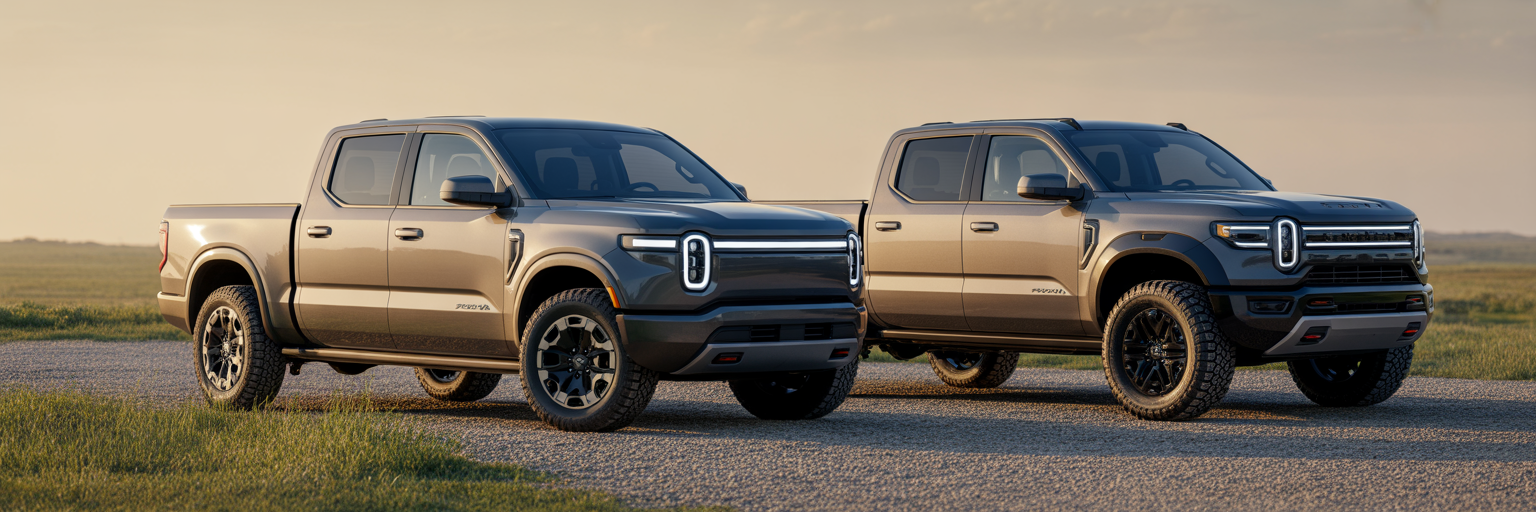
Choosing the right manufacturer is only half the battle. Your choices at the dealership regarding trim, packages, and accessories can make or break your truck’s accessibility.
First and foremost, avoid off-road packages if reach is your top priority. Trims like the F-150 Tremor, Ram Rebel, Tundra TRD Pro, and the Silverado/Sierra Trail Boss/AT4 variants are incredibly popular and capable. However, the 2 to 4 inches of suspension lift and larger tires they include directly harm bed accessibility. That height increase should be a dealbreaker for any buyer focused on ease of use. This principle holds true even when comparing different types of off-road trucks, as seen in our Jeep Gladiator vs. Toyota Tacoma analysis.
Tonneau covers also have a significant impact. While they are great for security and weather protection, their design affects access.
- Hard-folding or one-piece covers make reaching over the side nearly impossible. They also limit the utility of corner steps, as you cannot easily reach under the closed cover from the step.
- Retractable or soft roll-up covers are better options for accessibility. They can be partially opened, allowing you to use a side or corner step to access a portion of the bed without having to open the entire cover and tailgate.
To get the lowest possible bed height from the factory, stick with a base or mid-level trim like an XL, XLT, WT, LT, or Tradesman, preferably in a two-wheel-drive configuration. If you must have a taller truck, aftermarket solutions like automatic running boards can provide a step, but they are an expensive addition.
The Verdict: Best 2026 Pickup for a 5-Foot-4 Owner
After analyzing the dimensions, features, and practical usability of each 2026 half-ton pickup, we can now deliver a final verdict. For a 5-foot-4 owner, the choice comes down to which truck best solves the challenges of daily use.
- Lowest Bed: In its most basic 2WD, regular cab configuration, the Ford F-150 or Chevrolet Silverado typically offers the lowest absolute bed-rail height from the factory. However, this can vary by a fraction of an inch depending on specific options.
- Easiest Bed to Reach Over From the Side: This is the toughest category for all, but the edge again goes to the lowest-possible configuration of a base model F-150 or Silverado, where every inch of reduced height matters.
- Best Rear Bumper Step: The Chevrolet Silverado and GMC Sierra are the clear winners. The standard CornerStep is simple, effective, and always available, making it the most practical solution for daily use.
- Best Tailgate Step: The Ford F-150’s integrated step and handle system is the most secure and confidence-inspiring for climbing fully into the bed, though its dependency on a lowered tailgate limits its versatility.
- Best Option Without Additional Accessories: The Chevrolet Silverado or GMC Sierra wins this category easily. The CornerStep bumper is standard on most trims, providing excellent access right off the lot without needing to check a single option box.
Considering all these factors, the best overall truck for a shorter owner is the 2026 Chevrolet Silverado 1500 or GMC Sierra 1500 in a non-lifted trim like an LT or RST. This choice represents the best truck for a short person because it delivers an unbeatable combination of a reasonable factory ride height and the most practical, always-available step system for the everyday tasks that challenge a 5-foot-4 owner. The CornerStep is a simple, elegant solution that makes living with a full-size truck significantly easier. While other trucks offer more complex and expensive solutions, the GM twins provide the best out-of-the-box experience. For those considering other options, our guide to the top reliable used trucks under $25,000 can offer budget-friendly alternatives.