
That momentary pulse from your headlights on a dark road is more than just a minor annoyance; it’s your vehicle’s way of signaling an issue within its electrical system. If you’ve found yourself wondering, “why do my headlights flicker,” you’re right to be concerned. This symptom is a critical warning sign that points to an unstable electrical supply, and ignoring it can lead to bigger problems.
Flickering, pulsing, or dimming lights are all symptoms of the same root cause: inconsistent voltage. Understanding the source requires looking at the main components involved in your car’s lighting. Think of them as a team. The battery acts as the power reservoir, providing the initial energy to start the car and stabilizing the system. The alternator is the generator, recharging the battery and powering everything while the engine is running. Finally, the wiring and control modules form the distribution network that delivers electricity where it’s needed.
When one part of this team falters, the lights are often the first to show it. The specific behavior of the flicker provides valuable clues for diagnosis, helping you narrow down the potential culprits. Addressing the issue promptly is essential for safety. Flickering lights can compromise your visibility at night and may be a precursor to a complete lighting failure or even a no-start condition that leaves you stranded.
Understanding Why Your Headlights Flicker
That momentary pulse or flicker from your headlights on a dark road is more than just a minor annoyance; it’s your vehicle’s way of signaling an issue within its electrical system. If you’ve found yourself wondering, why do my headlights flicker, you’re right to be concerned. This symptom is a critical warning sign that points to an unstable electrical supply, and ignoring it can lead to bigger problems.
Flickering, pulsing, or dimming lights are all symptoms of the same root cause: inconsistent voltage. Understanding the source requires looking at the main components involved in your car’s lighting. Think of them as a team. The battery acts as the power reservoir, providing the initial energy to start the car and stabilizing the system. The alternator is the generator, recharging the battery and powering everything while the engine is running. Finally, the wiring and control modules form the distribution network that delivers electricity where it’s needed.
When one part of this team falters, the lights are often the first to show it. The specific behavior of the flicker provides valuable clues for diagnosis, helping you narrow down the potential culprits. Addressing the issue promptly is essential for safety. Flickering lights can compromise your visibility at night and may be a precursor to a complete lighting failure or even a no-start condition that leaves you stranded.
Decoding the Flicker: What the Timing Tells You

The most important clue in diagnosing flickering headlights is observing exactly when it happens. The timing and conditions of the flicker can quickly point you toward the source of the problem, saving you time and frustration. Whether your car lights flicker when driving or only at a standstill, each scenario tells a different story about your vehicle’s electrical health.
Flickering at Idle
If your headlights are steady while driving but pulse or dim when you’re stopped at a light, the issue often lies with the charging system’s output at low engine speeds. This typically points to a struggling alternator that cannot produce enough current at idle to meet the car’s electrical demands. A weak or aging battery that can no longer effectively buffer these power fluctuations can also cause this symptom.
Flickering Over Bumps
When headlights flicker only when you hit a pothole or drive over a rough patch of road, the cause is almost always a loose physical connection. The jolt from the bump is enough to momentarily break an electrical circuit. The most common culprits are a loose battery terminal, a corroded or loose ground wire connecting the engine or battery to the chassis, or damaged wiring that is making intermittent contact. This is especially true for vehicles not designed for rough terrain, unlike purpose-built models in our Jeep Gladiator vs. Toyota Tacoma comparison.
Flickering When Revving the Engine
Do your lights flicker or get brighter as you press the accelerator? This behavior strongly suggests a failing voltage regulator. This component, usually located inside the alternator, is responsible for maintaining a steady and safe voltage level across the electrical system. When it fails, it can no longer manage the increased output from the alternator as engine RPMs rise, causing voltage to become unstable.
Flickering with Accessories
If your headlights dim or flicker the moment you turn on the air conditioning, crank up the stereo, or use your turn signals, it indicates the alternator is being pushed to its limit. The extra electrical load from these accessories is more than the charging system can handle. This points toward a failing alternator that has lost its ability to produce its rated amperage or, in some cases, high resistance in a specific circuit that is drawing excessive power.
Only One Headlight Flickers
When the flicker is isolated to a single headlight, you can breathe a small sigh of relief. This almost certainly means the problem is not with your car’s main charging system. Instead, the fault is localized to that specific headlight assembly. The issue could be a failing bulb, a corroded socket, faulty wiring leading to that light, or a bad component like an HID ballast or LED driver.
| When the Flicker Occurs | Most Likely Cause | What It Means |
|---|---|---|
| Only at Idle | Weak Alternator or Failing Battery | The charging system is struggling to meet the car’s basic electrical needs at low engine speed. |
| When Driving Over Bumps | Loose Connection | A physical jolt is interrupting the flow of electricity, likely from a bad ground, battery terminal, or damaged wire. |
| When Revving the Engine | Failing Voltage Regulator | The component meant to stabilize power output is malfunctioning, causing voltage to fluctuate with RPMs. |
| When Using Accessories (A/C, Stereo) | Overloaded Alternator | The alternator cannot produce enough power to run the vehicle and the extra accessories simultaneously. |
| Only One Headlight Flickers | Isolated Headlight Fault | The problem is with the bulb, socket, ballast/driver, or wiring for that specific light, not the whole car’s electrical system. |
This table summarizes the most common scenarios for flickering headlights. Use it as a starting point to narrow down your diagnosis before performing any hands-on checks.
System-Wide Problem or Isolated Fault?
After observing when the flicker occurs, the next critical diagnostic step is to determine the scope of the problem. Are you dealing with an issue affecting the entire vehicle, or is it confined to the headlight circuit? Answering this question will guide you toward the correct troubleshooting path and prevent you from chasing the wrong components.
The easiest way to do this is with the “Interior Lights Test.” While the headlights are flickering, pay close attention to the other lights in your car. Look at your dashboard illumination, the dome light, and the radio or infotainment display. Do they dim, pulse, or flicker in sync with the headlights? If the answer is yes, you have a system-wide electrical problem. This indicates the fault lies with a core component that powers the entire vehicle, such as the alternator, the battery, or the main ground connections. A system-wide issue is generally more urgent and requires immediate attention.
Conversely, if the headlights flicker while all the interior lights remain perfectly steady, you can confirm the problem is an isolated fault. This means the charging system is likely healthy, and the issue is limited to the headlight circuit itself. In this scenario, the potential culprits are narrowed down to parts like a specific headlight relay, a bad connection in the headlight wiring harness, or a fault within both headlight assemblies. This distinction is a key part of troubleshooting car electrical problems, as it separates a major charging system failure from a more contained wiring or component issue.
Investigating the Charging System: The Usual Suspects
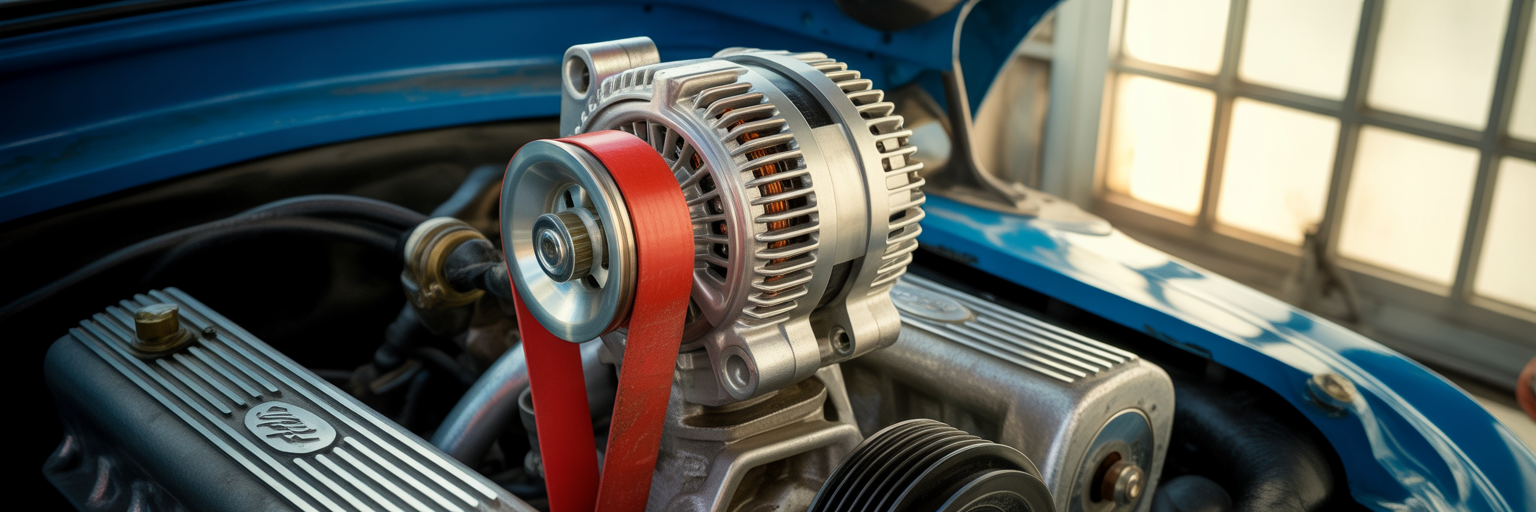
If you’ve determined you have a system-wide electrical issue, your investigation should focus on the core components of the charging system. These parts work together to generate, store, and regulate your vehicle’s power, and a failure in any one of them can cause flickering lights and other electrical gremlins.
The Alternator: The Heart of Your Electrical System
The alternator is the car’s power generator, converting mechanical energy from the engine into electrical energy. When it begins to fail, it can no longer produce a consistent current, with the alternator causing lights to flicker being a classic symptom. Other signs of a bad alternator include a whining or grinding noise that changes with engine speed, the smell of burning rubber or hot wires, or a dashboard warning light shaped like a battery or labeled “ALT” or “GEN.”
The Voltage Regulator: The System’s Gatekeeper
Often built directly into the alternator, the voltage regulator’s job is to maintain a stable voltage, typically between 13.5 and 14.5 volts when the engine is running. If the regulator fails, it can cause voltage to fluctuate wildly. This can manifest as either dim, flickering lights (under-voltage) or excessively bright, pulsing lights that burn out quickly (over-voltage). The latter is particularly dangerous, as it can damage sensitive electronics throughout the vehicle.
The Battery and Its Connections: The Foundation
While the alternator generates power, the battery acts as a crucial buffer, smoothing out voltage fluctuations and providing power when the engine is off. An old, weak battery may not be able to absorb these fluctuations, leading to flickering. More commonly, the problem is simpler: the battery connections. Corroded or loose terminals create high resistance, impeding the flow of electricity to and from the battery. A visual inspection of the terminals is always a good first step.
The Accessory/Serpentine Belt: The Driving Force
The alternator is driven by a belt connected to the engine’s crankshaft, known as the serpentine or accessory belt. If this belt is worn, cracked, or has lost its tension, it can slip on the alternator pulley. This slippage results in inconsistent rotation of the alternator, causing erratic power generation and flickering lights. You might also hear a squealing sound, especially on startup or when electrical loads are high. Properly maintaining these components is part of a larger strategy for engine longevity, and you can learn more about how to keep your car’s engine running for years.
Engine and Chassis Grounds: The Unsung Heroes
For electricity to flow, it needs a complete circuit, and ground connections provide the return path to the battery. These ground straps, which connect the engine and other components to the vehicle’s frame, are critical. If a primary ground strap is corroded, loose, or broken, it can cause all sorts of bizarre electrical issues, including flickering lights. As noted in a guide on common car electrical problems, checking for loose chassis or engine ground connections is a key step when flickering occurs over bumps.
Diagnosing Faults in a Single Headlight
If your troubleshooting has led you to an isolated fault affecting only one headlight, you can ignore the main charging system and focus on the components specific to that light assembly. This is often a more straightforward and less expensive problem to solve. The approach to how to fix flickering headlights in this case depends on the type of lighting technology your vehicle uses.
Conventional Halogen Bulbs
Halogen bulbs are the simplest of the bunch. Typically, they just burn out and stop working. However, in some cases, the delicate filament inside the bulb can become damaged or break, causing it to flicker intermittently before it fails completely. If you have a flickering halogen, the easiest first step is to simply replace the bulb.
HID (High-Intensity Discharge) Systems
HID headlights are more complex and rely on a component called a ballast to operate. The ballast takes the car’s 12-volt power and transforms it into a high-voltage pulse to ignite the xenon gas in the bulb, then regulates the current to keep it lit. A failing ballast is the most common cause of a flickering HID headlight. Other symptoms include the light changing color (often turning pink or purple), taking a long time to turn on, or shutting off intermittently.
LED (Light-Emitting Diode) Systems
Modern LED headlights use a component called a driver, which functions similarly to an HID ballast. The driver regulates the voltage and current supplied to the LED emitters. A faulty driver will cause the LED headlight to flicker, dim, or fail to turn on. In many modern cars, the LED driver is integrated into the headlight assembly, which can make replacement more complex and costly.
Bulb Sockets and Connectors
Regardless of the bulb type, the socket it plugs into can be a point of failure. Over time, moisture can cause corrosion on the electrical contacts, creating a poor connection that leads to flickering. The heat generated by headlights can also cause the plastic socket or connector to become brittle, melt, or deform, resulting in a loose fit. A visual inspection for discoloration, melting, or a green, powdery residue is a good diagnostic step.
Localized Wiring Damage
The wiring that runs from the main harness to the individual headlight assembly can also be the source of the problem. Wires can become frayed from rubbing against a sharp edge in the engine bay, or they could have been damaged in a minor front-end collision. This damage can create a short or an intermittent open circuit, causing the light to flicker. These types of electrical issues become more common with age, which helps explain why some high-mileage cars age better than others depending on their initial build quality and maintenance history.
Safe DIY Checks You Can Perform at Home

Before heading to a mechanic, there are several safe and effective checks you can perform with basic tools to help diagnose the source of your flickering headlights. Always prioritize safety: turn the engine off and consider disconnecting the negative battery terminal before inspecting wiring, and be cautious of moving parts if the engine is running.
- Visual Inspection: Start with the basics. Open the hood and carefully inspect the battery terminals. Look for any white or greenish powder, which indicates corrosion. Clean it off with a wire brush and a mixture of baking soda and water. Ensure the terminal clamps are tight and cannot be wiggled by hand. Next, trace the thick black cable from the negative battery terminal to where it bolts to the car’s frame and engine block. These are the main grounds. Check that these connections are clean, tight, and free of rust.
- Using a Multimeter: A simple multimeter is an invaluable tool. Set it to DC Volts (V⎓). With the engine off, touch the red probe to the positive battery terminal and the black probe to the negative terminal. A healthy, fully charged battery should read around 12.4 to 12.6 volts. A reading below 12.2 volts may indicate a weak car battery causing lights to dim or flicker. Next, start the engine. The voltage should jump to between 13.5 and 14.5 volts. This shows the alternator is charging. If the voltage is wildly fluctuating or stays near the battery’s resting voltage, the alternator or voltage regulator is likely faulty.
- The Load Test: With the engine running and the multimeter still connected, have a helper turn on all major electrical accessories: high beams, A/C on full blast, wipers, and the radio. The voltage on a healthy system should dip slightly but remain stable, ideally above 13.0 volts. If the voltage drops significantly or begins to fluctuate, it’s a clear sign the alternator cannot keep up with the demand.
- Pay Attention to Dashboard Warnings: Never ignore your car’s built-in diagnostic system. A persistent battery light or a message like “Check Charging System” is a direct signal that the vehicle’s computer has detected a fault. This confirms you have a problem that needs to be addressed.
Performing these simple checks is a great habit for any car owner. It empowers you with information, whether you plan to fix the issue yourself or explain the symptoms to a professional. This proactive approach is just as important as finding the right vehicle in the first place, such as one of the best used cars for first-time buyers under $12,000.
Knowing When to Park It: Risks and Professional Repair
While some causes of flickering headlights are minor, others are precursors to serious failures that can compromise your safety. It is crucial to understand the risks of ignoring the problem and to recognize when it’s time to stop driving and seek professional help.
The first major risk is being stranded. A flickering light is often the first sign of a failing alternator. If the alternator gives out completely, it will no longer recharge the battery. The car will continue to run on battery power alone for a short time until the battery is depleted, at which point the engine will die, leaving you stuck on the side of the road.
The second risk is a sudden blackout. A flicker can quickly escalate to a complete and unexpected headlight failure. Losing all forward illumination while driving at night on an unlit road is an extremely dangerous situation that can easily lead to an accident. This safety risk alone is reason enough to take the symptom seriously.
Finally, there is the risk of damage to other electronics. A faulty voltage regulator can cause voltage spikes, sending excessive power through your car’s electrical system. These surges can fry expensive and sensitive electronic modules, such as the engine control unit (ECU), transmission controller, or infotainment system, turning a relatively inexpensive alternator repair into a multi-thousand-dollar ordeal. Avoiding these stressful situations starts with owning a dependable vehicle, which is why many buyers look for the top reliable used trucks under $25,000.
For your safety, park the vehicle and have it inspected if you notice any of these red flags:
- The flickering is accompanied by a grinding or whining noise from the engine bay.
- A battery or alternator warning light is persistently illuminated on your dashboard.
- You smell burning rubber or the distinct odor of an electrical fire.
- The lights are getting progressively dimmer each time you drive.
In these situations, the safest and most cost-effective choice is to stop driving and consult a qualified mechanic. They have the diagnostic tools to pinpoint the exact cause and prevent a minor annoyance from becoming a major failure.