
Defining Range and Value in the 2025 EV Market
The average American drives about 40 miles per day, a distance nearly every electric vehicle on the market can handle with ease. This simple fact often gets lost in the conversation about EV ownership. The discussion in 2025 is no longer about whether an EV can manage your daily commute. It is about the freedom to go further, less often.
When we talk about “long range,” we are referring to the capacity for spontaneous road trips and the convenience of charging just once or twice a week instead of daily. For today’s market, a practical benchmark for long range starts around 250 to 300 miles. This is the sweet spot that transforms an EV from a city car into a do everything vehicle. Similarly, “affordable” needs context. With the average new car price hovering near $48,000 in the United States, we are focusing on models that fall below the $45,000 mark before any incentives.
This brings us to range anxiety, the persistent fear of running out of power. While it remains a primary concern for potential buyers, it is becoming more of a psychological barrier than a practical one. Battery technology has improved dramatically, and the charging network is expanding. However, it is important to have realistic expectations. Real world range is not a fixed number. As a study from Recurrent Auto highlights, factors like cold weather can have a noticeable impact, potentially reducing an EV’s range by about 20%. Understanding these variables is key to finding the right long range affordable electric cars for your needs.
Top Budget-Friendly EVs That Go the Distance

With those benchmarks for range and price in mind, the market offers several compelling options. These vehicles prove that you no longer need a six figure budget to get an EV that handles both daily errands and long haul journeys. Here are some of the top contenders for the best budget EV 2025.
Chevrolet Equinox EV: The Practical Family SUV
The Chevrolet Equinox EV has quickly become a standout by delivering exactly what most American families need. It offers a spacious, practical SUV body with an impressive EPA estimated range of 319 miles on front wheel drive models. Starting well under our $45,000 affordability cap, it packages this capability with familiar, user friendly technology. It is not trying to be a spaceship. It is designed to be a dependable family vehicle that just happens to be electric, making the transition feel seamless for many buyers.
Hyundai Ioniq 5: Style and Ultra-Fast Charging
The Hyundai Ioniq 5 looks like it drove off a concept car showroom floor, but its most impressive feature is its 800-volt architecture. This technology is typically found on much more expensive EVs. What does it mean for you? At a compatible DC fast charger, the Ioniq 5 can charge from 10% to 80% in as little as 18 minutes. That is just enough time to grab a coffee and stretch your legs on a road trip. With a range of up to 303 miles, its combination of futuristic style and groundbreaking charging speed makes it a top choice.
Kia EV6: The Sporty and Engaging Choice
Built on the same platform as the Ioniq 5, the Kia EV6 offers a different flavor. Where the Hyundai prioritizes comfort and space, the EV6 delivers a sportier, more driver focused experience. Its sleek, athletic design is matched by more responsive handling, making it feel more like a sport sedan than an SUV. It also boasts an excellent range of up to 310 miles and the same fast charging capabilities as its corporate cousin, appealing to those who want their practical EV to have a bit of personality on winding roads.
Tesla Model 3: The Established Benchmark
No list would be complete without the Tesla Model 3. While its price often sits at the very top of our “affordable” bracket, its influence is undeniable. The Model 3 offers a minimalist interior, cutting edge software, and access to Tesla’s extensive and reliable Supercharger network. For many, the peace of mind that comes with the most established charging network in the country is worth the premium. The base model provides a solid 272 miles of range, making it a strong, if pricier, contender.
A Look Ahead: The 2026 Nissan LEAF
The original mass market EV is getting a major redesign for 2026. The next generation Nissan LEAF is expected to transform from a hatchback into a sleek crossover coupe, with a projected range of around 303 miles. This move shows how rapidly the market is advancing, promising even more options for buyers in the near future. For those wanting to see more of what is available today, you can explore our broader category on electric vehicles for a wider range of choices.
The Reality of Charging Your Electric Vehicle in the US
Owning one of these impressive EVs means shifting your mindset from “filling up” at a gas station to “topping up” your battery. The experience is different, but it quickly becomes a simple routine. The vast majority of charging does not happen on a road trip, it happens while you sleep.
Home Charging: Your Primary Fueling Station
Think of your home charger as your personal gas station. Every EV comes with a Level 1 charger, which plugs into a standard 120V wall outlet. This is the slowest method, adding only 3 to 5 miles of range per hour. It works for some, but for most owners, a Level 2 charger is a necessary investment. This 240V unit, similar to what an electric dryer uses, can fully charge most EVs overnight, ensuring you start every day with a full “tank.”
Navigating the Public Charging Network
When you are away from home, the public EV charging infrastructure USA comes into play. You will find Level 2 chargers at destinations like shopping centers, offices, and hotels, which are great for adding some range while you are parked. For long distance travel, DC Fast Chargers are essential. These high powered stations can add hundreds of miles of range in under 30 minutes, depending on the car. A vehicle like the Hyundai Ioniq 5 is built to take full advantage of these powerful chargers.
Understanding Connectors and Speeds
For years, the public charging network was split between two main connector types: CCS, used by most automakers, and NACS, used by Tesla. However, the industry is now rapidly consolidating around Tesla’s NACS standard. This is good news for consumers, as it will simplify the charging experience for everyone. To stay current on these developments, you can always check our news section for the latest updates on charging technology and network expansions. In the meantime, apps like PlugShare are indispensable, showing you available chargers, connector types, and user reviews in real time.
Calculating the True Cost of EV Ownership
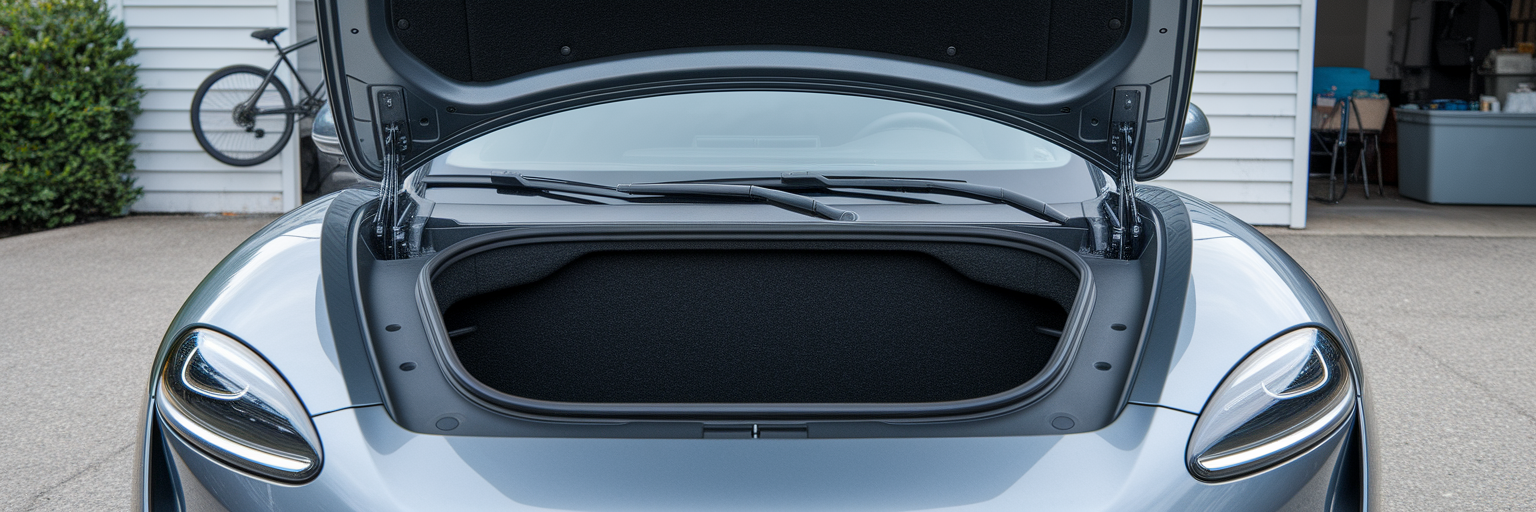
The sticker price is only the beginning of the story. To understand the real financial picture, you have to look at the total cost of ownership. This is where electric vehicles begin to show a significant advantage over their gasoline counterparts.
The most immediate savings come from reduced electric car maintenance costs. With no engine oil to change, spark plugs to replace, or exhaust systems to repair, the service schedule for an EV is much simpler. You still have tires, brakes, and cabin air filters to think about, but you can say goodbye to the routine engine upkeep that adds up over time. This is a stark contrast to the litany of issues that can sideline a traditional engine, which often leave you wondering why your car will not start.
Fuel savings are another major factor. Charging an EV at home, especially during off peak hours, is significantly cheaper than buying gasoline. The exact savings depend on your local electricity rates and gas prices, but most owners spend a fraction of what they used to on fuel. Furthermore, federal and state tax credits can reduce the initial purchase price by thousands, though it is crucial to check current eligibility rules as they can change. Finally, concerns about battery longevity are often overstated. Most manufacturers offer an 8 year or 100,000 mile warranty on the battery, and the cost of replacement is steadily declining.
| Cost Factor | Electric Vehicle (e.g., Chevy Equinox EV) | Gasoline Vehicle (e.g., Chevy Equinox) |
|---|---|---|
| Annual Fuel/Energy Cost | ~$650 | ~$2,100 |
| Routine Maintenance | ~$300 (Tires, filters, inspections) | ~$750 (Oil changes, filters, tires, inspections) |
| Federal Tax Credit (if eligible) | Up to $7,500 (one-time) | $0 |
| Estimated First-Year Savings | Significant, especially with tax credit | |
Note: Fuel/energy costs are based on 15,000 miles driven per year, with electricity at $0.17/kWh and gasoline at $3.50/gallon. Maintenance costs are estimates for routine services. Tax credit eligibility depends on multiple factors.
Is an Electric Vehicle Right for You?
After considering the cars, the charging, and the costs, the final question is a personal one. An EV is a fantastic choice for many, but it is not yet the perfect solution for everyone. A balanced look at the pros and cons of electric cars can help you decide.
On one hand, the benefits are compelling:
- A better driving experience: The silent, instant acceleration and smooth ride are things owners consistently praise.
- Lower running costs: Significant savings on fuel and maintenance add up over the life of the car.
- Zero tailpipe emissions: You are contributing to cleaner air in your community.
On the other hand, there are practical limitations to consider:
- Higher initial purchase price: Even with incentives, EVs often cost more upfront than comparable gas cars.
- Charging time: A 20 minute fast charge is remarkable, but it is still longer than a 5 minute gas station stop.
- Range in extreme weather: As mentioned, cold can reduce range, which requires more planning in winter.
Ask yourself a few direct questions. Do you have a consistent place to install a home charger, like a garage or driveway? Are your typical long distance routes well served by DC fast chargers? Does the upfront cost, even after potential credits, fit within your budget? Your answers will guide your decision. While the transition to electric is not universal yet, rapid improvements in technology and infrastructure are making it the right choice for more Americans every year. To continue your research, feel free to explore more topics on our main site.