
Finding the right truck to pull your camper is about more than just matching a number on a brochure to the weight of your trailer. It’s about confidence on the road, safety for your family, and the longevity of your vehicle. This camper towing truck guide will walk you through the critical details that separate a stressful towing experience from a smooth one, all within a realistic budget.
Decoding the Numbers Behind Safe Towing
Before we even look at specific models, we have to talk about the numbers. These figures, found on stickers and in manuals, are the foundation of safe towing. Ignoring them is not an option.
Towing Capacity vs. Real-World Performance
A truck manufacturer’s advertised “max tow rating” is often the first number people see, but it’s also the most misleading. Think of it like a car’s top speed. While the vehicle might technically be able to hit it under perfect, controlled conditions, it’s rarely practical or safe in the real world. That 13,000-pound rating was likely achieved with a specific configuration, a lightweight driver, and on a flat, cool test track. It doesn’t account for pulling your camper up a steep grade in the Colorado mountains or through the summer heat of Arizona with your family and gear in the cab. For this reason, a non-negotiable 15-20% safety margin is essential. If your camper weighs 8,000 pounds, you should be looking for a truck rated to tow at least 10,000 pounds.
The Critical Role of Payload Capacity
Payload is where most people get into trouble. It’s the total weight your truck can carry in its cab and bed, and it gets used up faster than you think. The manufacturer’s payload number is for an empty truck. To find your real-world limit, you must do the math: add the weight of yourself, your family, your dog, all the gear in the truck bed, and most importantly, the camper’s tongue weight. This total must be less than the used truck payload capacity listed on the yellow and white sticker inside the driver’s doorjamb. That sticker is the law for your specific truck, not a generic number from a website.
Understanding Gross Vehicle and Combined Weight Ratings (GVWR & GCWR)
The GVWR (Gross Vehicle Weight Rating) is the absolute maximum your truck can weigh, including passengers, cargo, and tongue weight. The GCWR (Gross Combined Weight Rating) is the maximum weight of your fully loaded truck and fully loaded trailer combined. These are not suggestions. They are legal limits set by the manufacturer. Exceeding them not only puts extreme stress on your truck’s frame, brakes, and suspension but can also create significant liability issues in the event of an accident.
Calculating and Managing Tongue Weight
Tongue weight is the downward force the trailer tongue exerts on the hitch ball. It should be between 10-15% of the total loaded trailer weight. Too little tongue weight can cause the trailer to sway uncontrollably, a terrifying and dangerous situation that can easily lead to a complete loss of control. Too much tongue weight overloads the truck’s rear axle, compromising steering and braking. A weight distribution hitch is a critical tool for managing this, but it doesn’t increase your truck’s payload. It simply redistributes the load more evenly across the truck and trailer axles. When considering the financial side of purchasing a capable vehicle, it’s wise to consider all funding avenues. For those who might use their truck for business, exploring options like small business loans for equipment can provide the necessary capital to acquire a reliable and safe tow vehicle.
Essential Mechanical Features for a Tow Vehicle
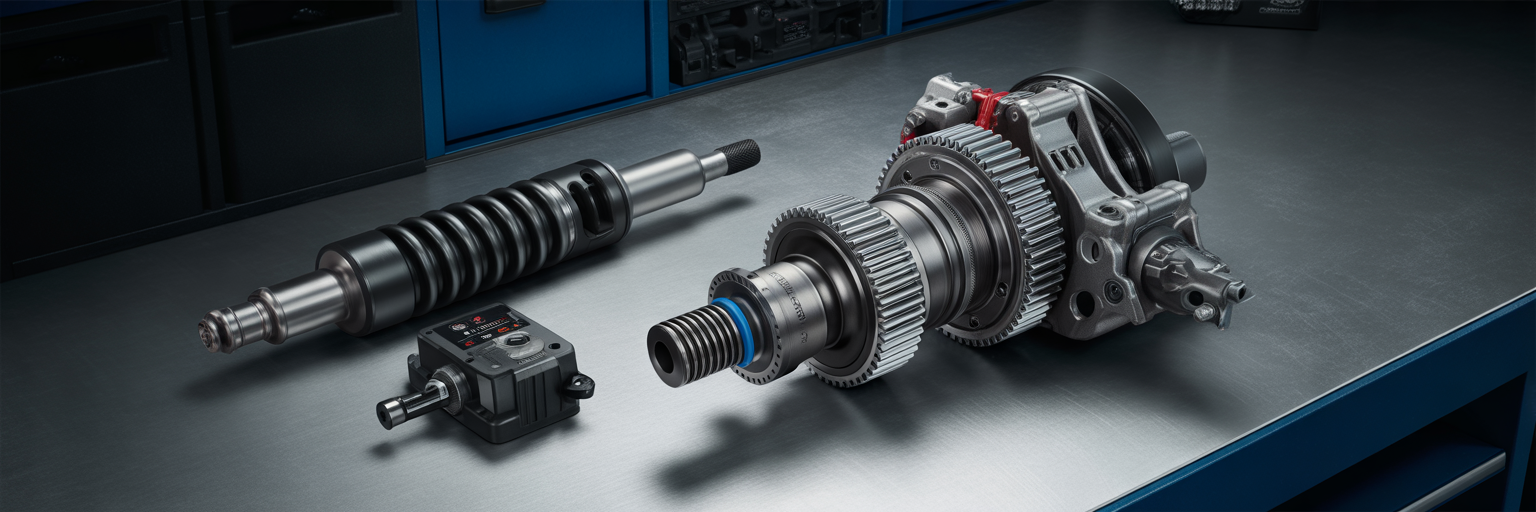
With a firm grasp on the numbers, we can now look at the hardware that makes safe towing possible. The right mechanical features are what separate a truck that can merely pull a trailer from one that can control it with stability and confidence. Answering the question of what to look for in a tow vehicle starts here.
The Importance of the Right Axle Ratio
The axle ratio is one of the most critical yet overlooked components for towing. Numbers like 3.73, 3.92, or 4.10 represent a torque multiplier. Think of it like the gears on a bicycle. A higher numerical ratio (like 4.10) is like being in a lower gear. It makes it much easier to get a heavy load moving from a standstill and helps the engine stay in its powerband on hills. The trade-off is higher engine RPMs and lower fuel economy at highway speeds. A lower numerical ratio (like 3.21) prioritizes fuel economy but can make the engine feel sluggish and cause the transmission to hunt for gears when towing.
Identifying a Factory Tow Package
Simply having a hitch on the back does not mean a truck is ready to tow. A factory-installed tow package is a set of integrated components designed to handle the immense stress of pulling a heavy trailer. When inspecting a used truck, you must verify it has these features:
- A frame-mounted Class IV or V hitch receiver.
- Both 4-pin and 7-pin wiring connectors.
- An upgraded, high-capacity radiator.
- An external transmission fluid cooler.
- An external engine oil cooler (on many heavy-duty packages).
Those last three items are vital. The transmission is often the first major component to fail on a tow vehicle, and that failure is almost always due to overheating. The auxiliary coolers in a factory tow package are the single best defense against catastrophic transmission failure on a long, hot day of climbing mountain passes.
Why an Integrated Trailer Brake Controller is Non-Negotiable
Your camper has its own electric brakes, and the trailer brake controller is what activates them. While you can add an aftermarket controller, a factory-integrated unit is far superior. It communicates directly with the truck’s computer, applying the trailer brakes proportionally to your own braking effort. This results in smooth, predictable stops. Aftermarket controllers often feel jerky and disconnected, and they don’t have access to the truck’s anti-lock brake and stability control systems, making them less effective in an emergency.
Suspension and Tires for Towing Duty
The suspension and tires are your connection to the road. For most half-ton trucks towing a camper, you should look for Light Truck (LT) rated tires with a Load Range of ‘E’. These tires have stiffer sidewalls that significantly reduce sway and provide a much more stable feeling. Passenger (P) rated tires, which are common on base model trucks, have soft sidewalls that can feel squirmy and unsettling with a heavy trailer behind you. Checking the tires is a simple but crucial safety step.
Choosing the Right Engine and Drivetrain
The engine and drivetrain are the heart of your tow vehicle. This is where power is generated and delivered to the ground. The choice here often comes down to a preference between modern technology and traditional simplicity, each with distinct advantages for towing.
Gasoline V8 vs. Turbocharged V6
This is the classic debate in the full-size truck world. A traditional gasoline V8, like Chevrolet’s 5.3L or Ram’s 5.7L HEMI, delivers power in a predictable, linear fashion. There are no surprises, just a smooth build of power as RPMs rise. They are known for their long-term simplicity and durability. For those who appreciate the traditional muscle and sound, understanding the nuances between different V8s is key, as explored in our Mustang GT and Challenger R/T comparison.
On the other hand, a turbocharged V6, like Ford’s 3.5L EcoBoost, offers a completely different experience. It produces immense torque at very low RPMs, making a heavy camper feel surprisingly light off the line. It can feel more effortless when accelerating onto a highway. The trade-off is added complexity with turbos, intercoolers, and more intricate plumbing, which can mean more potential failure points down the road.
The Case for Midsize Truck Engines
For campers under 6,000 pounds, a midsize truck can be an ideal solution. The V6 engines found in trucks like the Toyota Tacoma or GMC Canyon provide an excellent balance of capability and daily drivability. They offer more than enough power for this weight class while being more maneuverable and fuel-efficient when you’re not towing. They represent a sweet spot for many weekend campers who also use their truck as a daily driver.
Two-Wheel Drive (2WD) vs. Four-Wheel Drive (4WD)
The choice between 2WD and 4WD is a practical one. For those who camp primarily on paved roads in fair weather, a 2WD truck is perfectly sufficient and offers a slight advantage in both cost and payload capacity since it doesn’t have the extra weight of the 4WD components. However, if your adventures might lead you to a muddy campsite, a slick boat ramp, or a snowy mountain pass, 4WD becomes an essential safety and recovery tool. The ability to engage all four wheels can be the difference between a minor inconvenience and being stuck for hours.
Transmission’s Role in Towing
Modern automatic transmissions are incredibly sophisticated. Nearly all trucks designed for towing feature a “Tow/Haul” mode. This isn’t a gimmick. When engaged, it completely changes the transmission’s shift logic. It holds gears longer to keep the engine in its powerband, preventing constant shifting on inclines. More importantly, on descents, it will automatically downshift to use engine braking, which helps control your speed and saves your service brakes from overheating and potential failure.
Top Midsize Truck Contenders Under $35,000
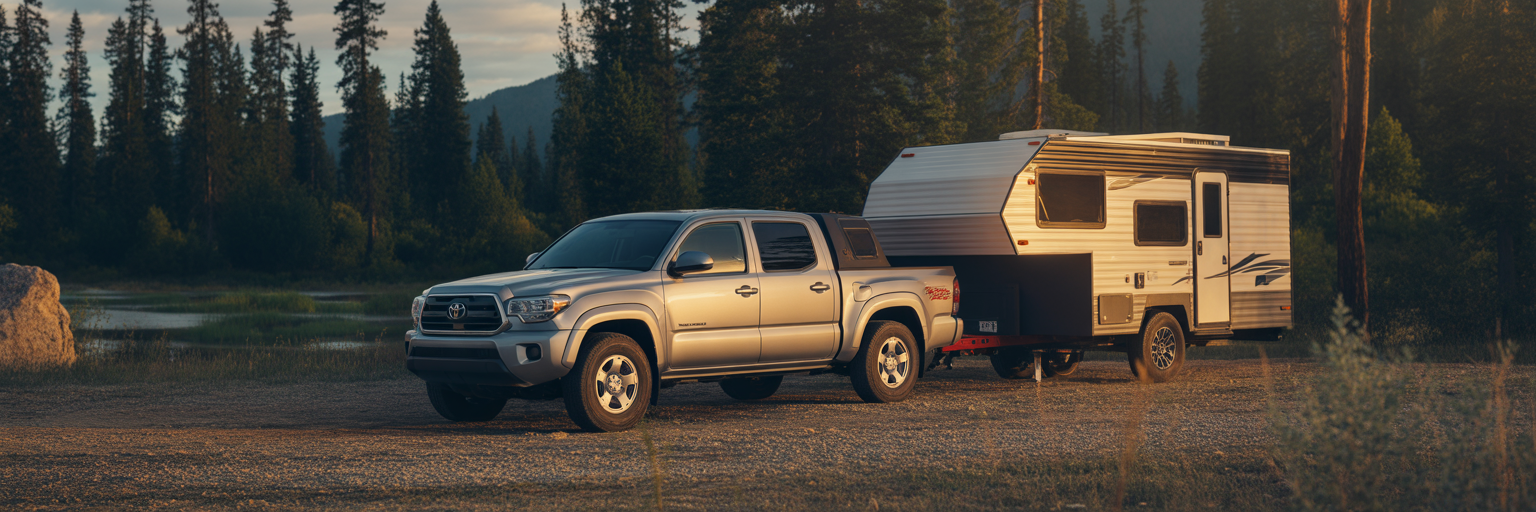
Midsize trucks offer a compelling blend of towing muscle and daily-driving convenience, making them a popular choice. Within the budget of used trucks under $35000, several excellent options stand out for their reliability and capability. As you consider these models, remember that our homepage at Carphanatics offers a wide range of reviews across different vehicle segments.
Toyota Tacoma (2022 and similar model years)
The Toyota Tacoma is the undisputed king of reliability and resale value in the midsize segment. According to a recent study by iSeeCars, the 2022 Tacoma has an average price around $34,923 and a stellar reliability rating of 8.2 out of 10. Equipped with its proven 3.5L V6 and factory tow package, it’s rated to pull up to 6,800 pounds. This makes it a perfect match for many small to mid-size travel trailers. While its interior may feel more utilitarian than some rivals, its reputation for taking a beating and asking for more is well-earned.
GMC Canyon (and Chevrolet Colorado sibling)
The GMC Canyon and its Chevrolet Colorado twin offer a more refined experience and, in some configurations, more power. With the available 3.6L V6, these trucks boast a class-leading conventional tow rating of up to 7,700 pounds. They feel like a bridge between midsize and full-size trucks, offering a comfortable ride and a well-appointed interior. With a strong reliability score of 7.9, the Canyon and Colorado are excellent choices for those who need a bit more towing capacity but still want the smaller footprint of a midsize truck.
Honda Ridgeline (2022 and similar model years)
The Honda Ridgeline is the outlier in this group, and that’s its greatest strength. Built on a unibody platform like an SUV, it offers a ride quality and handling dynamic that no traditional body-on-frame truck can match. It’s the comfort choice, hands down. Its towing capacity is limited to 5,000 pounds, which makes it unsuitable for larger trailers. However, for those with pop-up campers or small travel trailers, the Ridgeline’s smooth ride, innovative in-bed trunk, and excellent daily drivability make it an incredibly compelling and practical option.
Leading Full-Size Trucks for Heavier Campers
When your camper’s weight starts to climb, a full-size truck becomes the right tool for the job. Their longer wheelbases, wider stances, and more robust frames provide the stability needed to handle larger trailers. These are some of the best used trucks for towing you can find in this price range.
Ford F-150 (2020-2022 models)
The Ford F-150 has been the best-selling truck in America for decades for a reason. For towing, the standout engine is the 3.5L EcoBoost V6. It delivers a massive wave of low-end torque that makes even heavy trailers feel manageable. It’s common to find 2020-2022 models with this engine for around $34,000, and they carry a solid 8.0 reliability score. When equipped with the Max Trailer Tow Package, these trucks can be rated to pull well over 11,000 pounds, offering immense capability for the price.
Chevrolet Silverado 1500 (2021 and similar model years)
The Chevrolet Silverado 1500 is the dependable, traditional workhorse. The 5.3L V8 engine is a proven powerplant known for its durability and smooth, predictable power delivery. It may not have the dramatic punch of the EcoBoost, but its simplicity is a major draw for many buyers. A 2021 model has an average price around $33,042 and a respectable 7.5 reliability score. A Silverado with the 5.3L V8 and a proper tow package is a confident and comfortable platform for pulling trailers in the 9,500-pound range.
Comparing F-150 and Silverado for Towing
The choice between these two often comes down to philosophy. The F-150 with the 3.5L EcoBoost is for the driver who wants the latest technology and maximum torque. It makes towing feel effortless. The Silverado with the 5.3L V8 is for the driver who values a proven, naturally aspirated engine and a straightforward, reliable experience. Both are excellent, but they deliver their capability in very different ways. Driving both back-to-back is the best way to decide which you prefer.
Finding the Right Configuration
It is critical to understand that not all F-150s or Silverados are created equal. The specific configuration of a truck can change its payload capacity by over 1,000 pounds. A SuperCrew cab with a short bed and 4WD will have a much lower payload than a SuperCab with a long bed and 2WD. This is why you must always check the yellow and white tire and loading information sticker on the driver’s doorjamb. That sticker tells the true story for that specific truck. While this guide focuses on half-ton trucks, some with exceptionally large campers might be curious about the next level. For those considering heavier loads, understanding the differences between one-ton trucks is crucial, as detailed in our comparison of the Ford F-350 and Chevy Silverado 3500HD.
Ranking the Best Trucks by Towing Scenario
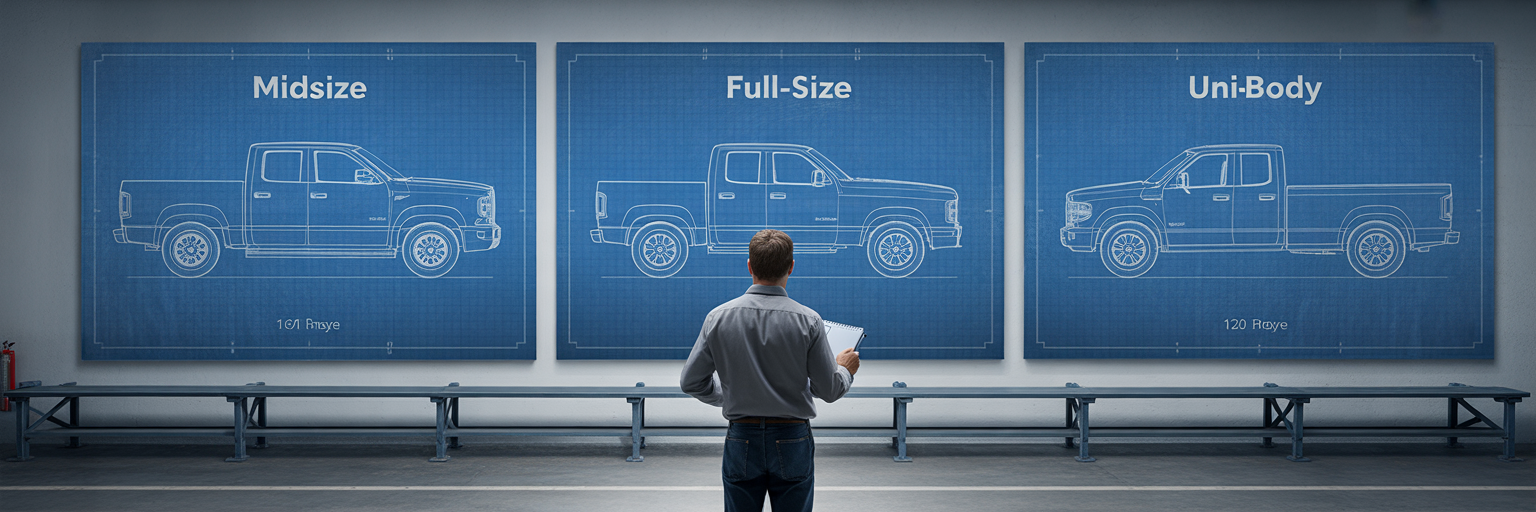
To bring it all together, let’s match the right truck to your specific needs. The best truck for a weekend trip with a small pop-up is very different from the one needed for a cross-country journey with a large travel trailer. This section serves as your final decision-making tool.
Summary Table of Top Picks
| Truck Model (Year) | Category | Engine | Avg. Price | Reliability Score | Max Towing (Typical) |
|---|---|---|---|---|---|
| Toyota Tacoma (2022) | Midsize | 3.5L V6 | $34,923 | 8.2 / 10 | 6,800 lbs |
| GMC Canyon (2021) | Midsize | 3.6L V6 | ~$33,000 | 7.9 / 10 | 7,700 lbs |
| Honda Ridgeline (2022) | Midsize (Unibody) | 3.5L V6 | ~$34,500 | 8.0 / 10 | 5,000 lbs |
| Ford F-150 (2020-2022) | Full-Size | 3.5L EcoBoost V6 | ~$34,000 | 8.0 / 10 | 11,000+ lbs |
| Chevrolet Silverado 1500 (2021) | Full-Size | 5.3L V8 | $33,042 | 7.5 / 10 | 9,500+ lbs |
Note: Average prices and reliability scores are based on data from iSeeCars for the specified model years. Towing capacities are typical figures and vary significantly based on specific vehicle configuration, axle ratio, and tow packages. Always verify with the specific vehicle’s door jamb sticker.
Best for Weekend Trips with a Small Camper (Under 5,000 lbs)
For this scenario, comfort and daily usability are just as important as towing. The Honda Ridgeline is the top choice for its unmatched SUV-like ride and clever features. If your plans include unpaved roads or you simply prefer a more traditional truck, the Toyota Tacoma is an outstanding alternative, offering legendary reliability and better off-road capability.
Best for Growing Families with a Mid-Size Trailer (5,000-8,000 lbs)
Here, you need more capability without necessarily jumping to the largest possible truck. The GMC Canyon with the V6 engine is a strong contender, providing ample power in a more maneuverable package. However, a properly equipped Ford F-150, perhaps with the efficient 2.7L EcoBoost or the classic 5.0L V8, offers superior stability from its longer wheelbase and a higher payload capacity, making it a safer choice as trailer weight approaches 8,000 pounds.
Best for Cross-Country Hauls with a Large Trailer (Over 8,000 lbs)
When you’re covering long distances with a heavy trailer, there is no substitute for the torque and stability of a full-size truck. Within this budget, the clear winner is a Ford F-150 with the 3.5L EcoBoost V6 and the Max Trailer Tow Package. Its immense torque and stable platform make it the most confident tower in this class. The Chevrolet Silverado 1500 with the 5.3L V8 is a very close and highly reliable alternative, especially for those who prefer the feel of a V8 engine.
Your Pre-Purchase Inspection Checklist
You’ve done the research and found a promising truck. Before you sign any paperwork, a final, thorough inspection is crucial. This isn’t the time to take the seller’s word for it. This checklist will help you spot potential issues that could turn your dream truck into a nightmare.
- Verify the Vehicle’s History: Insist on seeing a vehicle history report from a service like CarFax or AutoCheck. Look for red flags like reported accidents, salvage or rebuilt titles, flood damage, and inconsistent service records. A clean history is a good start.
- Physical Inspection for Towing Wear: Look closely at the rear of the truck. Does it sag? This can indicate worn-out leaf springs from chronic overloading. Inspect the hitch receiver for any cracks or signs of stress. Get underneath and look for fluid leaks from the transmission pan or the rear differential, two areas that work hard during towing.
- The Test Drive: What to Listen and Feel For: During the test drive, turn the radio off and listen. Pay attention to how the transmission shifts. It should be smooth and decisive. Any harsh clunks or hesitation are major red flags. Listen for any whining or humming sounds from the transmission or rear end, especially while accelerating and coasting.
- Get a Professional Opinion: This is the most important step. A pre-purchase inspection (PPI) by a qualified, independent mechanic is not a cost; it’s an investment. For a couple hundred dollars, a professional can put the truck on a lift and spot things you can’t, like hidden frame damage, imminent mechanical failures, or shoddy repair work. This single step can save you thousands in future repairs and is a vital part of determining what to look for in a tow vehicle.