
The Core Conflict: Rugged Utility vs. Refined Elegance
The small all-wheel-drive crossover segment has become one of the most fiercely contested battlegrounds in the US auto market. By 2026, nearly every manufacturer offers a contender, but two vehicles stand out by representing completely opposite philosophies: the Subaru Crosstrek and the Mazda CX-30. They compete on price, but they appeal to fundamentally different desires. The choice between them forces you to ask a critical question: Is your car a practical tool for life’s messy adventures, or is it a refined object meant to make the daily drive a more pleasant experience?
The Subaru Crosstrek is the embodiment of rugged practicality. It’s the automotive equivalent of a well-worn pair of hiking boots. Its reputation was forged in places with real weather, from the snowy winters of New England to the damp, unpaved logging roads of the Pacific Northwest. Owners don’t just drive Crosstreks; they rely on them. It’s a dependable workhorse you can load with muddy gear, point toward a mountain, and trust to get you there and back without fuss. This go-anywhere spirit has cemented its status as a candidate for the best small AWD crossover for those who prioritize function above all else.
In the other corner stands the Mazda CX-30, a vehicle that feels like it belongs in a different class. It’s the stylish, sophisticated alternative. Guided by Mazda’s “Kodo” design philosophy, its flowing lines and sculpted body panels create a sense of motion even at a standstill. That elegance extends inside, where the premium materials and driver-focused layout create an experience that borders on luxury. The engineering prioritizes a quiet ride and engaging handling, turning the act of driving itself into a feature. The exceptional CX-30 interior quality isn’t an accident; it’s a deliberate choice to appeal to buyers who want their car to feel special.
So, how do you choose between a vehicle built for the trail and one designed for the commute? This comparison will break down the essential differences. We will examine interior space and cabin quality, compare on-road performance and fuel efficiency, analyze their confidence in winter conditions, and look at long-term ownership costs. By the end, you’ll have a clear picture of which crossover truly fits your life.
Inside the Cabin: A Showdown of Space and Practicality
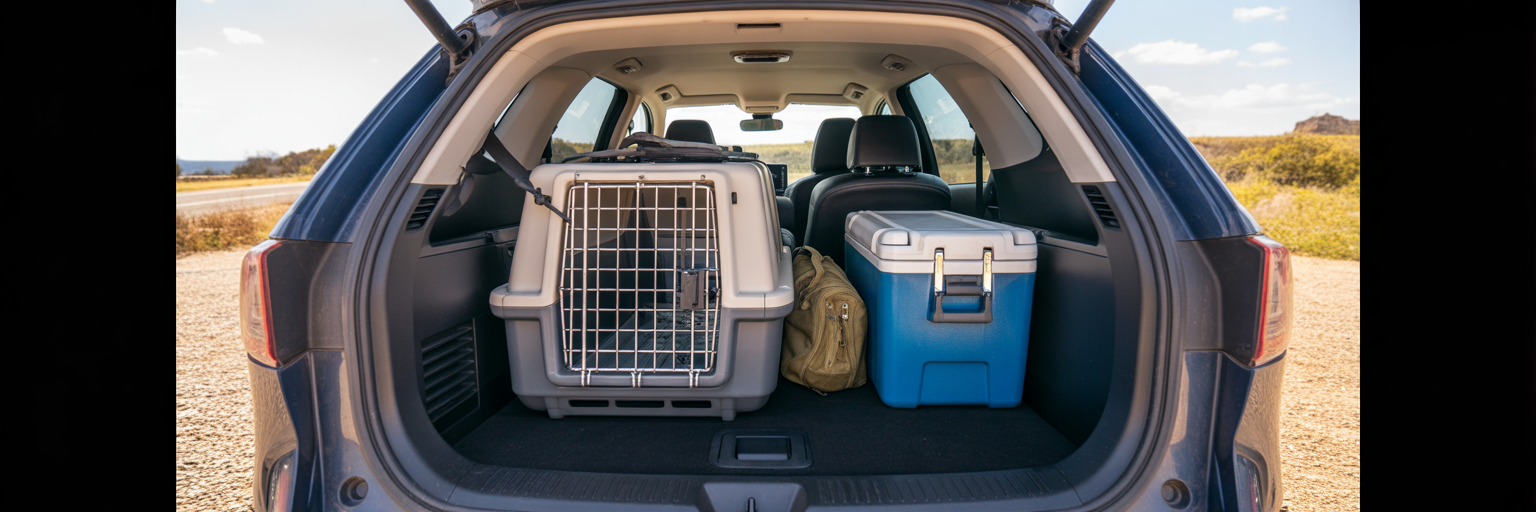
When it comes to pure, unadulterated practicality, the numbers and design choices tell a clear story. This is where the Subaru Crosstrek builds its most compelling case, appealing directly to those who need their vehicle to be a versatile tool. The differences in how these two crossovers use their interior space are not subtle; they are fundamental to their identities. This same focus on utility over style is a recurring theme in vehicle design, and for those interested in how it plays out in larger vehicles, our comparison of the Ford F-350 and Chevy Silverado 3500HD offers another perspective on worksite-focused engineering.
Cargo Capacity: The Numbers and the Reality
On paper, the cargo specifications seem close. But in the real world, the Crosstrek’s advantage is significant. Its boxier shape and wider, taller hatch opening make a world of difference. That extra 10 cubic feet with the seats down is the difference between fitting a mountain bike inside or having to mount it on a rack. The Crosstrek’s lower lift-over height also means you’re not hoisting heavy items as high, a small detail that your back will appreciate after a trip to the hardware store. The CX-30’s tapered, stylish rear end looks great, but it undeniably compromises your ability to load bulky items like furniture or large dog crates.
Rear-Seat Room: Comfort for Passengers
If you regularly carry adults in the back seat, your passengers will thank you for choosing the Crosstrek. While legroom figures are nearly identical, the Subaru’s taller roofline and larger side windows create an open, airy feeling. Passengers in the back of the CX-30 may feel more confined due to its sloping roof and high beltline, a design choice that prioritizes exterior styling over rear passenger comfort. For road trips or even just carpooling, that extra sense of space in the Crosstrek reduces fatigue and makes the journey more pleasant for everyone.
Material Durability: Built for the Real World
The Crosstrek’s interior is designed with a clear purpose: to withstand an active lifestyle. The use of tough, easy-to-clean plastics isn’t a sign of cutting corners; it’s a practical decision. Subaru knows its owners will be tracking in mud, snow, and sand. The available water-repellent StarTex upholstery is a perfect example of this philosophy. It’s built to handle wet ski gear, dripping raincoats, and the occasional spill without staining. This makes the Crosstrek an outstanding compact SUV for dog owners, as the interior is far more forgiving of muddy paws and shedding fur. For buyers who see their car as a basecamp for adventures, the Crosstrek’s cabin is the clear winner.
Practicality at a Glance: Crosstrek vs. CX-30 Interior Dimensions
| Feature | Subaru Crosstrek | Mazda CX-30 | What It Means for You |
|---|---|---|---|
| Cargo Volume (Seats Up) | 20.8 cu. ft. | 20.2 cu. ft. | Slight edge to Crosstrek for weekly groceries. |
| Cargo Volume (Seats Down) | 55.3 cu. ft. | 45.2 cu. ft. | Significant advantage for Crosstrek; fits bikes or large furniture. |
| Rear Legroom | 36.5 inches | 36.3 inches | Nearly identical, but Crosstrek’s cabin shape feels larger. |
| Rear Headroom | 38.0 inches | 38.3 inches | Slightly more headroom in the CX-30 on paper. |
| Ground Clearance | 8.7 inches | 6.9 inches | Major Crosstrek advantage for snow and rough roads. |
Note: Dimensions are based on 2026 model year specifications. This table highlights how the Crosstrek’s design prioritizes maximum cargo volume and ground clearance, while the CX-30 remains competitive in passenger comfort.
A Tale of Two Interiors: Comfort, Quality, and Ambiance
If the last section was the Crosstrek’s victory lap, this is the Mazda CX-30’s powerful counterargument. Here, the focus shifts from measurable utility to the subjective experience of sitting inside the car. The CX-30’s cabin is its secret weapon, delivering an atmosphere that feels borrowed from a more expensive brand. The dashboard wraps around the driver, with soft-touch materials on nearly every surface. The chrome accents are elegant, not flashy, and the knobs and buttons move with a satisfying, well-oiled click. It’s a masterclass in perceived value. This approach is similar to how premium brands use custom gift boxes for businesses to create a memorable first impression; the thoughtful presentation makes the entire experience feel more special.
Stepping from the Mazda into the Subaru is an immediate contrast. The Crosstrek’s interior is logical, durable, and assembled with care, but it lacks any sense of occasion. The plastics are harder, the design is more straightforward, and the overall feeling is one of pure function. There’s nothing wrong with it, but it does little to delight the senses. Where the CX-30’s cabin feels like a tailored suit, the Crosstrek’s feels like a sturdy pair of work pants. Both get the job done, but one makes you feel a lot better doing it.
This difference extends to ride comfort. The CX-30’s suspension is tuned for on-road serenity. It glides over bumps and isolates you from road noise, making it a peaceful sanctuary during a stressful commute. The Crosstrek’s ride is a bit firmer and you hear more from the road and wind. This isn’t a flaw; it’s a direct trade-off for its long-travel suspension designed for rougher terrain. One is tuned for the highway, the other for the fire road.
Even the infotainment systems reflect their opposing philosophies. The CX-30 uses a rotary controller on the center console, a design intended to reduce driver distraction by developing muscle memory. The Crosstrek employs a large, familiar touchscreen that most people will find immediately intuitive. For the buyer whose car is a refuge from the outside world, a place to decompress on the way home from work, the Mazda CX-30 is the undeniable choice. Its superior comfort, quietness, and exceptional CX-30 interior quality create an environment that punches far above its price.
On the Road: Driving Dynamics and Fuel Efficiency
How a car feels from behind the wheel is just as important as how it looks or how much it can carry. Here, the Crosstrek and CX-30 offer distinctly different experiences that cater to different types of drivers. While their 2026 engine options offer comparable horsepower on paper, the way they deliver that power and handle on the road could not be more different.
The Mazda CX-30 is engineered for people who genuinely enjoy the act of driving. Its steering is quick and responsive, giving you a clear sense of connection to the road. In corners, the body stays relatively flat, inspiring confidence and making it feel more like a sporty hatchback than a crossover. A key part of this experience is its conventional six-speed automatic transmission, which delivers crisp, predictable shifts. This combination makes the CX-30 feel athletic and eager, whether you’re navigating a winding country road or just darting through city traffic. For drivers who appreciate a deep dive into performance metrics, our Camaro SS vs Mustang Mach-1 showdown offers a look at how we analyze driving dynamics at the highest level.
The Subaru Crosstrek, in contrast, prioritizes smoothness and efficiency over sportiness. Its standard Continuously Variable Transmission (CVT) operates without distinct gear shifts, creating a seamless flow of power. While it can feel less engaging during spirited driving, it excels at providing a relaxed and comfortable experience in everyday situations. The Crosstrek’s on-road character is best described as stable, predictable, and secure. It doesn’t beg you to push it harder, but it always feels planted and in control, which is exactly what many drivers want from a daily vehicle.
When it comes to fuel economy, both vehicles are highly competitive. EPA estimates for their most popular engine configurations are often within one or two MPG of each other. However, their different transmissions can lead to slight advantages in different scenarios. The Crosstrek’s CVT is often more efficient in the stop-and-go grind of city driving, while the CX-30’s automatic can sometimes yield better mileage during steady-state highway cruising. Ultimately, the choice comes down to personal preference: the engaging, athletic feel of the Mazda, or the smooth, efficient, and unobtrusive operation of the Subaru.
Mastering the Elements: Winter and Rough Road Confidence
This is the Crosstrek’s home turf. When the weather turns foul or the pavement ends, the Subaru’s core engineering philosophy shines brightest. It begins with its standard Symmetrical All-Wheel Drive. This is a full-time, proactive system that constantly sends power to all four wheels, ensuring maximum grip and balance before a slip can even occur. Think of it as always being ready for a challenge. In contrast, Mazda’s i-Activ AWD is a reactive, on-demand system. It operates primarily in front-wheel drive to save fuel and only sends power to the rear wheels when it detects slippage. It’s effective, but it’s reacting to a problem rather than preventing it.
The most significant difference, however, is ground clearance. The Crosstrek boasts a commanding 8.7 inches of clearance, while the CX-30 sits at a more car-like 6.9 inches. That nearly two-inch difference is massive in the real world. It’s what allows the Crosstrek to drive through unplowed streets after a blizzard or navigate the pothole-ridden roads of cities like Detroit without scraping its underbelly. For anyone heading to a remote trailhead, that extra height is the key to clearing ruts and rocks that would stop the Mazda in its tracks. This is the heart of the argument for the Crosstrek for winter driving.
This advantage in harsh conditions is consistently noted by automotive experts. For instance, a head-to-head comparison by U.S. News & World Report frequently points out that while both are capable, the Crosstrek’s design gives it a distinct edge in winter climates. That feeling of security during a snowstorm isn’t just perception; it’s the direct result of superior hardware.
Furthering its all-weather credentials is Subaru’s X-MODE. With the push of a button, this system optimizes the engine, transmission, and AWD system for extremely low-traction surfaces like deep snow, mud, or ice. It’s a specialized tool for the worst conditions, a feature the more road-focused CX-30 simply doesn’t offer. For anyone living in the Snow Belt or whose lifestyle includes regular trips off the beaten path, the Crosstrek’s combination of a proactive AWD system, superior ground clearance, and advanced traction aids provides a tangible, confidence-inspiring advantage that is impossible to ignore.
The Long Haul: Reliability, Resale Value, and Ownership Costs

A car is a major purchase, and the costs don’t stop when you drive it off the lot. When considering the Subaru Crosstrek vs Mazda CX-30, the long-term financial picture reveals another key difference. Both Subaru and Mazda have earned strong reputations for reliability in recent years, frequently scoring well in consumer studies. You can expect either vehicle to be a dependable companion with routine maintenance.
The crucial factor in the total cost of ownership is resale value, and this is where the Subaru Crosstrek has a legendary reputation. For years, it has consistently held its value better than almost any other vehicle in its class. This is driven by incredible demand, a rock-solid reputation for durability, and a fiercely loyal owner base. While the Mazda CX-30’s resale value is respectable, it typically can’t match the Crosstrek’s stellar performance on the used market. This means that after a few years of ownership, you’re likely to get more of your initial investment back when you sell or trade in a Crosstrek.
This creates two different definitions of value. The Mazda’s value is front-loaded; you get a near-luxury interior and a refined driving experience for a mainstream price. It feels more expensive than it is. The Subaru’s value is realized over the long term. A lower depreciation rate means a lower total cost to own, making it a very shrewd financial choice. Understanding long-term value is crucial, and for those also considering fuel-efficient family cars, our 2026 Hybrid Sedan Showdown: Honda Accord vs. Toyota Camry provides a similar analysis of ownership costs.
Routine maintenance and insurance costs for both vehicles are competitive and closely matched, with no major surprises for either model. The decision, therefore, comes down to what you value more. If you want the most premium experience for your money today, the CX-30 delivers. But if you’re looking at the bigger financial picture, the Crosstrek’s outstanding resale value makes it the smarter long-term investment.
Your Perfect Match: Final Verdicts for Different Drivers
There is no single “better” vehicle in this comparison. The right choice depends entirely on your priorities, your lifestyle, and what you want from your car on a daily basis. To make it simple, here are our final verdicts for three common types of buyers.
- The Verdict for the Daily Commuter: The Mazda CX-30 is the clear winner. Its quiet, comfortable ride transforms a stressful commute into a more pleasant experience. The premium interior feels like a small luxury, and its engaging handling can make even a mundane drive more enjoyable. Its strengths are perfectly aligned with life on paved roads.
- The Verdict for the Dog Owner & Weekend Adventurer: The Subaru Crosstrek wins this by a landslide. Its massive cargo area, durable and easy-to-clean interior, superior ground clearance, and more capable AWD system make it the perfect tool for an active lifestyle. It’s the vehicle you buy when your weekends involve trailheads, ski slopes, or muddy paws.
- The Verdict for the Budget-Conscious Buyer: This is a nuanced choice that depends on your definition of “value.” If your priority is the lowest total cost of ownership over three to five years, the Crosstrek’s phenomenal resale value makes it the smarter long-term financial decision. If your priority is getting the most premium features and upscale feel for your initial purchase price, the CX-30 offers a taste of luxury that the Crosstrek cannot match.
Ultimately, choosing between the Subaru Crosstrek and Mazda CX-30 is a classic head-versus-heart decision. The Crosstrek makes an unassailable logical case with its practicality, capability, and financial sense. The CX-30 makes an emotional appeal with its beautiful design, refined interior, and enjoyable driving dynamics. This principle applies across all segments; whether you’re deciding between electric SUVs like the Hyundai Ioniq 5 vs Kia EV6 or these two crossovers, the best choice is always the one that fits your life.