
For decades, American car culture has operated on a simple assumption: when the snow flies, you need an SUV. This idea, reinforced by marketing that equates a high seating position with invincibility, has become the default answer for winter driving. But what if that assumption is based more on perception than physics? What if the most capable and confidence-inspiring winter vehicles have been hiding in plain sight all along?
The truth is, many sedans, wagons, and hatchbacks offer inherent advantages on slick roads. It comes down to a lower center of gravity. Think about the difference between a low-slung race car and a top-heavy truck. The lower vehicle feels more planted and stable, resisting the unsettling body roll that can make a driver feel disconnected from the road during a slide. This stability is a massive asset on icy surfaces or in slushy corners, providing a more direct and reassuring feel through the steering wheel.
Of course, it’s not just about vehicle shape. Modern automotive technology has completely changed the conversation. Advanced all-wheel-drive (AWD) and electronic stability control (ESC) systems are no longer exclusive to big, bulky vehicles. These intelligent tools proactively manage traction, sending power precisely where it’s needed before you even realize you’re slipping. They have become so effective that a vehicle’s specific attributes, like its drivetrain and tires, are far more important than its classification as an SUV.
This guide explores the best cars for snow not suvs by focusing on what actually matters: performance, design, and real-world capability. It’s time to look beyond the hype and discover the cars that truly master winter conditions.
Why Your Tires Are the True Winter Heroes
Let’s be perfectly clear about one thing: an all-wheel-drive system can only distribute power to the tires; it cannot create grip where none exists. The single most important factor in your vehicle’s winter performance is the rubber that meets the road. Your car’s entire connection to the pavement is limited to four contact patches, each roughly the size of a postcard. What those patches are made of determines whether you stop, go, or slide.
Many drivers believe their “all-season” tires are good enough. This is a dangerous misconception. The difference between all-season and dedicated winter tires is not subtle, it is a fundamental difference in chemistry and engineering. When you look at the winter tires vs all season debate, the science is undeniable.
Here’s what makes winter tires so effective:
- Specialized Rubber Compounds: In temperatures below 45°F (7°C), the rubber in all-season tires becomes hard and stiff, almost like a hockey puck on ice. They lose their ability to conform to the road surface. Winter tires, in contrast, are made with a high-silica compound that stays soft and pliable even in a deep freeze. This allows them to maintain their grip on cold asphalt and ice.
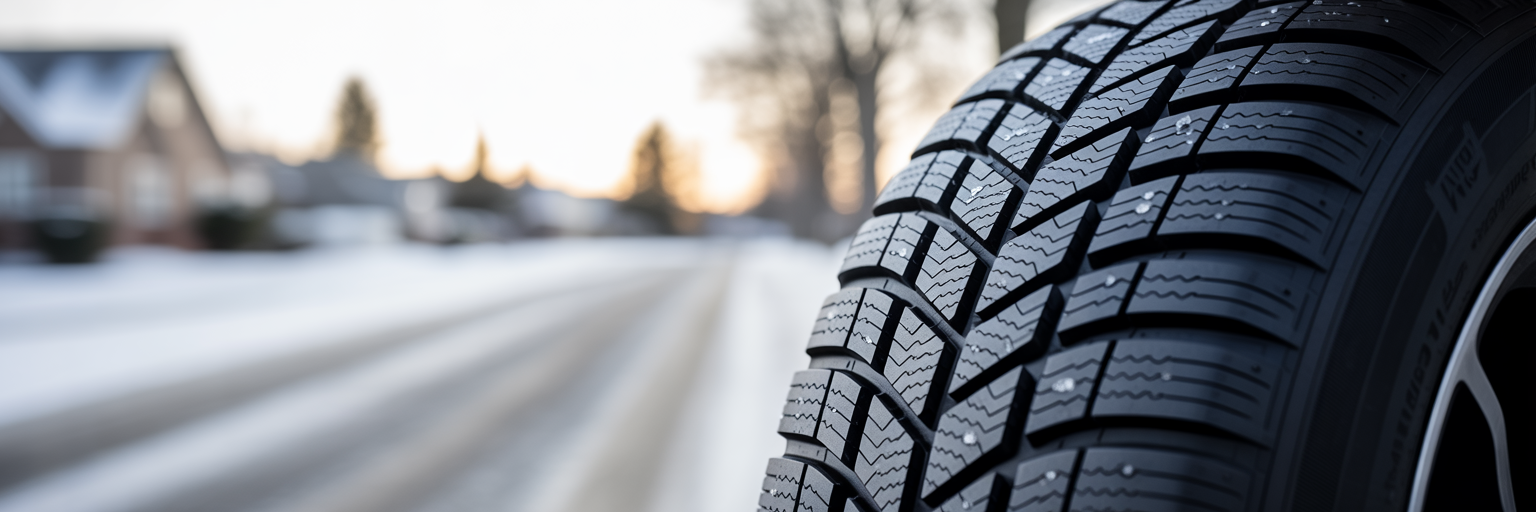
- Aggressive Tread Designs: Look closely at a winter tire. You’ll see deep, wide grooves designed to do one thing exceptionally well: channel away slush and water. This prevents a layer of water from building up between the tire and the road, a phenomenon known as hydroplaning, which causes a complete loss of control.
- The Power of Sipes: The most critical feature is something you can barely see. The tread blocks of winter tires are covered in thousands of tiny, razor-thin slits called sipes. As the tire rotates, these sipes open up and act like thousands of tiny biting edges, clawing at ice and packed snow to generate traction that all-season tires simply cannot match.
The real-world result is staggering. A front-wheel-drive sedan on proper winter tires will consistently out-brake and out-corner an AWD SUV on all-season tires on an icy road. It’s like trying to hike a snowy mountain in running shoes versus insulated hiking boots. One is designed for the task, the other is a liability. To get the most out of your winter setup, follow these simple rules:
- Install a full set of four winter tires when the temperature consistently drops below 45°F, not just when the first snowflake falls. Using only two creates a dangerous handling imbalance.
- Regularly check your tire pressure. Air pressure can drop by about 1 PSI for every 10°F drop in temperature. Underinflated tires have a compromised contact patch and reduced performance. This focus on seasonal maintenance is a key part of a larger strategy for how to keep your car’s engine running for years, ensuring reliability when you need it most.
Essential Features for a Confident Winter Drive
With the right tires installed, the next step is to look at the vehicle’s inherent capabilities. Certain features and design choices separate a merely adequate winter car from a truly great one. These elements work together to provide security, control, and comfort when the weather turns against you.
Decoding All-Wheel-Drive Systems
Not all AWD systems are created equal. The type of system in a car dramatically affects how it feels and reacts on a slippery road. Full-time systems, like Subaru’s Symmetrical AWD, are “always on,” constantly sending power to all four wheels. This provides instantaneous grip from a standstill and exceptional balance through corners. In contrast, many on-demand or “slip-and-grip” systems primarily drive two wheels for fuel efficiency and only engage the other axle when they detect a loss of traction. While effective, there can be a slight delay before they kick in. Premium systems, like Audi’s Quattro, often add torque vectoring, which can shift power not just front-to-back but also side-to-side for superior cornering stability.
| AWD System Type | How It Works | Real-World Benefit | Commonly Found In |
|---|---|---|---|
| Full-Time Symmetrical AWD | Continuously powers all four wheels with a 50/50 or similar torque split. | Instantaneous grip and exceptional balance from a standstill and in corners. | Subaru (Legacy, Outback, Impreza) |
| On-Demand (Reactive) AWD | Primarily powers the front or rear wheels. Engages the other axle when slip is detected. | Improves fuel efficiency during normal driving; provides traction when needed. | Many sedans and hatchbacks from Honda, Toyota, Mazda |
| Proactive/Full-Time Torque-Vectoring AWD | Continuously powers all four wheels and can actively shift power side-to-side. | Superior cornering stability and performance-oriented handling on slippery roads. | Audi (Quattro), Mercedes-Benz (4MATIC), BMW (xDrive) |
Ground Clearance: How Much is Enough?
One of the main selling points for SUVs is their high ground clearance. But how much do you really need? For navigating unplowed residential streets in cities like Denver or Minneapolis, a minimum of 5.5 inches of ground clearance for snow driving is a practical benchmark. While most sedans meet this, many wagons and ruggedized hatchbacks go further. Models with names like “Cross Country” or “Alltrack” often boast ride heights of 6.5 inches or more, offering the perfect compromise between a sedan’s stability and an SUV’s ability to clear deep snow without getting stuck.
Beyond Grip: Visibility and Comfort as Safety Tools
True winter confidence isn’t just about traction; it’s about being able to see, react, and stay comfortable. Features often dismissed as luxuries become critical safety equipment in a blizzard. Heated side mirrors and windshield wiper de-icers ensure your view remains clear. A heated steering wheel isn’t just for comfort; it keeps your hands nimble and responsive. Excellent outward visibility, with large windows and thin roof pillars that reduce blind spots, is invaluable in a whiteout. As highlighted in a recent U.S. News analysis of the best cars for winter driving, features like advanced AWD systems and heated elements are consistently found in top-performing vehicles for 2025 and 2026. Finally, a responsive chassis that communicates what the tires are doing gives you the feedback needed to stay in control.
Top Sedans That Master the Snow
Applying these principles, it becomes clear that many sedans are exceptionally well-suited for winter. They combine sophisticated AWD systems with a stable, low-slung chassis to deliver a driving experience that is both secure and engaging, even when the roads are treacherous.
The Subaru Legacy stands out as the pragmatic, high-value champion. With standard Symmetrical All-Wheel Drive and excellent outward visibility, it’s a no-nonsense choice for anyone who prioritizes reliable traction without a premium price tag. It feels planted and predictable, giving the driver a strong sense of confidence when pulling away from an icy intersection or navigating a snowy lane.
For those seeking more comfort and refinement, the Volvo S60 or S90 are compelling options. Designed in a country defined by harsh winters, these sedans blend a sophisticated AWD system with world-class safety features and supremely comfortable seats. They are built for long, secure journeys in challenging conditions, providing a serene cabin that insulates you from the storm outside.
At the premium end, German manufacturers prove that luxury and all-weather capability go hand-in-hand. An Audi A4 with Quattro or a Mercedes-Benz E-Class with 4MATIC are ideal awd sedans for winter driving. They are perfect for the executive commuter in a city like Chicago or Boston who needs to arrive safely and comfortably, no matter the forecast. These cars offer a seamless blend of performance, technology, and all-weather grip. For those considering a pre-owned model, it’s worth noting that some of the best used German cars that are actually worth owning are those equipped with these legendary all-wheel-drive systems, offering both luxury and all-weather peace of mind.
Of course, it’s important to maintain a balanced perspective. The primary trade-off with a sedan is its lower ground clearance. While their on-road stability is superior, they are more susceptible to getting high-centered in deep, unplowed snow drifts than their wagon counterparts. For most cleared roads and moderate snowfall, however, they are more than capable.
Wagons and Hatchbacks: The Perfect Winter Blend
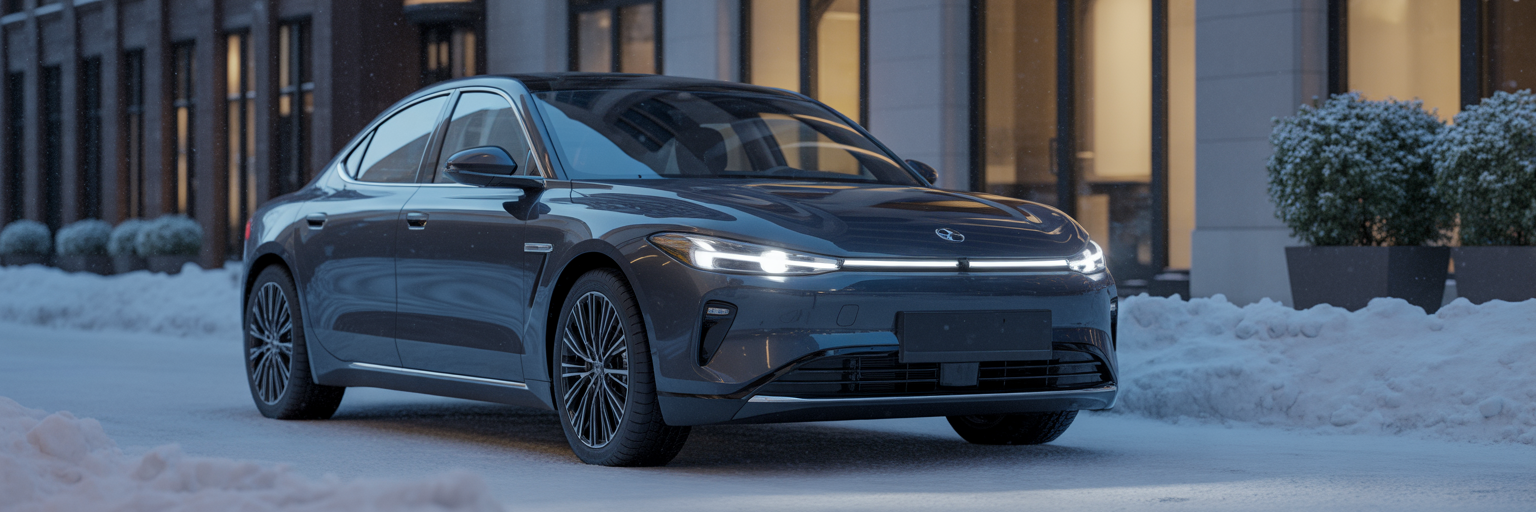
If there is a “sweet spot” in the world of winter vehicles, it is the wagon and its close cousin, the hatchback. These vehicles offer the best of all worlds: the agile, road-hugging handling of a sedan, the practical cargo space of an SUV, and, in many cases, the ground clearance to tackle serious snow.
The undisputed benchmark in this category is the Subaru Outback. It has earned its reputation as one of the best wagons for snow for good reason. The subaru outback winter performance is legendary, built on a foundation of standard Symmetrical AWD and a generous ground clearance that, at over 8.5 inches, rivals many SUVs. Combined with a durable interior that’s perfect for hauling skis, boots, and winter gear, it’s the go-to choice for active families from the mountains of New England to the Pacific Northwest.
For those who want similar capability with a dose of Scandinavian style, the Volvo V60 or V90 Cross Country are exceptional alternatives. These wagons feel solid and unshakable on the road, prioritizing comfort and safety for long-distance winter travel. Their robust build quality and thoughtfully designed interiors make them a sanctuary during a snowstorm.
Winter driving doesn’t have to be a chore, and performance-oriented models like the Subaru WRX or Volkswagen Golf Alltrack prove it. These cars are for the enthusiast who sees a snow-covered road as an opportunity for fun. Their responsive engines and sport-tuned AWD systems allow for an engaging, controlled drive that turns a mundane commute into an enjoyable experience. Models like these are prime examples found in any driver’s guide to fun and practical used hatchbacks, proving that utility and driving enjoyment can coexist.
Finally, for those navigating tight urban environments, compact AWD hatchbacks like the Subaru Impreza or Mazda3 AWD are brilliant solutions. Their smaller footprint makes them easy to maneuver and park on narrow, snow-choked city streets, while their AWD systems provide the crucial traction needed to pull away from icy intersections with confidence.
The Verdict: Best in Class for Winter Conditions
After exploring the physics, features, and real-world options, it’s time for a decisive conclusion. While the “best” car always depends on individual needs, these three vehicles stand out as top performers in their respective categories for mastering winter.
The Best Value Winter Warrior: Subaru Outback
There is no better combination of capability, reliability, and value for winter driving. The Outback’s formula is simply unbeatable: standard Symmetrical AWD, SUV-rivaling ground clearance, and a practical, durable design. It is the logical, pragmatic choice for the vast majority of drivers in snowy climates who need a vehicle that just works, every time.
The Most Fun on a Snowy Road: Subaru WRX / Volkswagen Golf Alltrack
For the driver who doesn’t just want to survive winter but enjoy it, these cars deliver. Their appeal lies in sharp handling, responsive power, and sophisticated AWD systems that reward an engaged driver. They prove that a practical winter vehicle can also be a source of genuine driving pleasure on a winding, snow-covered backroad.
The Ultimate All-Around Winter Car: Volvo V60 Cross Country
This is the no-compromise choice. The V60 Cross Country perfectly balances rugged capability with luxury, advanced safety, and sublime long-distance comfort. With ample ground clearance, a robust AWD system, and an interior that feels like a Swedish mountain lodge, it is the ideal vehicle for the person who wants security, style, and practicality without sacrificing a thing.
Ultimately, choosing a great winter car means thinking critically about your needs and looking beyond the default choices. Making an informed decision is the first step to confident driving in any season. For more expert reviews and head-to-head comparisons, explore all the resources available at CarPhanatics.