
The Foundation of an Automotive Dynasty
In the late 1970s and early 1980s, the American family car was in a state of crisis. Two oil shocks had left drivers anxious at the gas pump, and the domestic sedans they had long trusted were often large, thirsty, and plagued by inconsistent quality. You could almost hear the collective sigh of frustration from households tired of wrestling with carburetors on cold mornings and watching rust bubble up on quarter panels. It was a market hungry not for flash or muscle, but for something profoundly simple: a car that just worked.
Answering America’s Call for Practicality
Into this landscape of uncertainty rolled the first-generation Toyota Camry in 1983. It was not a car that screamed for attention. Instead, it whispered a promise of competence. Its compact, front-wheel-drive layout was a stark contrast to the lumbering, rear-wheel-drive boats many Americans were used to. This design wasn’t just a technical detail; it meant better traction in the snow and a more spacious interior without a bulky transmission tunnel dividing the cabin. It was a car designed from the ground up for the realities of daily life.
The fuel economy was, for many, a revelation. Suddenly, a trip to the gas station didn’t feel like a financial penalty. This efficiency, combined with its practical size, began to answer the question of why is the Camry so popular before most people even knew to ask it. It was the right car at the right time, offering a rational escape from the automotive headaches of the era. It didn’t try to be exciting; it tried to be easy, and in doing so, it became essential.
The Toyota Way: Building Trust from Day One
The Camry’s early appeal went far beyond its spec sheet. It was a physical manifestation of the Toyota Production System, a philosophy that was then largely unknown to the American public. You didn’t need to understand concepts like “kaizen” or “jidoka” to appreciate the results. You could feel it in the solid thud of the doors, see it in the tight, consistent panel gaps, and experience it in the absence of squeaks and rattles that plagued so many of its contemporaries.
Owning an early Camry was like buying a high-quality hand tool. It might not have been the most exotic instrument in the toolbox, but it was perfectly balanced, made of superior materials, and designed to perform its function flawlessly for a lifetime. This commitment to quality built a foundation of trust that money couldn’t buy. While other brands were focused on styling cycles and marketing gimmicks, Toyota was quietly building a reputation for dependability, one trouble-free mile at a time. This focus on manufacturing excellence is a core part of the identity of many leading automotive brands we follow.
The Midsize Leap That Changed Everything
If the first Camry was a promise, the second-generation wide-body model (XV10) launched in 1991 was the brilliant fulfillment of that promise on a grander scale. Toyota’s engineers and product planners saw that while Americans loved the efficiency and reliability of the original, they still craved space. The decision to upsize the Camry from a compact to a true midsize sedan was a masterstroke.
The XV10 was a car perfectly tailored for the American family. It offered ample room for kids, groceries, and luggage without sacrificing the core values that made the original a success. It was still fuel-efficient, impeccably built, and easy to drive. By creating a car that could comfortably handle the school run, the daily commute, and the cross-country road trip, Toyota captured the heart of the mainstream market. It was no longer just a smart alternative; it was the new standard. This move cemented the Camry not as an object of passion, but as a symbol of smart, rational decision-making that would define its dominance for decades to come.
Cementing a Reputation for Unquestionable Reliability
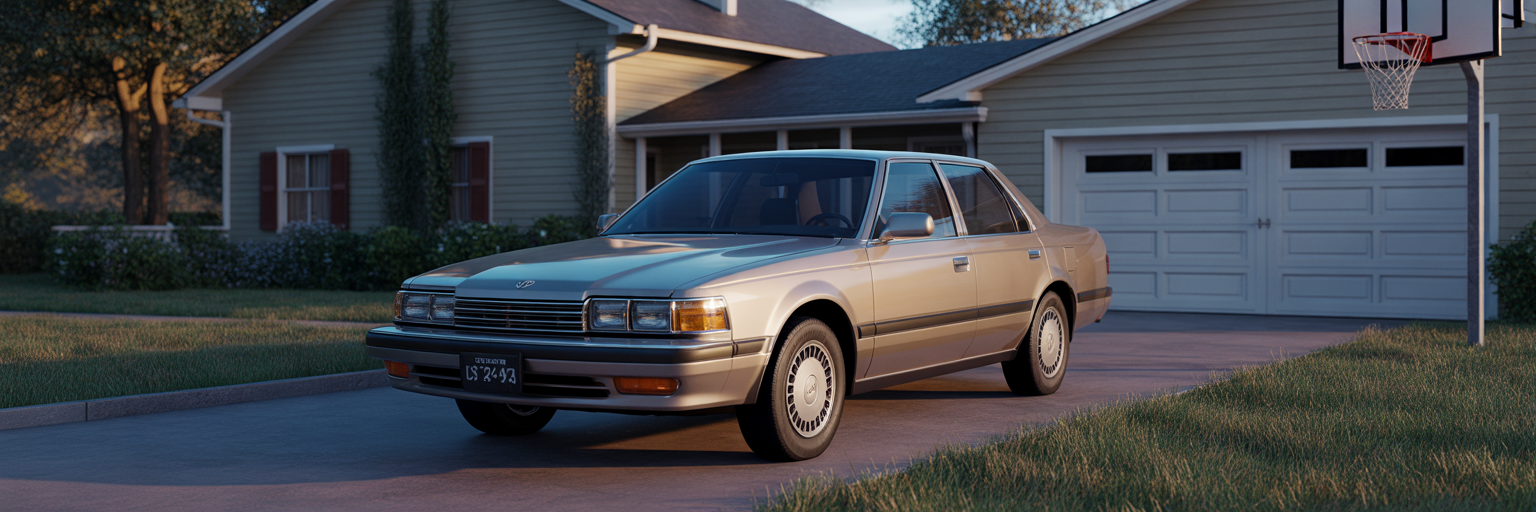
Building on the foundation of its early success, the Toyota Camry entered the late 1990s and 2000s not just as a competitor, but as the undisputed benchmark. During the eras of the XV20 and XV30 generations, the Camry became America’s best-selling passenger car, a title it would hold for years. This wasn’t achieved through flashy advertising or radical redesigns. It was accomplished by consistently and relentlessly delivering on its core promise of dependability, transforming initial trust into unshakable brand loyalty.
The ‘Appliance’ as a Badge of Honor
Around this time, a common critique emerged from automotive enthusiasts: the Camry was an “appliance.” It was meant as a slight, suggesting the car was as devoid of personality as a refrigerator or a toaster. But was that really a criticism? For the millions of people who bought one, that predictability was its greatest feature. They didn’t want a temperamental weekend toy for their daily commute. They wanted a car that started every single morning, that never left them stranded, and that faded into the background of their busy lives.
The “appliance” label was, in effect, a badge of honor. It signified that the Camry had perfected its primary function: providing comfortable, quiet, and supremely reliable transportation. It was a tool that worked flawlessly, every time. This focus on function over form appealed directly to a mass market that valued peace of mind far more than racetrack credentials, creating a legion of fiercely loyal owners who would return to the brand again and again.
A Camry for Everyone: The Two-Engine Strategy
A key pillar of the Camry’s market dominance was its brilliant two-engine strategy. Toyota understood that its customer base wasn’t a monolith. Some buyers prioritized maximum fuel economy and low running costs, while others were willing to trade a few miles per gallon for the effortless power of a larger engine. By offering a choice between a workhorse four-cylinder and a silky-smooth V6, Toyota could satisfy both ends of the midsize sedan market with a single nameplate.
This wasn’t just about engine size; it was about creating two distinct personalities within the same trusted package. The four-cylinder was the sensible, budget-conscious choice. The V6 was the quiet upgrade, offering a touch of near-luxury refinement without the premium badge and associated costs. This strategic flexibility allowed the Camry to compete against a wider range of vehicles, from the Honda Accord to entry-level luxury sedans.
The Four-Cylinder Workhorse
At the heart of the Camry’s reputation for invincibility was its standard four-cylinder engine. Powerplants like the 5S-FE and later the 2AZ-FE became legends in their own right. Their engineering was elegantly simple, prioritizing longevity and ease of maintenance over headline-grabbing horsepower figures. These engines weren’t designed to be thrilling; they were designed to be immortal.
The theme of Toyota Camry reliability is written in the service histories of these vehicles. Stories abound of these four-cylinder Camrys running for 200,000, 300,000, or even more miles with nothing more than routine oil changes and basic upkeep. They were non-interference engines, meaning a snapped timing belt wouldn’t result in catastrophic engine damage, a small detail that provided immense peace of mind. As MotorTrend has documented in its historical overviews, it was this reputation for bulletproof engineering that helped the Camry become America’s best-selling sedan. It solidified an identity that competitors could only envy: the quiet, comfortable, and utterly dependable default choice for anyone who just needed their car to work.
The Engine Debate: V6 Power Versus Four-Cylinder Practicality
For decades, one of the most significant decisions a Camry buyer could make was choosing what lay under the hood. The choice between the economical four-cylinder and the powerful V6 was more than just a box to tick on an options list; it defined the car’s character and long-term ownership experience. While the previous era cemented the Camry’s reputation for reliability, a closer look at its engine offerings reveals a fascinating story of trade-offs between practicality and performance.
The Appeal of the ‘Sleeper’ V6
The V6-equipped Camry has always been something of a “sleeper.” From the outside, it looked nearly identical to its four-cylinder sibling. But a press of the accelerator told a different story. Engines like the 1MZ-FE and later the 2GR-FE delivered a wave of smooth, quiet, and surprisingly urgent power. Merging onto a busy highway wasn’t a planned maneuver; it was an effortless event. The V6 transformed the Camry from a merely competent commuter into a confident and serene long-distance cruiser.
There was a feeling of substance that came with the V6. The engine note was more refined, vibrations were almost nonexistent, and the car felt more expensive than it was. For buyers who wanted the Camry’s trusted reliability but desired a more premium driving experience, the V6 was the perfect answer. It offered a taste of luxury without the associated badge, a quiet secret known only to its driver.
Understanding the V6 Ownership Trade-Offs
That smooth power, however, came with a few practical considerations. The most significant for long-term owners of older models was maintenance. Many of the popular V6 engines, for instance, used a timing belt rather than a timing chain. This meant a scheduled replacement was necessary, typically around 90,000 miles, which was a more expensive and involved service than the four-cylinder engines required. While these V6 engines were overwhelmingly reliable, certain high-mileage units could also be prone to issues like oil consumption, requiring more diligent checks. These weren’t deal-breakers, but they were factors that slightly complicated the otherwise flawless ownership narrative.
The Unbeatable Case for the Four-Cylinder
In the Camry V6 vs 4-cylinder debate, the four-cylinder consistently won on pure, unassailable logic. Its primary advantage was, and remains, fuel economy. Over the life of the car, the savings at the pump were substantial. The upfront purchase price was also lower, making it the more accessible option from day one. But the real beauty was in its long-term simplicity. Most modern four-cylinder Camrys use a timing chain, designed to last the life of the engine, eliminating the cost and worry of belt replacement. With fewer cylinders and a simpler design, routine maintenance was generally quicker and more affordable. For anyone whose top priorities were low cost of ownership and maximum dependability, the four-cylinder was the undisputed champion. Even simple maintenance tasks on an older car, like learning how to clean headlights with toothpaste, feel more manageable on a vehicle known for its simplicity.
| Factor | Four-Cylinder Engine | V6 Engine |
|---|---|---|
| Performance | Adequate for daily driving, focused on efficiency | Smooth, strong acceleration; confident for highway merging and passing |
| Fuel Economy | Excellent; a primary reason for its popularity | Good for its power, but noticeably lower than the four-cylinder |
| Upfront Cost | Lower purchase price on both new and used models | Higher purchase price, positioned as a premium option |
| Long-Term Maintenance | Generally simpler and less expensive (e.g., timing chains on most models) | Can be more complex and costly (e.g., timing belt changes on older models) |
| Key Reliability Note | Considered the benchmark for longevity and trouble-free ownership | Highly reliable, but some specific models require more diligent maintenance |
So, which is right for you? The choice comes down to priorities:
- The V6 Driver: You value effortless power and a refined driving experience. You frequently travel on the highway and appreciate the confidence of having power in reserve. You are prepared for slightly higher fuel and potential maintenance costs in exchange for performance.
- The Four-Cylinder Driver: Your primary concerns are low total cost of ownership, maximum fuel efficiency, and the simplest possible long-term maintenance. You want the absolute peak of Toyota’s legendary reliability. For most buyers, especially on the used market, a well-maintained four-cylinder remains the smartest and safest bet.
The Hybrid Pivot: Redefining Mainstream Efficiency

Just as the Camry had once answered America’s call for reliability, it adapted again in the mid-2000s to address a new and growing concern: environmental impact and fuel volatility. The introduction of the Camry Hybrid with the XV40 generation in 2006 was a pivotal moment. It wasn’t a niche science experiment; it was a deliberate, strategic move to bring Toyota’s world-leading hybrid technology from the quirky Prius into the heart of the American mainstream. This marked a major evolution in the Camry’s story, shifting the conversation from pure reliability to intelligent efficiency.
Bringing Hybrid Tech to the Masses
By placing its proven Hybrid Synergy Drive system into its best-selling nameplate, Toyota made a powerful statement. Hybrid technology was no longer just for early adopters or the eco-conscious elite. It was ready for everyone. The Camry Hybrid offered a familiar, comfortable, and trusted package, but with a futuristic powertrain that promised significant fuel savings. This move democratized hybrid technology, making it an easy and logical choice for millions of families and commuters who already trusted the Camry name.
Demystifying the Hybrid Experience
For many drivers, the Camry hybrid ownership experience was their first taste of an electrified vehicle, and it was full of pleasant surprises. The technology itself is complex, but the feeling behind the wheel is one of profound simplicity. The silent pull-away from a stoplight, running on pure electric power, is an unforgettable sensation. In stop-and-go city traffic, where a conventional car is at its least efficient, the hybrid system shines, shutting off the gasoline engine and saving fuel. The instant torque from the electric motor provides a satisfying and responsive feel, making the car feel quicker than its horsepower numbers might suggest.
The advantages of the hybrid model over its gasoline-only counterparts are clear and compelling:
- Substantial Fuel Savings: The most obvious benefit is the dramatic improvement in miles per gallon, especially for those who do a lot of city driving. This translates directly into lower running costs over the life of the vehicle.
- Reduced Maintenance: The hybrid system’s regenerative braking, which uses the electric motor to slow the car and recharge the battery, means significantly less wear on the conventional brake pads and rotors. Furthermore, the gasoline engine runs less often, reducing overall wear and tear.
- A Quieter, Smoother Ride: The ability to run on silent electric power at low speeds and the seamless interplay between the engine and motor create a uniquely serene and refined driving experience that even the V6 model struggled to match.
The Hybrid’s Role in an SUV World
The introduction and refinement of the Camry Hybrid proved to be a brilliant strategic move as the market began its massive shift toward SUVs. As crossovers and small SUVs grew in popularity, the sedan segment was under pressure. However, the Camry Hybrid offered a powerful counterargument. It delivered fuel economy figures that many popular SUVs simply couldn’t touch. For buyers who were pragmatic about their actual needs, it raised a critical question: why buy a heavier, less efficient SUV when a comfortable sedan could cut your fuel bill in half?
The hybrid gave sedan loyalists and efficiency-minded buyers a compelling reason to resist the crossover trend. It reinforced the Camry’s identity as the sensible, forward-thinking choice, securing its market share in an increasingly competitive landscape. While many buyers were drawn to the high seating position of an SUV, the Camry Hybrid made a strong case that true utility could also be found in exceptional efficiency, a point worth considering when comparing it to even the best hybrid SUVs under $35k.
Decoding the True Cost of Long-Term Ownership
The purchase price of a car is just the first chapter in its financial story. The real measure of a vehicle’s value is its total cost of ownership, a metric where the Toyota Camry has consistently excelled. This section moves beyond performance and features to quantify the concept of reliability in the language every owner understands: dollars and cents. It’s here, in the long-term financial equation, that the Camry’s dominance becomes undeniable.
Beyond the Sticker Price: Total Cost of Ownership
Owning a Camry has long been one of the most financially sound decisions in motoring. This is due to a combination of factors that work together to keep money in your pocket. Insurance rates are typically lower because the car’s safety record is strong and its drivers are statistically a low-risk group. When repairs are needed, parts are inexpensive and widely available, from dealerships to local auto parts stores. Perhaps most importantly, the Camry is one of the most understood vehicles on the road. An enormous network of independent mechanics knows these cars inside and out, meaning you’re never locked into expensive dealership service for routine work.
Resale Value: The Camry’s Financial Superpower
The single greatest factor in the Camry’s low cost of ownership is its legendary resale value. This isn’t magic; it’s a simple economic principle. The car’s stellar reputation for reliability creates incredibly high demand on the used market. More buyers wanting a finite number of cars means prices stay strong. This minimizes depreciation, which is the single largest expense for most new car owners. A Camry holds its value so well that the effective cost of owning one for three to five years can be significantly lower than that of a competitor with a lower initial sticker price but steeper depreciation.
This financial strength extends to the hybrid models as well. A common concern with used hybrids is the longevity and replacement cost of the high-voltage battery. However, as organizations like Consumer Reports have consistently found, these batteries are engineered to last the life of the vehicle. Failures are rare, and the proven durability of Toyota’s hybrid systems has made them a trusted choice on the used market, helping them retain excellent value.
A Buyer’s Guide to Finding a Dependable Used Camry
Searching for a used Camry is one of the safest bets in the pre-owned market, but knowing what to look for can help you find the best possible example. This used Camry buying guide focuses on key checkpoints for some of the most popular generations.
- Find the Best Model Years: When asked what is the best year for Toyota Camry, many experts point to the later years of any given generation, as initial kinks have been worked out. For example, models from 2012-2017 (XV50 generation) are highly regarded for their proven reliability across all powertrains. The 2002-2006 (XV30) generation is also a benchmark for simple, long-lasting engineering.
- Check for Oil Consumption (2007-2009 Four-Cylinder): The 2AZ-FE 2.4L four-cylinder engine used in some 2007-2009 models could be prone to excessive oil consumption. When inspecting one of these cars, check the oil level and look for any blue smoke from the exhaust on startup. Ask the owner for records of oil top-offs.
- Verify V6 Timing Belt Service (Pre-2007): If you are looking at a V6 model from before the 2007 model year (which introduced the 2GR-FE engine with a timing chain), it is critical to check for proof that the timing belt has been replaced at the recommended interval, typically every 90,000 miles. This is a non-negotiable maintenance item.
- Inspect Hybrid System Health: For a used hybrid, ensure the car transitions smoothly between electric and gas power. Check that the “Ready” light comes on promptly and that there are no warning lights on the dash. A pre-purchase inspection from a qualified mechanic is especially valuable here.
- Prioritize Maintenance Records: A thick stack of service receipts is the best indicator of a well-cared-for car. A Camry with 150,000 miles and a perfect service history is often a much better buy than one with 80,000 miles and a questionable past.
An All-Hybrid Future and the Camry’s Enduring Legacy
After more than four decades of quiet dominance, the Toyota Camry is making its boldest move yet. The landmark decision to make the 2025 model an all-hybrid lineup marks the beginning of a new chapter. This isn’t a radical departure from its identity but rather a confident evolution, synthesizing its entire history of reliability and practicality into a single, forward-looking strategy. It’s a move that secures the Camry’s legacy for a new era.
A Confident Bet on a Hybrid Future
In a market where many automakers are making all-or-nothing bets on pure electric vehicles, Toyota’s all-hybrid approach for the Camry is a masterclass in pragmatism. As noted by sources like Reuters, this strategy cleverly aligns with tightening fuel economy standards while catering to a mass market that may not be ready, willing, or able to make the leap to full electrification. It doesn’t require customers to install home chargers or worry about range anxiety on a road trip. It simply takes the familiar, trusted Camry and makes it significantly more efficient.
This is a calculated bet not on bleeding-edge technology, but on what mainstream buyers actually want: a lower cost of ownership and a smaller carbon footprint without any disruption to their lives. It’s a classic Toyota move, prioritizing widespread, practical improvement over niche innovation.
Evolving Without Losing Its Soul
While the powertrain is the headline news, the latest Camry demonstrates how a vehicle can evolve without abandoning its core principles. The newest generation offers more standard horsepower than the outgoing four-cylinder, available all-wheel drive for all-weather confidence, and sharp, modern styling that sheds the last vestiges of the “appliance” label. You can see this evolution reflected across the latest automotive news, where practicality is being paired with more engaging design.
Toyota is carefully threading a needle: adding desirability and modern features without compromising the fundamental promise of reliability, safety, and value that has defined the Camry for generations. The goal is to attract a new buyer who wants style and technology, while reassuring the lifelong Camry loyalist that the car they trust is still, at its heart, a Camry. It’s an attempt to answer not just the needs of the head, but the wants of the heart.
The Enduring Relevance of the Sedan
In a market seemingly saturated with SUVs of every shape and size, it’s fair to ask: does the sedan still have a place? The Camry’s continued success provides a resounding “yes.” For a substantial segment of the population that does not need to haul seven passengers or tow a boat, the sedan remains a more efficient, more comfortable, and better-driving vehicle. Its lower center of gravity provides more agile handling, and its lighter weight and more aerodynamic shape contribute to superior fuel economy.
The Camry’s enduring purpose is to serve these buyers with a product that is perfectly optimized for their needs. Its four-decade journey from a compact upstart to an American institution was never about being the fastest, the flashiest, or the most exciting car on the road. It was about being the most trustworthy. The all-hybrid future is not a betrayal of that identity, but its next logical expression, ensuring the Toyota Camry remains America’s default sensible sedan for many years to come.