
The Enduring Legacy of America’s Favorite Mid-Size Truck
For years, Kelley Blue Book’s resale value awards have read like a broken record, with the Toyota Tacoma consistently topping the charts. It’s not uncommon for a three-year-old model to retain an almost unbelievable percentage of its original sticker price. This isn’t a fluke or a market bubble. It’s a financial phenomenon built on decades of deliberate engineering and a cult-like following. This article dissects the mechanical DNA and market forces that explain why Tacomas hold value so stubbornly.
We will explore the three pillars supporting this legacy: legendary reliability, purpose-built off-road capability, and the resulting unmatched value retention. This value is so predictable that enthusiasts have coined a term for it: the “Toyota Tax.” It’s that premium buyers willingly pay for a used Tacoma, confident that they are buying a truck that simply refuses to quit. It’s a puzzle that can’t be solved by looking at spec sheets alone.
To truly understand this, we need to go back to the beginning. We will move chronologically through all four Toyota Tacoma generations, examining the specific engines, frames, and design choices that forged this reputation. From the simple, unbreakable first generation to the hybridized powerhouse of today, each chapter adds another layer to the story. For those looking to compare, our overview of the best trucks is a great resource to see how the Tacoma stacks up in its class.
First Generation (1995–2004): Building an Unbreakable Foundation
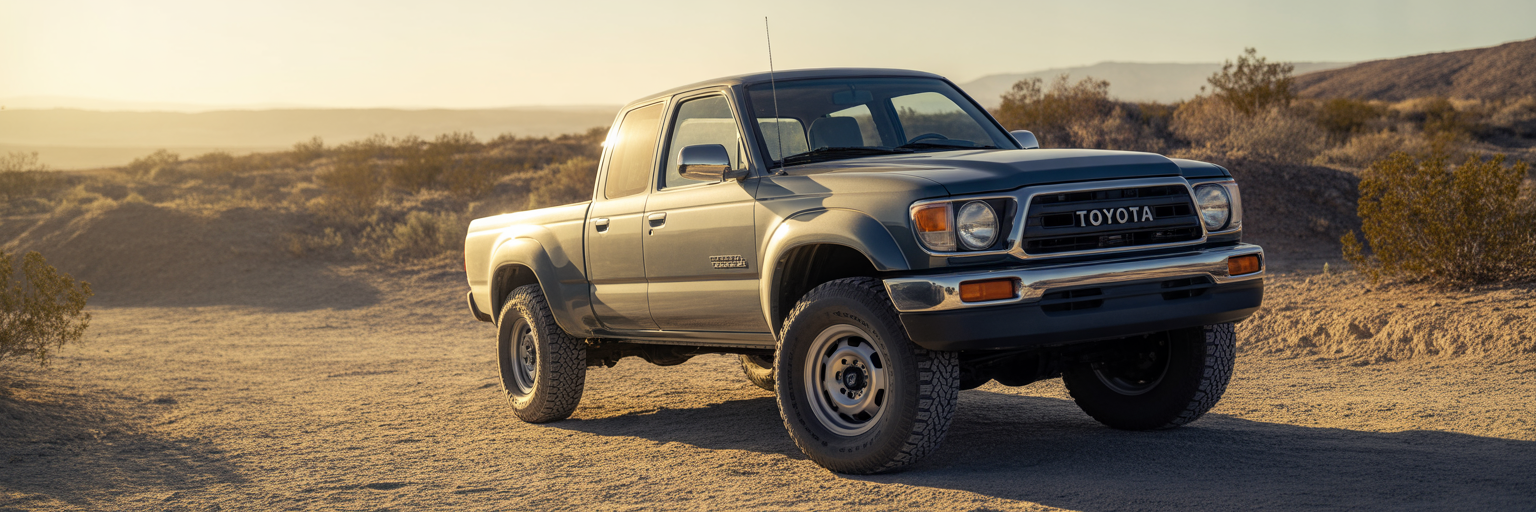
The Tacoma story begins with a strategic pivot. For decades, Toyota’s compact truck in America was a rebadged version of its global Hilux, a vehicle famous for its indestructible nature in the world’s harshest environments. But by the mid-90s, Toyota recognized that North American drivers wanted more than just raw utility. They wanted a truck that could handle a weekend on the trail and still be comfortable enough for the Monday morning commute.
A New Truck for a New Market
The first-generation Tacoma was born from this insight. While it inherited the Hilux’s spirit of durability, it was engineered specifically for American tastes. The most significant change was the move to an independent front suspension (IFS) across the 4×4 lineup. This was a direct departure from the Hilux’s solid front axle, offering a dramatically improved on-road ride and handling. The frame was widened, the cabin was made more spacious and quiet, and the interior materials felt less agricultural. Toyota successfully created a truck that was rugged without being punishing, laying the groundwork for its dual-purpose appeal.
The Legendary Engine Lineup
At the heart of the first-gen’s reputation are its engines. The base 2.4L 2RZ-FE and 2.7L 3RZ-FE four-cylinders were simple, reliable workhorses. But the star of the show was the 3.4L 5VZ-FE V6. This engine is a masterclass in over-engineering. With its stout iron block and straightforward design, it became a benchmark for longevity. Early versions were non-interference engines, meaning a snapped timing belt wouldn’t result in catastrophic internal damage, a detail that speaks volumes about its forgiving nature. It wasn’t the most powerful V6 on the market, but its reputation for running for hundreds of thousands of miles with basic maintenance made it arguably the best Tacoma engine of its time. It was an engine you could trust, miles from civilization.
The Advent of the Factory-Built Trail Rig
Toyota cemented the Tacoma’s off-road credentials in 1998 with the introduction of the TRD Off-Road package. This was a pivotal moment. For the first time, a buyer could walk into a dealership and drive away with a truck equipped for serious trail duty. The package included upgraded Bilstein shocks, slightly larger tires, and the crown jewel: a factory-installed electronic locking rear differential. Before this, a “locker” was a hardcore, aftermarket-only modification. By offering it from the factory, Toyota democratized serious Tacoma off-road capability and sent a clear signal to the enthusiast community that it was listening. These simple, mechanically transparent, and incredibly tough first-gen trucks are still sought after today, forming the unbreakable foundation of the Tacoma legend.
Second Generation (2005–2015): The Era of Growth and Dominance
If the first generation built the Tacoma’s foundation, the second generation built the empire. Responding to a market that was shifting away from truly compact trucks, Toyota went bigger, bolder, and more powerful. This was the era where the Tacoma didn’t just compete in the mid-size segment; it came to define it. According to AutoTrader, the Tacoma’s popularity was firmly established by this generation, with strong sales solidifying its reputation for value.
Growing into a True Mid-Size Competitor
The 2005 model was a complete redesign, growing significantly in every dimension. The styling became more muscular and aggressive, directly appealing to American truck buyers who wanted a vehicle with presence. The frame was stronger, the payload and towing capacities increased, and the interior offered more space and creature comforts. It was no longer a compact truck with aspirations; it was a bona fide mid-size contender that felt substantial and capable, ready to take on both work and adventure.
The Power of the 4.0L V6
Powering this larger truck was the new 4.0L 1GR-FE V6. This engine quickly earned a reputation for being just as durable as its 3.4L predecessor, but with a welcome increase in horsepower and torque. It was a simple, reliable workhorse with a timing chain instead of a belt, reducing long-term maintenance needs. The 1GR-FE’s robust nature also made it a favorite of the aftermarket, spawning a massive ecosystem of performance parts from cold air intakes to full-blown supercharger kits. It provided the dependable muscle that the bigger, more capable second-gen needed.
Addressing the Frame Rust Controversy
No story of the second-gen is complete without discussing the Toyota Tacoma frame issues. A manufacturing defect in the frame’s corrosion protection led to premature and severe rust on trucks operated in salty winter climates. It was a serious black eye for a brand built on quality. However, Toyota’s response became a case study in brand management. Instead of downplaying the issue, the company initiated a massive campaign that included a 15-year warranty extension and a full frame replacement program for affected vehicles, costing the company an estimated $3.4 billion. Paradoxically, by standing behind its product so comprehensively, Toyota reinforced the trust it had with its customers. Many owners who received a brand-new frame on their high-mileage truck became even more loyal to the brand. For more on breaking automotive stories, you can check the latest car news.
Refining the TRD Formula
With the second generation, Toyota also began to segment its enthusiast offerings more clearly. The TRD Sport was aimed at on-road performance, featuring a sport-tuned suspension, a limited-slip differential, and its signature non-functional hood scoop. The TRD Off-Road, however, doubled down on trail capability. It retained the all-important locking rear differential and Bilstein shocks but added advanced electronic aids like A-TRAC (Active Traction Control), which could brake a spinning wheel to send power to the one with grip. This refinement showed that Toyota understood its buyers weren’t a monolith; some wanted a sporty street truck, while others wanted a dedicated trail machine.
Third Generation (2016–2023): Fusing Modern Technology with Rugged DNA
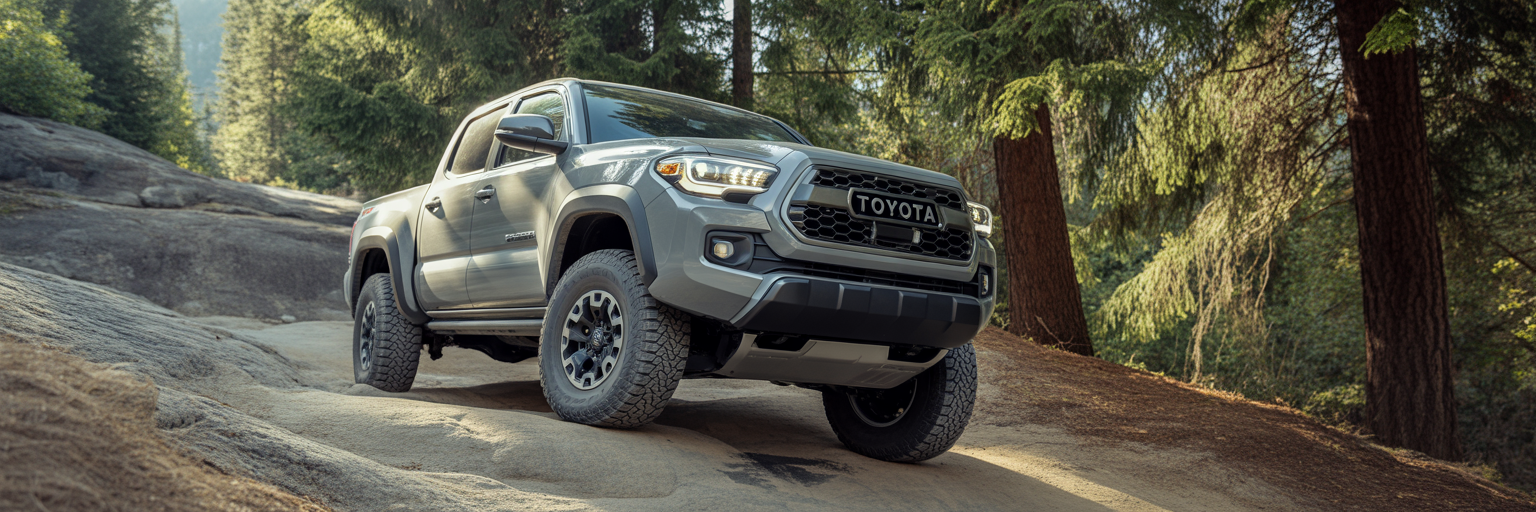
The third of the Toyota Tacoma generations represented a significant modernization. While retaining the familiar size and shape of its predecessor, Toyota infused the truck with a new powertrain, smarter electronics, and a more refined interior. This generation was about balancing the Tacoma’s rugged, analog soul with the digital demands of the modern driver.
The Atkinson Cycle V6 and the Efficiency Debate
The biggest change was under the hood. The venerable 4.0L V6 was replaced by a more technologically advanced 3.5L 2GR-FKS V6. This engine featured Toyota’s D-4S direct and port injection system and could operate on the Atkinson cycle, a combustion process that prioritizes fuel efficiency over outright power. While it boasted more horsepower on paper, early adopters voiced a common complaint: a perceived lack of low-end torque and a new 6-speed automatic transmission that seemed to “hunt” for the right gear. It felt different from the effortless grunt of the old 4.0L. To their credit, Toyota listened. Subsequent model years received updated ECU and transmission tuning that significantly improved drivability and throttle response, smoothing out the power delivery and making the truck feel more decisive.
Smarter Transmissions and the Manual’s Last Stand
While the new 6-speed automatic took time to find its footing, Toyota made a crucial decision that endeared it to purists: it continued to offer a 6-speed manual transmission. In an era where the manual was vanishing from nearly every vehicle segment, its availability in the Tacoma was a key differentiator. It offered a more engaging driving experience and gave drivers precise control, especially in technical off-road situations. This commitment to the manual gearbox was a nod to the Tacoma’s enthusiast roots.
Advanced Off-Road Electronics
This generation brought a suite of sophisticated off-road aids that made expert-level techniques accessible to more drivers. Crawl Control acted as a low-speed off-road cruise control, managing the throttle and brakes automatically so the driver could focus solely on steering through obstacles. Multi-Terrain Select allowed the driver to tailor the truck’s traction control system to specific surfaces like mud, sand, or rocks. These systems didn’t replace driver skill, but they provided an electronic safety net that made tackling challenging terrain less intimidating.
The Rise of the TRD Pro
Crowning the third-gen lineup was the TRD Pro. This wasn’t just an appearance package; it was a turn-key, high-performance off-roader straight from the factory. A detailed Tacoma TRD Pro review would highlight its key features: beefy Fox internal bypass shocks, a factory suspension lift, a protective front skid plate, and unique styling. The TRD Pro became the halo model, a highly desirable truck that offered incredible capability without the need for immediate aftermarket modification. It represented the ultimate factory expression of the Tacoma’s adventurous spirit and became a status symbol on and off the trail.
Fourth Generation (2024+): A Turbocharged and Hybridized Future
The fourth-generation Tacoma marks the most significant transformation in the truck’s history. Built from the ground up on a new platform with entirely new powertrains, it’s Toyota’s bold attempt to future-proof its icon while doubling down on the core attributes that made it a legend. This is the Tacoma for a new era.
The TNGA-F Platform: A Modern Foundation
Underpinning the new truck is the TNGA-F global truck platform, a modern, modular architecture shared with the larger Tundra and Sequoia. The move to a fully boxed, high-strength steel ladder frame brings immense benefits. The new chassis is significantly more rigid than the outgoing C-channel frame, which translates directly to a more solid feel, improved handling dynamics, and enhanced crash safety. It’s a foundation built for the next decade of performance and capability.
The Turbocharged Powertrain Shift
In a move that surprised some traditionalists, Toyota retired the V6 entirely. The standard powertrain is now a 2.4L turbocharged four-cylinder. But before anyone laments the loss of two cylinders, a look at the numbers tells the real story. The new turbo engine produces significantly more torque than the outgoing V6, and crucially, it delivers that torque much lower in the rev range. This low-end grunt is exactly what you want in a truck for towing, hauling, or crawling over obstacles. It’s a smarter, more efficient way to make usable power.
i-FORCE MAX: Hybrid Power for Performance
At the top of the powertrain lineup sits the i-FORCE MAX hybrid. This isn’t a hybrid system designed solely for sipping fuel like in a Prius. Here, the electric motor, sandwiched between the engine and transmission, acts as a performance booster. It provides instantaneous torque fill, eliminating turbo lag and delivering a powerful, responsive surge of acceleration. Off-road, this translates to incredibly precise throttle control at low speeds. It’s a hybrid system built for power and capability, not just miles per gallon. For those evaluating how the new Tacoma stacks up against competitors, exploring which 2025 trucks offer the best towing and fuel economy provides valuable context.
A Revolution in Ride Comfort: Multi-Link Rear Suspension
Perhaps the most transformative change for daily driving is the switch to a multi-link coil spring rear suspension on most trims. For decades, the Tacoma used traditional leaf springs, which are simple and great for carrying heavy loads but notorious for a stiff, bouncy ride when the bed is empty. The new multi-link setup provides vastly superior ride comfort and high-speed stability without sacrificing payload or towing capacity. It finally makes the Tacoma ride less like a classic truck and more like a modern SUV.
Trailhunter: The Factory-Built Overlander
Responding directly to the explosion of the overlanding trend, Toyota introduced the Trailhunter trim. Co-developed with renowned Australian off-road outfitter ARB, the Trailhunter is a factory-built, long-range exploration vehicle. It comes equipped with Old Man Emu position-sensitive shocks, a steel rear bumper, robust frame-mounted rock rails, and a high-mounted air intake. It’s Toyota’s answer to the enthusiast who wants a vehicle ready for a multi-day backcountry adventure right off the showroom floor.
The Core Factors Driving Unmatched Value Retention
After journeying through the Toyota Tacoma generations, a clear picture emerges. The truck’s incredible ability to hold its value isn’t magic; it’s the result of a consistent, multi-decade strategy. The reasons can be distilled into a few core pillars that work together to create a demand that consistently outstrips supply.
- Bulletproof Mechanical Reliability: This is the bedrock. The legacy of over-engineered, under-stressed engines like the 5VZ-FE and 1GR-FE created a multi-generational reputation for longevity. Owners know these trucks can be trusted to run for hundreds of thousands of miles with basic care. This confidence translates directly into a willingness to pay more for a used example, knowing the largest ownership costs are likely behind them.
- Purpose-Built Design and Capability: The Tacoma hits a sweet spot. Its mid-size footprint is large enough to be useful but small enough to be maneuverable on tight trails where full-size trucks can’t go. The long-standing availability of TRD packages with genuine off-road hardware, especially the locking rear differential, makes it the default choice for a massive community of outdoor enthusiasts. This specialized demand for Tacoma off-road capability insulates it from the depreciation that affects more generic vehicles.
- Unparalleled Aftermarket Support and Community: A Tacoma is more than a truck; it’s a platform. The vast ecosystem of aftermarket parts for suspension, armor, lighting, and performance is second to none. Owners see their trucks not as depreciating assets but as ongoing projects. This culture of modification and personalization is supported by incredibly strong online communities and forums where owners share knowledge on everything from routine maintenance to complex modifications. For those inspired to work on their own vehicles, our DIY section offers helpful guides.
These factors create the “Toyota Tax,” a self-perpetuating cycle. A stellar reputation for reliability and capability creates intense demand. This demand, combined with a vibrant community that keeps the existing fleet on the road and continuously improves it, keeps used prices high. High resale value then reinforces the perception of the Tacoma as a smart, safe purchase, which in turn fuels more demand.
| Pillar of Value | Key Contributing Factor(s) | Direct Impact on Resale Value |
|---|---|---|
| Mechanical Reliability | Over-engineered engines (5VZ-FE, 1GR-FE); simple and robust transmissions; durable frame design. | Lower long-term ownership costs and a reputation for high-mileage longevity create immense buyer confidence. |
| Purpose-Built Capability | Ideal mid-size footprint for trails; factory-offered TRD packages with locking differentials and upgraded suspension. | Creates intense, specialized demand from off-road, overlanding, and outdoor lifestyle communities that insulates it from typical depreciation. |
| Aftermarket & Community | Vast ecosystem of parts for suspension, armor, and performance; strong online forums and DIY support. | Owners continuously invest in their trucks, increasing their value. Ease of repair and modification sustains the fleet. |
| Brand Trust & Reputation | Consistent delivery on durability promises; comprehensive handling of issues like the frame rust recall. | Builds a multi-generational reputation for standing behind the product, creating a ‘safe bet’ perception in the used market. |
The Final Word on a Four-Wheeled Investment
The Toyota Tacoma’s defiance of depreciation is not an accident. It is the direct, tangible result of a decades-long philosophy: build a truck that is durable, capable, and trustworthy above all else. It’s a strategy that has prioritized mechanical simplicity and real-world utility over fleeting trends and cosmetic flair. From the unbreakable simplicity of the first generation to the sophisticated power of the fourth, a clear thread runs through the truck’s history.
The newest generation, with its advanced TNGA-F platform and i-FORCE MAX hybrid powertrain, shows that Toyota is not resting on its laurels. The company is strategically evolving the Tacoma, integrating modern technology not for its own sake, but to enhance the core identity of the truck. The turbo engine delivers more usable torque, and the multi-link suspension provides better control, all in service of making a more capable vehicle.
Ultimately, buying a Tacoma has become more than just a vehicle purchase for many. It’s seen as a long-term investment in utility, adventure, and peace of mind. Its remarkable ability to hold its value is the ultimate proof of the trust it has earned from millions of owners across America. It is a legacy of earned confidence, one the newest generation is meticulously engineered to continue.