
The V8 engine has been the heartbeat of American automotive culture for nearly a century. Its popularization in the post war era set the stage for a revolution in performance and identity. Yet, if you walk into a dealership today, you will find that familiar rumble is becoming a rare and expensive option. This shift is not a matter of preference but a result of immense global pressures that have made the V8 an endangered species.
An American Icon’s Cultural Legacy
Before we examine the technical reasons for its decline, it is important to understand what the V8 represents. It is more than just an engine configuration. For generations, it has been a sensory experience, a cultural symbol, and a core part of the American identity.
The Sound and Feel of American Muscle
The signature rumble of a V8 is unmistakable. It comes from its cross plane crankshaft, which creates an uneven firing order among the cylinders. This design produces a deep, throbbing exhaust note that feels powerful even at idle. You can feel the vibration in your chest, a physical connection to the machine. Smaller inline four or V6 engines, with their smoother and more balanced firing orders, produce a higher pitched, more refined sound. They are efficient and quiet, but they lack that raw, mechanical character that defines the V8.
From Hot Rods to Hollywood
The V8’s story began in the optimistic years following World War II, when soldiers returned home with mechanical skills and a desire for speed. They took affordable Ford Flathead V8s and created the first hot rods, sparking a nationwide culture of performance. This movement exploded in the 1960s with the muscle car boom, as manufacturers like Ford, Chevrolet, and Dodge stuffed massive V8s into their cars. This era cemented the engine’s place in our collective memory, amplified by Hollywood. From Steve McQueen’s Mustang in “Bullitt” to the roaring engines in “American Graffiti,” the V8 became the soundtrack to rebellion and adventure.
A Symbol of Freedom and Identity
More than any other piece of automotive technology, the V8 became intertwined with the American idea of freedom. It represented power, independence, and the vastness of the open road. The ability to have a surplus of horsepower on tap felt uniquely American. It was a statement of abundance and a rejection of limits. For many, owning a V8 was not just about transportation. It was about identity. The disappearance of this engine feels like the end of an era, leaving many to wonder if any V8 engine replacement can ever capture that same spirit.
The Regulatory Pressures Forcing a Change

The emotional connection to the V8 is strong, but it cannot compete with the unyielding force of government regulations. The primary reason why are V8 engines disappearing is not a lack of demand but a complex web of rules that make them increasingly difficult and expensive to build. Automakers are not just choosing to move on, they are being pushed.
Decoding Corporate Average Fuel Economy (CAFE) Standards
In the United States, the most significant hurdle is the Corporate Average Fuel Economy or CAFE standard. Think of it as a fleet wide grade point average for fuel efficiency that each automaker must meet. Every vehicle they sell contributes to this average. A V8 powered truck that gets 17 miles per gallon significantly lowers the company’s overall score. To compensate, the manufacturer must sell a large number of highly efficient four cylinder cars or electric vehicles. As these emissions standards for cars become stricter each year, the mathematical burden of a thirsty V8 becomes too great to justify.
The Global Marketplace Demands Uniformity
The world is more connected than ever, and car companies design their products for a global audience. While the US has CAFE, Europe has its own stringent rules, and China has its own set of regulations. It is no longer financially viable for a company like Ford or General Motors to design a special V8 engine just for the North American market. Instead, they focus on creating a single, compliant engine platform, like a turbocharged four cylinder or V6, that can be sold everywhere. This global approach streamlines development and manufacturing, saving billions of dollars and ensuring compliance across all major markets.
The Technical Hurdles of V8 Compliance
Making a large displacement V8 clean enough for modern standards is a massive technical challenge. It requires a suite of expensive and complex after treatment systems. This includes gasoline particulate filters to capture soot, larger and more sophisticated catalytic converters with more precious metals, and incredibly advanced engine management software. These systems add thousands of dollars to the cost of the engine without adding a single horsepower. In fact, they often slightly restrict performance. Automakers face a choice: invest heavily in making an old design compliant or redirect that investment toward the future of performance engines. The choice is becoming obvious, and you can stay updated on these industry shifts by checking our news section for the latest developments.
Economic Realities of Modern Engine Production
Beyond the regulatory mandates, the simple economics of building cars in the 21st century have turned against the V8. From the factory floor to the customer’s driveway, the financial case for smaller, more efficient engines is overwhelming. It is a decision driven by dollars and cents.
The High Cost of Modernizing a Legacy Design
Bringing a traditional V8 up to modern standards for emissions and efficiency is not a simple tune up. It requires a complete re engineering effort, costing hundreds of millions, if not billions, of dollars. This involves developing new direct injection fuel systems, cylinder deactivation technology that can shut down half the engine while cruising, and using lighter, more exotic materials. This massive investment is for a single engine family that can only be used in a shrinking number of trucks and performance cars. The return on that investment is simply no longer there.
The Power of Modular Engine Platforms
The smartest automakers now use a modular engine architecture. This is a brilliant manufacturing strategy where a three cylinder, four cylinder, and V6 engine can all be built using the same fundamental design. They share components like pistons, connecting rods, and valve systems. This approach dramatically cuts down on development costs and simplifies the manufacturing process. A large, standalone V8 program does not fit into this efficient, cost effective model. It is an outlier in a system designed for commonality.
Supply Chain Volatility and Material Costs
A V8 is physically large. It requires significantly more aluminum, iron, and steel than a four or six cylinder engine. In an age of unpredictable supply chains and fluctuating raw material prices, this size becomes a liability. A smaller, lighter engine is not only more efficient to run but also a more stable and profitable product to build. It reduces the manufacturer’s exposure to market volatility.
The Total Cost of Ownership for the Consumer
The financial burden extends to the buyer as well. The total cost of owning a V8 powered vehicle is substantially higher. The initial purchase price for the V8 option is often several thousand dollars more. Annual fuel costs can be hundreds or even thousands of dollars higher. Some of the least efficient models are hit with a “gas guzzler” tax from the government. Finally, insurance premiums are often higher due to the vehicle’s power and replacement cost. As consumers become more budget conscious, many are looking for more economical options, which is why many are exploring choices like the best hybrid SUVs under $35k.
The Rise of Turbocharged and Downsized Engines
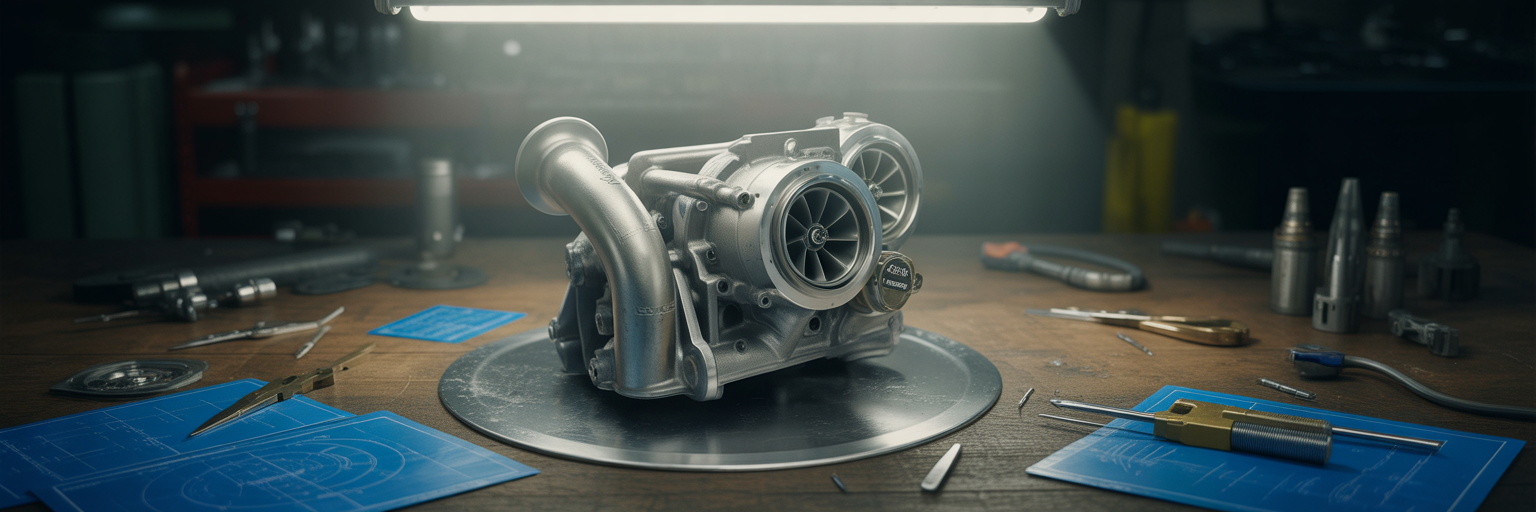
As the V8 fades, a new generation of technology has risen to take its place. Turbocharged and downsized engines, particularly V6s, are now the standard for performance and capability. From a mechanic’s perspective, these modern power plants are engineering marvels that deliver on the promise of doing more with less.
How a Turbocharger Makes Big Power from a Small Engine
The concept of turbocharging is quite simple. The engine’s hot exhaust gases, which are normally wasted, are used to spin a small turbine, like a pinwheel. This turbine is connected to another pinwheel, the compressor, which forces a huge amount of extra air into the engine’s cylinders. With more air, the engine can burn more fuel, and the result is a dramatic increase in power. A small 3.5 liter V6 can easily produce the same horsepower as a much larger 5.0 liter V8, all while being lighter and more fuel efficient.
Power Curve Showdown: Twin-Turbo V6 vs. Naturally Aspirated V8
The debate over a turbo V6 vs V8 often comes down to how they deliver power. A traditional V8 has a linear power curve. The horsepower and torque build smoothly and predictably as the engine’s RPMs climb. It is a satisfying and intuitive feeling. A modern twin turbo V6 behaves differently. It delivers a massive wave of torque very low in the RPM range, often below 3,000 RPM. This creates a feeling of immediate, effortless acceleration that is incredibly useful for daily driving, merging onto the highway, or towing a heavy load. While the V8 needs to be revved high to access its peak power, the turbo V6 provides it right where most people drive.
Conquering Turbo Lag: Modern Engineering Solutions
Older turbocharged engines were known for “turbo lag,” a noticeable delay between pressing the throttle and feeling the power kick in. However, modern engineering has all but eliminated this issue. Technologies like twin scroll turbos, which separate exhaust pulses for faster response, and variable geometry turbines have made modern engines incredibly responsive. Some systems even use small electric motors to help spin the turbos up instantly. While purists may still prefer the instantaneous throttle response of a naturally aspirated V8, the gap has narrowed to the point where most drivers would never notice a difference.
| Performance Metric | Typical 5.0L Naturally Aspirated V8 | Typical 3.5L Twin-Turbo V6 |
|---|---|---|
| Peak Horsepower | ~450 hp @ 7,000 RPM | ~450 hp @ 5,000 RPM |
| Peak Torque | ~410 lb-ft @ 4,600 RPM | ~510 lb-ft @ 3,500 RPM |
| Power Delivery Feel | Linear, builds smoothly to redline | Strong, immediate surge at low-to-mid RPMs |
| Fuel Economy (Combined) | ~17-19 MPG | ~20-22 MPG |
| Primary Advantage | Instant throttle response, iconic sound | Massive low-end torque, better fuel efficiency |
This new approach to power is especially evident in the truck market, where low end torque is king. You can see how these advanced powertrains have redefined capability by exploring some of the modern trucks that offer the best towing and fuel economy.
Hybridization as a Performance Enhancer
The other major technological shift shaping the future of performance is hybridization. For years, the word “hybrid” brought to mind slow, economy focused cars like the Toyota Prius. That perception is now completely outdated. Automakers are increasingly using electric motors not just for efficiency, but as a powerful tool to create staggering levels of performance.
More Than Just a Prius: Electric Motors for Power
In a performance hybrid system, a potent gasoline engine is paired with one or more electric motors. The electric motors are powered by a small battery that is recharged during braking and by the engine itself. When the driver demands maximum acceleration, both power sources work together. This combination allows for horsepower and torque figures that were once the exclusive domain of exotic supercars, all while improving overall fuel efficiency.
Instant Torque Fill: The Hybrid Advantage
The true magic of a performance hybrid is something called “torque fill.” An electric motor delivers 100% of its available torque instantly, from the moment it starts spinning. A gasoline engine, by contrast, needs to build up RPMs to reach its peak torque. By using the electric motor to fill in this gap, engineers can create a feeling of relentless, seamless acceleration. It completely eliminates any hint of lag, whether from a turbocharger spooling up or simply from the engine getting into its powerband. The result is a car that feels incredibly responsive and powerful at any speed.
The ‘Halo Car’ Strategy: Keeping the V8 Alive
Ironically, this advanced technology may be the very thing that saves the V8, at least in a limited capacity. In high end “halo” vehicles like the Corvette E Ray or luxury performance sedans, a hybrid system can be paired with a V8. The electric motor’s efficiency helps improve the vehicle’s overall fuel economy rating, which in turn helps the automaker’s fleet average under CAFE rules. As a report from CarBuzz highlights, this strategy allows the V8 to survive in low volume, high margin models where buyers are willing to pay a premium for its sound and character.
The Downsides: Weight, Complexity, and Cost
Of course, this solution is not without its trade offs. A performance hybrid system adds significant weight from the battery, motors, and control electronics. This can negatively impact a vehicle’s handling and agility. It also adds a great deal of complexity, with more components that could potentially fail and require specialized service. Finally, it is an expensive technology, which is why it is currently reserved for high end vehicles. It is a sophisticated but heavy and costly way to achieve performance.
What the V8’s Decline Means for Drivers

This profound shift in engine technology is not just an academic exercise for engineers. It has real, practical implications for everyone who buys, drives, and works on vehicles. From the job site to the weekend car show, the landscape is changing permanently.
The New King of the Work Truck
The American pickup truck was the V8’s last great stronghold, but that fortress has fallen. Today, twin turbo V6 engines dominate the sales charts for manufacturers like Ford and Ram. These smaller engines often boast higher towing and payload ratings than their V8 counterparts, all while delivering better fuel economy. For buyers who use their trucks for work, the logical choice is clear. The V6 simply does the job better.
The Future of the Used V8 Market: Classic or Liability?
This raises a fascinating question for the used car market. Will the last generation of V8 powered cars and trucks become sought after modern classics, holding their value as enthusiasts seek out that authentic experience? Or will rising fuel prices and the fear of complex repairs make them undesirable liabilities? The answer is likely both. Pristine, low mileage examples will probably become collector’s items, while average daily driven V8s may become harder to sell.
In the Garage: Maintenance and Repair Realities
For those who like to work on their own vehicles, the difference between old and new is stark. A traditional pushrod V8 is relatively simple and accessible, with more room in the engine bay for repairs. A modern, direct injection turbocharged engine is a different story. It is packed with more components like turbos, intercoolers, and high pressure fuel systems that can fail. While modern engines are generally very reliable, the long term durability of a simple, old school V8 is well documented. For those interested in tackling their own projects, our DIY section offers guides for a range of vehicles.
The Evolution of the American Tuner
The enthusiast community is adapting as well. The art of American hot rodding is evolving. The focus is shifting from swapping camshafts and carburetors to mastering ECU tuning and electronic boost controllers. A new generation of tuners is learning how to extract huge amounts of power from these smaller, turbocharged engines. It is a different skill set, one that relies more on software than a wrench, but the spirit of performance and personalization remains the same. This is the new frontier for the future of performance engines.