
In the mid-1990s, the American car market presented a clear choice. You could have a truck-based SUV like a Ford Explorer, which handled like a boat and drank gasoline with alarming enthusiasm, or you could drive a station wagon, a body style that screamed suburban surrender. There was no middle ground. This clear division in the automotive world set the stage for one of the most successful automotive experiments in modern history, and the Subaru Outback history began not with a groundbreaking new platform, but with a clever set of modifications to an existing one.
The Genesis of an Unconventional Icon
The automotive landscape of the 1990s was defined by this stark contrast. The rise of the SUV was undeniable, yet many drivers felt alienated by their sheer size and inefficiency. They wanted the all-weather capability and cargo space but dreaded the clumsy handling and poor fuel economy on their daily commute. Station wagons, while practical, had an image problem, often seen as the very definition of uncool. Subaru saw an opportunity not to invent a new vehicle, but to reinvent a category.
The first Outback, introduced in 1994, was essentially a trim package for the existing Legacy wagon. It was a masterclass in resourceful engineering, transforming the car’s personality with a few strategic, low-cost tweaks. The formula was simple yet profoundly effective:
- Raised Suspension: A modest lift provided extra ground clearance, giving it a more commanding stance and genuine rough-road capability.
- Rugged Aesthetics: Two-tone paint and prominent plastic body cladding created a visual language of durability, protecting the body from scrapes while looking the part.
- All-Terrain Tires: More aggressive tires signaled that this was a wagon that wasn’t afraid to leave the pavement.
These changes were minor on paper, but their collective impact was huge. The real genius, however, was in the marketing. Subaru hired Paul Hogan, famous for his role as “Crocodile Dundee,” to be the face of the Outback. The ads never compared the Outback to other wagons. Instead, they pitted it directly against bulky SUVs, positioning it as the smarter, more nimble alternative. Hogan, with his rugged charm, famously declared it the world’s first “Sport-Utility Wagon.” This brilliant piece of marketing didn’t just sell a car; it created an entirely new niche.
The strategy worked perfectly. It resonated with active, educated buyers in places like the Pacific Northwest and New England, people who needed a vehicle that could handle a snowy commute on Monday and a trip to the trailhead on Saturday. They didn’t want the compromises of a traditional SUV. They wanted a car that fit their lifestyle, and the Outback delivered. This approach to understanding market shifts is something we see constantly; for more on what’s happening in the automotive world today, you can check out the latest car news.
The Engineering Heartbeat: Boxer Engine and Symmetrical AWD
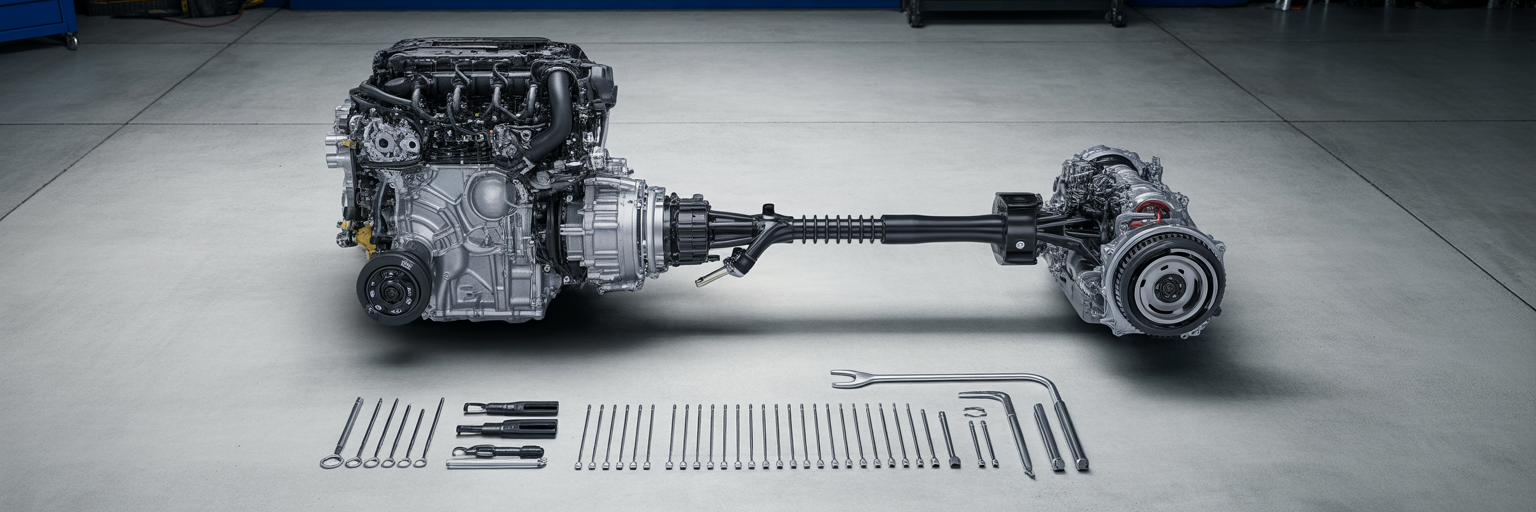
While clever marketing put the Outback on the map, its enduring success is rooted in a unique engineering philosophy that sets it apart from nearly every competitor. This approach is part of what makes the brand stand out, a topic we explore across CarPhanatics. At its core are two signature technologies that work in perfect harmony: the horizontally-opposed boxer engine and Symmetrical All-Wheel Drive. These aren’t just features on a spec sheet; they are the mechanical soul of the vehicle.
Explaining the Horizontally-Opposed Boxer Engine
Imagine two boxers standing on opposite sides of a punching bag, striking it at the exact same time. Their punches cancel each other out, keeping the bag stable. This is the principle behind the boxer engine. Instead of pistons moving up and down like in most engines, they move horizontally, opposing each other. This design delivers two primary Subaru boxer engine benefits. First, it creates an engine that is remarkably flat and compact, allowing it to be mounted lower in the vehicle. This lowers the car’s center of gravity, reducing body roll in corners and contributing to a more stable, planted feel. Second, the opposing piston movements naturally cancel out vibrations, resulting in exceptionally smooth operation without the need for complex balancing shafts found in other engine types.
Demystifying Symmetrical All-Wheel Drive
The term “Symmetrical” is often misunderstood. It doesn’t just mean all four wheels get power. The core of the Subaru Symmetrical AWD explained is its perfect left-to-right balance. Because the boxer engine is mounted longitudinally (in line with the car), the transmission and driveshaft run straight down the vehicle’s centerline. This allows for a drivetrain layout that is a near-perfect mirror image from side to side. Most competitors use transverse (sideways-mounted) engines, which requires a more complex and less balanced system to send power to the rear wheels. Subaru’s design is simpler, more direct, and inherently more balanced, which translates to more predictable handling.
The Synergy of Core Technologies
It’s a mistake to think of the boxer engine and Symmetrical AWD as two separate systems. They are deeply interconnected. The flat profile of the boxer engine is precisely what enables the Symmetrical AWD system to be so effective. It allows the entire drivetrain, from the transmission to the rear differential, to sit low and in a straight line. This direct path for power delivery is more efficient and responsive than the convoluted systems found in many competing AWD vehicles, which often feel like front-wheel-drive cars that only send power to the rear when they detect slip.
AWD System Evolution Through Generations
Subaru’s commitment to all-wheel drive hasn’t stood still. The system has evolved significantly over the Outback’s lifespan. Early models used purely mechanical systems with viscous-coupling center differentials to distribute power. Over time, these have been replaced by more sophisticated, electronically controlled setups. Modern Outbacks feature systems like Active Torque Split, which uses sensors to anticipate wheel slip and proactively distribute torque before traction is lost. Higher-trim models have used Variable Torque Distribution (VTD), a more performance-oriented system that sends more power to the rear wheels for a sportier feel. This continuous refinement has made the system faster, smarter, and more effective in all conditions.
The Transmission Debate and the Rise of the CVT
For decades, the Outback’s powertrain was defined by its boxer engine and AWD system, paired with conventional automatic or manual transmissions. But in the early 2010s, Subaru made a pivotal shift, adopting a Continuously Variable Transmission (CVT) across most of its lineup. This decision was driven by sound engineering logic, but it quickly became one of the most polarizing topics within the owner community.
A CVT doesn’t have fixed gears like a traditional automatic. Instead, it uses a system of two variable-width pulleys connected by a steel belt. Think of it like a 10-speed bicycle, but with an infinite number of gears between the highest and lowest. This allows the engine to stay at its most efficient RPM for any given speed, delivering two key benefits. First, it provided a significant boost in fuel economy over the aging 4-speed automatics it replaced. Second, it offered a perfectly smooth acceleration experience, with no perceptible shifts to interrupt the flow of power.
Despite these advantages, the real-world driving experience alienated many. Drivers immediately noticed the “rubber band” effect, where pressing the accelerator caused the engine’s RPM to soar and hold at a high, noisy drone while the car slowly caught up. This disconnected feeling was unsettling for those accustomed to the familiar sensation of a car shifting through gears. To address this, Subaru later programmed artificial “shift points” into the CVT’s software, which mimic the behavior of a traditional automatic under heavy acceleration, giving drivers a sense of control and familiarity.
More concerning than the driving dynamics were the Subaru CVT reliability issues that emerged in early models. While the majority of owners experienced no problems, a notable percentage of transmissions from specific model years suffered from shuddering, hesitation, or outright failure. This led to class-action lawsuits and prompted Subaru to extend the powertrain warranty on affected vehicles to 10 years or 100,000 miles, a move that acknowledged the problem while attempting to restore consumer confidence. As an example, research from Consumer Reports has tracked owner-reported problems over the years, noting that while the Outback is generally reliable, certain model years with the CVT have seen a higher rate of transmission issues. This chapter in the Outback’s history remains a sensitive point for the brand and its loyalists.
A Reputation Built on Durability and Known Quirks
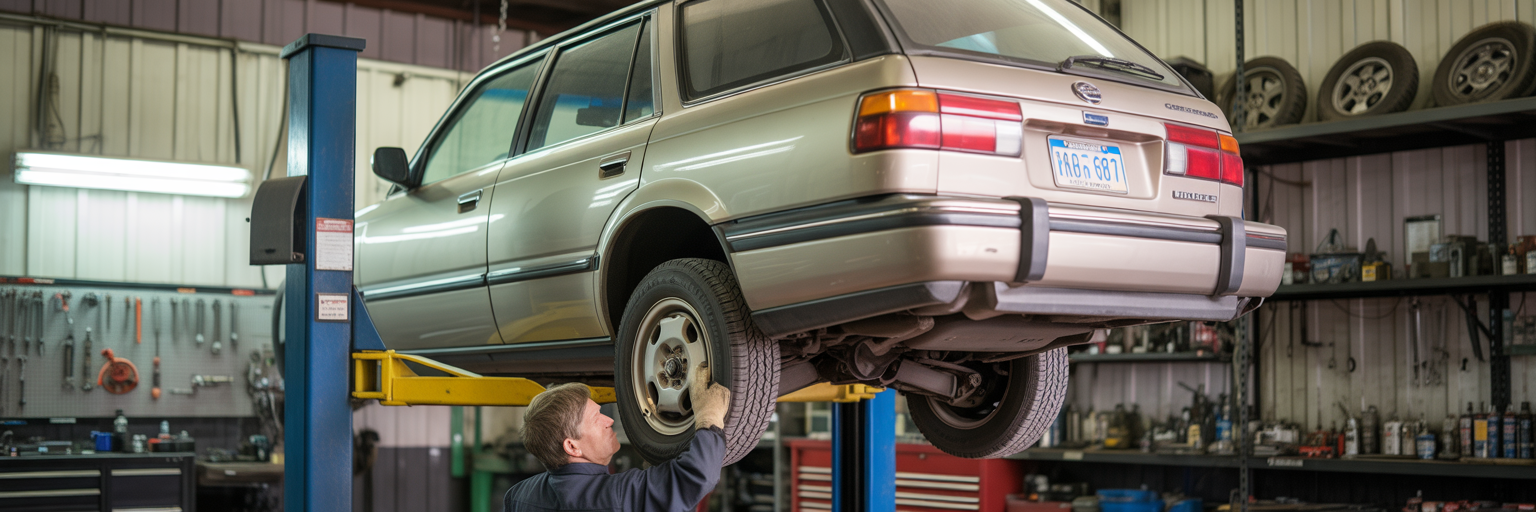
Owning an older Subaru Outback is an experience that comes with a well-documented set of expectations. The brand has cultivated a reputation for incredible longevity, but that durability is paired with a few famous quirks that long-term owners have come to know and anticipate. This balanced reality of ownership is a key part of the Outback story.
The most legendary of these issues is the head gasket failure on the 2.5-liter naturally aspirated engines, primarily from the late 1990s through the mid-2000s. The problem stemmed from a single-layer gasket design that was prone to leaking over time. The fix, which Subaru eventually implemented from the factory, was a more robust multi-layer steel (MLS) gasket. For owners of affected models, the repair is a known, albeit expensive, rite of passage that, once completed, typically resolves the issue for good.
Beyond head gaskets, other predictable maintenance points have emerged. Some generations of the FB-series boxer engine were known for higher-than-average oil consumption, and wheel bearing replacement is often considered a common wear-and-tear item, especially on vehicles that have seen many harsh winters. Yet, loyal owners don’t see these as deal-breakers. They are viewed as predictable costs of maintaining a high-mileage vehicle, much like replacing a timing belt. This hands-on nature of long-term ownership is a point of pride for many, who even learn simple tricks like how to clean headlights with toothpaste to keep their cars in top shape.
The counterpoint to these known issues is the Outback’s exceptional toughness. It is not uncommon to see these vehicles with odometers clicking past 200,000 or even 300,000 miles. This incredible longevity is a direct contributor to the model’s consistently high resale value. While a boxer engine repair might be more complex than on a simple inline-four, this is often offset by the fact that the rest of the car is built to last. The table below summarizes some of these widely discussed points.
| Issue | Affected Model Years (Primarily) | Common Symptoms | Resolution / Owner Insight |
|---|---|---|---|
| Head Gasket Failure (EJ25 Engine) | ~1998 – 2009 (Naturally Aspirated 2.5L) | Engine overheating, coolant loss, oil/coolant mixing (‘milkshake’) | Resolved in later models with multi-layer steel (MLS) gaskets. Repair is costly but a permanent fix. |
| CVT Reliability Concerns | ~2010 – 2015 | Shuddering, hesitation, whining noise, complete failure | Subaru issued extended warranties. Later models are considered more robust. Fluid changes are critical. |
| Excessive Oil Consumption | ~2011 – 2014 (FB25 Engine) | Low oil light between changes, need to add oil frequently | Resulted in a class-action lawsuit. Piston ring redesign in later engines addressed the issue. |
| Wheel Bearing Failure | Various Generations | A humming or grinding noise that increases with speed | Considered a common wear-and-tear item by long-term owners, especially on vehicles used in harsh climates. |
Note: This table summarizes widely discussed issues within the owner community. The affected years are general estimates, and not all vehicles within these ranges will experience problems. Regular maintenance is key to longevity.
The Culture and Loyalty of Outback Ownership
Ask an Outback owner what they love about their car, and they probably won’t start with horsepower or 0-60 times. They’ll tell you about the time it got them through a blizzard, the camping trip it made possible, or how it fits two mountain bikes and a dog. This gets to the heart of the question, why are Subaru owners loyal? It’s because the Outback has never just been a car; it’s an enabler of a lifestyle.
The vehicle’s design directly supports the hobbies of its target audience. Standard all-wheel drive provides confidence for ski trips. Ample cargo space and integrated roof rails make it easy to haul gear for kayaking or hiking. Its comfortable ride and efficient engine make it a pleasant daily driver. This duality is the Outback’s magic formula. It’s the one car that can handle a muddy trail on Sunday and a grocery run on Monday without feeling compromised in either environment.
Subaru of America has masterfully cultivated this emotional connection through its “Love” marketing campaign. By aligning the brand with values its customers hold dear, it has built a community, not just a customer base. Partnerships with the ASPCA resonate with pet lovers, support for the National Park Foundation appeals to adventurers, and the annual “Share the Love” event reinforces a sense of community and giving back. Buying a Subaru feels less like a transaction and more like joining a tribe with shared priorities.
This loyalty is built on a simple but powerful foundation:
- Everyday Practicality: The Outback is safe, comfortable, and fuel-efficient enough for daily life. It’s a sensible choice.
- Go-Anywhere Capability: Its standard AWD and respectable ground clearance provide a sense of freedom and adventure that few competitors can match.
- Unpretentious Image: The Outback projects an image of quiet confidence. It’s a tool for adventure, not a status symbol.
This blend of value and capability is a compelling proposition. For buyers prioritizing practicality and affordability in this space, exploring the best hybrid SUVs under $35k can offer a wider perspective on the market. The loyalty is reinforced by a vibrant grassroots community. Online forums, Facebook groups, and local meetups are filled with owners sharing maintenance tips, planning off-road excursions, and celebrating mileage milestones. They become the brand’s most passionate advocates, turning customers into a fiercely loyal family.
The 2026 Shift from Wagon to Mid-Size SUV
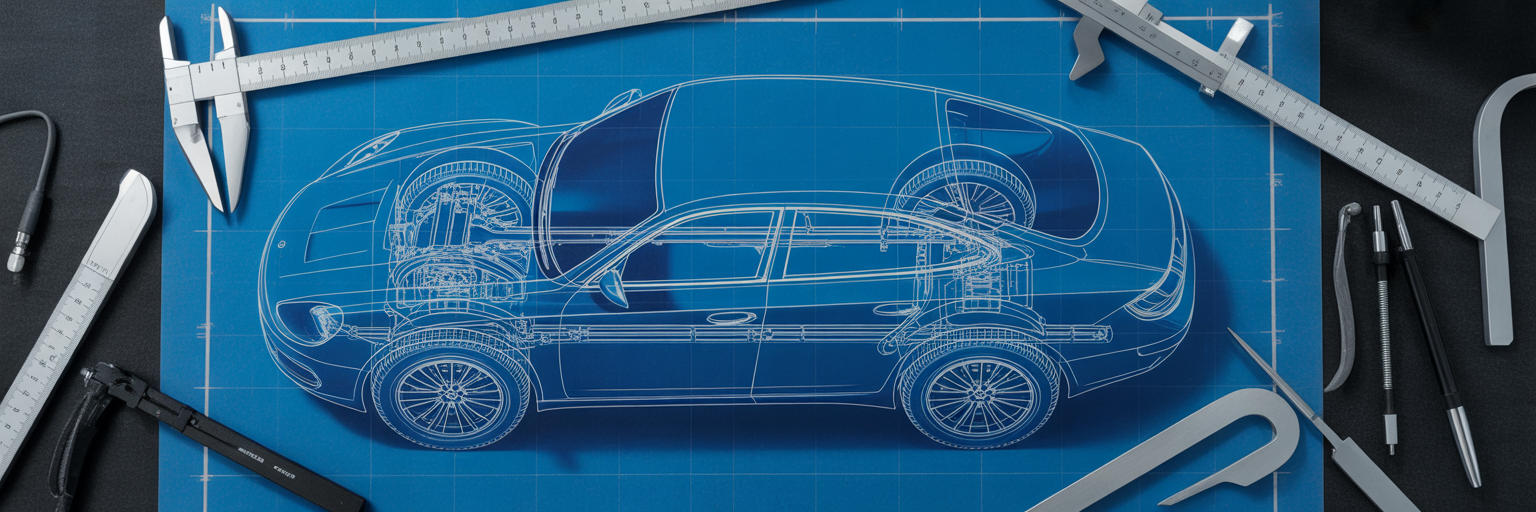
For three decades, the Subaru Outback has proudly occupied its unique space as a rugged, high-riding wagon. But the automotive market is relentless, and sustained consumer preference for the high seating position and boxy profile of traditional SUVs has become impossible to ignore. In response to this reality, Subaru is making the most significant change in the model’s history.
The 2026 Subaru Outback changes signal a move away from its iconic long-roof wagon silhouette toward a more conventional two-box SUV design. This strategic pivot aims to align the Outback more directly with mainstream competitors and capture buyers who may have been put off by its wagon identity. As the Outback enters this new phase, understanding the competitive landscape is key, and seeing how other popular models are evaluated, such as in a Toyota RAV4 vs. Tesla Model Y comparison, provides insight into what buyers in this segment prioritize.
This transformation is not just speculation. According to a report from Car and Driver, the “2026 Subaru Outback moves away from its wagon roots to become an SUV,” confirming the design shift that will reshape its public identity. The goal is clearly to broaden its appeal in a market dominated by vehicles like the Toyota RAV4 and Honda CR-V.
However, it’s crucial to understand that this is primarily an external transformation. Subaru has assured its followers that the core mechanical identity that defines the Outback will be preserved. The foundational elements that built its reputation, the boxer engine and Symmetrical All-Wheel Drive, will remain at the heart of the new design. The fundamental capability and all-weather confidence that owners have come to rely on are not going away.
This leaves us with a critical question. Is this change a pragmatic adaptation necessary for the Outback’s survival and continued success in a fiercely competitive market? Or does it represent the end of an era, a dilution of the quirky, unconventional identity that built one of the most loyal fanbases in the automotive world? As the Outback prepares to turn the page on its next chapter, both the company and its customers are left to ponder the future of this unlikely icon.