
The 300,000 Mile Club: Membership Requirements
The average age of a vehicle on American roads has climbed to over 12 years. This simple fact quietly reframes our relationship with our cars. The old benchmark of a car being “done” at 100,000 miles feels like a relic from another era. Today, the real gold standard for longevity is the 300,000 mile mark, a milestone that represents more than just mechanical endurance. It signifies a smart financial decision in an age of soaring new and used car prices.
We have all felt that moment of sticker shock, whether browsing online listings or walking onto a dealership lot. The cost of replacing a vehicle has made many drivers reconsider the one sitting in their driveway. Maximizing its lifespan is no longer just about being frugal; it is a strategic economic choice. While modern engineering has certainly improved the baseline quality of most vehicles, reaching this milestone remains a significant achievement. It is not something that happens by accident.
It is easy to fall for what is known as survivorship bias, where we only see the few exceptional examples that made it and assume they are common. You might hear a story about a quirky European sedan with a million miles, but that is often a statistical anomaly, a one off case of luck and obsessive care. This article is not about those exceptions. Instead, we will focus on models that consistently demonstrate durability, vehicles where reaching 300,000 miles is an achievable goal thanks to superior engineering and thoughtful design. As you can see in the latest automotive news, the industry is constantly shifting, but the principles of longevity remain surprisingly consistent.
Achieving this goal is ultimately a partnership. It is a combination of a machine’s inherent strengths, like its engine and transmission, and the owner’s dedicated stewardship, which includes disciplined maintenance and mindful driving habits. The following sections will explore this partnership, defining not just the “why” but the “how” behind the cars that just keep going. This is the blueprint for joining the 300,000 mile club.
The Mechanical Heart of Endurance
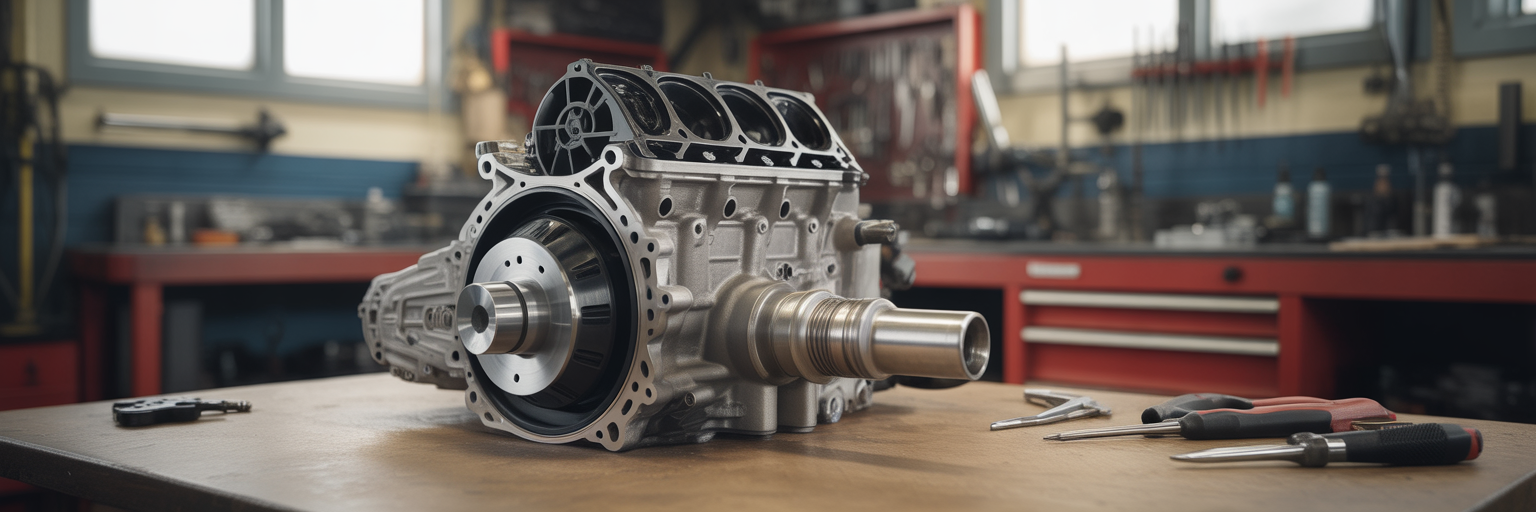
Naturally Aspirated vs. Turbocharged: The Simplicity Advantage
When you look under the hood of the most reliable high mileage cars, you will often find a key commonality: a naturally aspirated engine. In an era dominated by turbochargers and complex direct injection systems, the humble, air breathing engine holds a distinct advantage in the long run. The reason is simple. Fewer complex parts mean fewer potential points of failure over a three decade service life.
A turbocharged engine relies on a turbine spinning at extreme speeds and temperatures to force more air into the cylinders, creating more power from a smaller displacement. While efficient, this adds layers of complexity: turbochargers, intercoolers, extra plumbing, and increased stress on internal components. A naturally aspirated engine, by contrast, uses simple atmospheric pressure to draw in air. It is a less stressful, more straightforward design. Over hundreds of thousands of miles, that simplicity translates directly to reliability. There is no turbo to fail, no boost leak to diagnose, and less thermal stress on the engine as a whole.
The Anatomy of a High-Mileage Engine
Not all naturally aspirated engines are created equal. The ones that achieve legendary status are built with a specific philosophy, much like a marathon runner is trained differently than a sprinter. They are not designed for peak, explosive power. Instead, they are engineered for sustained, relentless operation. This is the core principle behind the celebrated Toyota engine longevity.
These powerplants are often “over engineered” with components that seem excessively robust for their power output. This includes things like forged crankshafts that can handle far more stress than the engine will ever produce, stout pistons and connecting rods, and heavy duty cooling systems designed to keep temperatures stable under any condition. The focus is on durability, not squeezing every last horsepower out of the design. This conservative approach means the engine operates well within its mechanical limits, reducing wear and tear over its long life. It is a stark contrast to some modern designs that can suffer from major issues, like the problems that led to the GM 6.2L engine recall, which serve as a reminder of what can happen when complexity introduces new failure modes.
Transmissions: The Unsung Heroes of Longevity
An engine’s durability is meaningless if the transmission cannot keep up. The transmission is the unsung hero of a high mileage vehicle, and its design plays a massive role in whether a car reaches the 300,000 mile mark. For decades, the gold standard has been the traditional automatic transmission using a torque converter and planetary gearsets. This design is proven, understood by nearly every mechanic, and when properly maintained, incredibly durable.
In contrast, some other transmission types have struggled with long term reliability. Early or poorly designed Continuously Variable Transmissions (CVTs), for example, gained a reputation for premature failure. While modern CVTs have improved, the long term track record of a well built conventional automatic is hard to beat. Then there is the manual transmission. In its purest form, it is a direct mechanical link between the engine and the wheels. With no complex hydraulics or electronics controlling the shifts, its life is largely in the hands, or rather the left foot, of the driver. A skilled operator who shifts smoothly and properly manages the clutch can make a manual transmission last indefinitely, often outliving the car itself.
Ultimately, the powertrain of a high mileage champion is defined by this philosophy of conservative design. It is a commitment to using time tested, robust components over the latest, unproven technology. It is this focus on building cars that last 300000 miles that separates the contenders from the pretenders.
Profiles in Automotive Durability
The Body-on-Frame Champions: Toyota SUVs
When you think of vehicles that are simply indestructible, the conversation often starts with Toyota’s body-on-frame SUVs. Models like the Land Cruiser, 4Runner, and Sequoia are legendary for their ability to absorb punishment and keep going. Their secret lies in a construction method borrowed from trucks, where the body is mounted onto a separate, rigid steel frame. This design is inherently more durable and resistant to twisting forces than the unibody construction found in most modern SUVs and cars.
This rugged foundation is paired with some of the most reliable powertrains ever built. The V8 engines found in older Land Cruisers and Sequoias, and the V6 in the 4Runner, are perfect examples of the “marathon runner” philosophy. They are naturally aspirated, under stressed, and built with exceptionally durable internal components. These are not the most fuel efficient or technologically advanced engines, but they are designed with one primary goal: to never quit. This combination of a tough frame and a bulletproof engine is why you can still find decades old examples tackling trails and daily commutes with over 300,000 miles on the odometer.
The Sedan Stalwarts: Honda and Toyota
You do not need a massive SUV to achieve incredible mileage. For decades, the humble family sedan has been a quiet champion of longevity, and two names consistently lead the pack: the Honda Accord and Toyota Camry. These cars are the embodiment of practical, efficient, and reliable transportation. Their success comes from a formula of mechanical simplicity and mass production excellence.
Their four cylinder engines are famously durable, offering a perfect balance of adequate power and excellent fuel economy. But the real star of the show is often the transmission. The exceptional Honda transmission reliability, particularly in their conventional automatic models, has been a cornerstone of the brand’s reputation. These transmissions are known for their smooth operation and incredible lifespan when given basic maintenance. Because millions of these cars have been sold, parts are inexpensive and widely available, and nearly any mechanic knows how to work on them. This accessibility is a critical, often overlooked factor in a car’s ability to stay on the road for decades.
American Workhorses: Ford and Chevrolet Trucks
On the domestic front, the undisputed kings of high mileage are full size pickup trucks. The Ford F-150 and Chevrolet Silverado are not just the best selling vehicles in America; they are also some of the longest lasting, provided you choose the right configuration. The key is to opt for their proven, naturally aspirated V8 engines, such as Ford’s 5.0L “Coyote” or Chevrolet’s 5.3L EcoTec3.
These engines are built to handle the demands of towing and hauling for hundreds of thousands of miles. Like the Toyota V8s, they prioritize torque and durability over high horsepower figures. When paired with heavy duty frames and robust transmissions, these trucks become capable of incredible service lives. While more powerful, turbocharged engine options are available, it is these simpler, larger displacement V8s that are the preferred choice for owners focused on longevity over outright performance.
The Surprise Contenders: Over-Engineered Luxury
It seems counterintuitive that a complex luxury car could be a high mileage champion, but certain models defy expectations. The Lexus LS 400 and its successor, the LS 430, are prime examples. These cars were the result of Toyota’s mission to beat the German luxury brands at their own game, and they did it by applying their philosophy of extreme over engineering.
Every component, from the legendary 1UZ-FE V8 engine to the interior switchgear, was designed with a level of quality and precision that was almost unheard of at the time. The engine, in particular, is a masterpiece of smooth, silent, and incredibly durable engineering. While these are complex cars with many electronic features, the core components were built to such a high standard that they simply do not fail often. This proves that with enough investment in quality control and engineering, even a feature rich vehicle can achieve remarkable longevity. As publications like TopSpeed have noted, a core group of high mileage heroes consistently run strong past 300,000 miles, and these overbuilt sedans are often on the list.
The common thread connecting all these vehicles is a strong owner community and a readily available parts market. These non mechanical factors are critical for keeping a car on the road for the long haul.
| Vehicle Category | Example Model | Key Powertrain | Primary Durability Trait |
|---|---|---|---|
| Full-Size SUV | Toyota Land Cruiser / Sequoia | Naturally Aspirated V8 | Over-engineered components and body-on-frame construction |
| Mid-Size Sedan | Honda Accord / Toyota Camry | 4-Cylinder Engine with Conventional Automatic | Mechanical simplicity and widespread parts availability |
| Full-Size Truck | Ford F-150 / Chevrolet Silverado | Naturally Aspirated V8 (e.g., 5.0L / 5.3L) | Robust frame and powertrain designed for heavy use |
| Luxury Sedan | Lexus LS 400 / LS 430 | Naturally Aspirated V8 | Exceptional quality control and over-engineering |
The Owner’s Manual for a Million Miles

Proactive vs. Reactive Maintenance: A Mindset Shift
Owning one of the most reliable high mileage cars is only half the equation. The other half is the owner. The single biggest difference between a car that dies at 150,000 miles and one that sails past 300,000 is the owner’s approach to maintenance. It is a fundamental mindset shift from being reactive to being proactive.
A reactive owner waits for something to break. The check engine light comes on, a strange noise appears, or a part fails, and only then do they head to the shop. This approach guarantees a shorter lifespan for any vehicle. A proactive owner, on the other hand, works to prevent failures from ever happening. They view the manufacturer’s maintenance schedule not as a suggestion, but as the absolute minimum. They replace parts based on time and mileage, not just when they fail. This mindset of preventative care is the first and most critical step in learning how to make your car last longer.
Owners of 300,000 mile vehicles do not just fix things; they anticipate them. They replace belts, hoses, and water pumps before they have a chance to leave them stranded. This disciplined approach, often supported by hands on work found in our DIY guides, is what transforms a good car into a great long term companion.
The Lifeblood of Your Vehicle: Beyond Oil Changes
Everyone knows that regular oil changes are important. But oil is just one of several critical fluids that act as the lifeblood of your vehicle. Neglecting the others is a common and costly mistake. Owners who reach extreme mileage pay close attention to all of them, understanding that clean, fresh fluid is the cheapest insurance against catastrophic failure.
Beyond engine oil, a proactive maintenance schedule must include:
- Transmission Fluid: This is arguably the most neglected fluid. It cools and lubricates the complex internals of your transmission. Old, burnt fluid leads to overheating, slipping gears, and eventually, a multi thousand dollar repair bill.
- Coolant (Antifreeze): Modern coolant does more than just prevent freezing and boiling. It contains anti corrosion additives that protect the entire cooling system, from the radiator to the engine block. Once these additives are depleted, corrosion begins.
- Brake Fluid: This fluid is hygroscopic, meaning it absorbs moisture from the air over time. This moisture can cause internal corrosion in brake lines and calipers and can lower the fluid’s boiling point, leading to potential brake failure under heavy use.
- Differential & Transfer Case Fluid: For any rear wheel drive or four wheel drive vehicle, these fluids are essential. They lubricate the gears that transfer power to the wheels. It is a simple and inexpensive service that prevents very expensive repairs.
The Power of Mechanical Sympathy
Beyond scheduled maintenance, there is a more subtle but equally important practice: driving with mechanical sympathy. This is not about driving slowly; it is about understanding that your car is a machine with limits and treating it accordingly. It is the difference between a driver who is at odds with their car and one who works in harmony with it.
Think of it like walking versus sprinting. You can walk for miles without issue, but you cannot sprint indefinitely. Aggressive driving, with constant hard acceleration and abrupt braking, is like asking your car to sprint everywhere. It puts immense stress on the engine, transmission, brakes, and suspension. A driver with mechanical sympathy is smoother. They allow the engine to warm up to operating temperature before applying heavy throttle, especially in cold weather. They anticipate stops to avoid panic braking. They scan the road ahead to avoid jarring potholes that punish suspension components. This smooth, mindful approach to driving dramatically reduces wear and tear over the long run and is a hallmark of every high mileage owner.
Finally, a crucial part of this ownership journey is finding a trusted, independent mechanic who knows your specific model. This person is more than just a repairman; they are a partner in your car’s longevity. They can spot potential issues before they become major problems and provide advice tailored to your vehicle, creating a relationship that is invaluable over a 300,000 mile journey.
Beyond the Engine: Systems Built to Last
The Case for Electronic Simplicity
A car can have a perfectly healthy engine and transmission, but if its electronic systems are failing, it can become an unusable and expensive paperweight. This is why electronic simplicity is a hidden virtue of many high mileage champions. Vehicles with fewer, less integrated electronic modules are simply less prone to the kind of complex, hard to diagnose failures that can plague modern cars.
We have all seen it. A friend’s brand new car has a glitchy central touchscreen that controls everything from the radio to the climate controls. When it fails, basic functions become inaccessible. Contrast that with a 2010 era vehicle with a simple radio and physical knobs and buttons for the heat and air conditioning. If the radio breaks, you lose your music. You do not lose your defroster in the middle of winter. These simpler, decentralized electronic systems are more robust and far cheaper to repair or replace if they do fail, making the car more sustainable to own in the long term.
Chassis, Suspension, and Rust Prevention
The powertrain might be the heart, but the chassis and suspension are the skeleton. A car is only as good as the structure holding it together. The cars that last 300000 miles are almost always built on a durable chassis with a straightforward suspension design. For trucks and old school SUVs, this often means a solid rear axle, a design that is incredibly strong and simple to maintain. For sedans, a common MacPherson strut setup is often preferred for its balance of comfort, performance, and ease of repair.
However, the greatest enemy of any car’s structure is rust. For owners living in the American “Rust Belt” or coastal areas, rust prevention is not an option; it is a requirement for longevity. The best high mileage cars often have better factory rust proofing, but even then, diligent ownership is key. This means regular undercarriage washes in the winter to remove road salt and periodic inspections for any signs of corrosion, especially on frame rails, subframes, and suspension mounting points. A little prevention here can add years to a vehicle’s usable life.
Interiors That Endure
A car you plan to keep for 300,000 miles is a car you will spend a lot of time in. The interior needs to be a pleasant and functional place, even after 15 or 20 years of use. This is where material choices make a huge difference. While premium leather and soft touch plastics feel luxurious when new, they often do not age gracefully. Leather cracks, soft touch coatings peel, and delicate trim pieces break.
You will notice that many of the high mileage stalwarts, particularly in their base or mid trim levels, use high quality, hard wearing cloth seats and durable, hard plastics on the dashboard and door panels. These materials might not feel as premium, but they are built to withstand decades of sunlight, spills, and daily use without falling apart. A durable interior is what makes a car a long term companion you still enjoy driving, not just a running machine with a tattered and broken cabin.
Your Roadmap to Automotive Longevity

Reaching 300,000 miles is not a matter of luck. It is the direct result of making an informed choice from the beginning and committing to a philosophy of diligent, mindful ownership. It begins with knowing what to look for when you buy, especially on the used market.
Here is a truth that challenges conventional wisdom: a vehicle with 150,000 miles and a thick folder of meticulous service records is a far better bet than one with 90,000 miles and an unknown history. The service history is the car’s biography. It tells you if the previous owner was proactive or reactive. When evaluating a potential purchase, a comprehensive used car maintenance checklist is your best tool. It empowers you to look beyond the shiny paint and assess the car’s true condition.
Before you buy, follow these steps:
- Check for a complete and organized service history. Receipts for oil changes, fluid flushes, and parts replacements are more valuable than any sales pitch.
- Inspect all fluids. Check the engine oil, coolant, and transmission fluid for proper levels and condition. Dark, sludgy fluids are a major red flag.
- Look for uniform tire wear. Uneven wear can indicate alignment problems or worn suspension components, pointing to deferred maintenance.
- Test all electronic components. Methodically check every window, lock, light, and button, from the radio to the cruise control.
- Check for any signs of rust. Get on the ground with a flashlight and inspect the undercarriage, paying close attention to the frame, floor pans, and suspension mounting points.
- Insist on a professional pre purchase inspection (PPI). This is non negotiable. A good mechanic will spot things you cannot and can perform crucial tests, like an engine compression test, to assess the health of the motor.
Once you own the car, the financial aspect of long term ownership comes into play. Instead of facing surprise repair bills, plan for them. Set aside a dedicated budget each month for maintenance and wear and tear items like tires, brakes, and belts. Think of it as a car payment to yourself. This proactive financial planning removes the stress from long term ownership and turns a potential crisis into a manageable expense. You might even find that applying these principles helps you choose between different vehicle types, like when comparing the best hybrid SUVs under $35k for long term value.
Ultimately, the journey to 300,000 miles is a rewarding one. It is a partnership between a well chosen machine and a dedicated owner. It saves you money, reduces waste, and creates a bond with your vehicle that few new car owners will ever experience. It is not about finding a magic car; it is about adopting a winning strategy.