
With average new car transaction prices in the United States consistently hovering near $48,000, finding a factory fresh truck for the dirt on an entry level budget is nearly impossible. Fortunately, the secondary market holds decades of over engineered four wheel drive hardware that can take a beginner further down the trail for a fraction of the cost. Shopping for the best off-road vehicles under $25,000 means bypassing dealership showrooms and looking directly at proven mechanical platforms.
Why Off-Road Vehicles Under $25,000 Beat New Crossovers
Automakers spend millions of dollars marketing brand new subcompact crossovers with aggressive plastic cladding and trail rated badges. While these modern machines handle snowy grocery runs admirably, they rarely survive repeated punishment on rocky backcountry passes. As highlighted in MotorTrend, older mechanical platforms consistently outperform new crossovers when operating on a strict budget. A core philosophy of any practical beginner off-roading guide is recognizing that a twenty five thousand dollar budget buys far more capability on the used market than it ever could on a new dealer lot.
Body-on-Frame Durability Versus Unibody Construction
Understanding the structural divide between traditional trucks and modern crossovers comes down to footwear. A heavy duty ladder frame is built like a steel toe work boot, whereas a unibody crossover resembles a lightweight running shoe. In a body on frame vehicle, the cabin sits atop a separate rectangular steel chassis that absorbs torsional twisting, heavy impacts, and suspension loads. Unibody crossovers combine the body and frame into a single stamped sheet metal shell designed primarily for highway fuel economy and crash crumple zones.
When a novice driver inevitably misjudges a line on a rutted mountain pass, a solid axle or heavy duty independent suspension bolted to a ladder frame shrugs off the impact. That same miscalculation in a front biased all wheel drive crossover often results in punctured aluminum oil pans, overheated electromagnetic center couplings, or structural flex that permanently throws the alignment out of spec. Soft roaders certainly have their place, as we noted in our comparison of popular all-wheel-drive crossovers built for light trails, but graded forest service roads are where their utility ends.
How Mechanical Simplicity Builds Better Trail Instincts
Modern vehicles rely heavily on complex terrain management computers that automatically pulse individual brakes and throttle down the engine when wheel slip occurs. While impressive on paper, these electronic safety nets insulate the driver from what the tires are actually doing on the dirt. Learning to drive off road in a vehicle equipped with a mechanical transfer case and hydraulic power steering provides unfiltered feedback directly to your hands and seat.
You quickly learn to feel the exact moment a tire loses grip on loose shale or when the chassis approaches an uncomfortable side hill angle. Developing these physical instincts early makes you a safer, smoother, and more deliberate driver. Choosing a purpose built, older four wheel drive platform gives first time buyers the structural margin for error they need while delivering superior long term value and true backcountry access.
Mechanical Features Every Beginner Should Prioritize
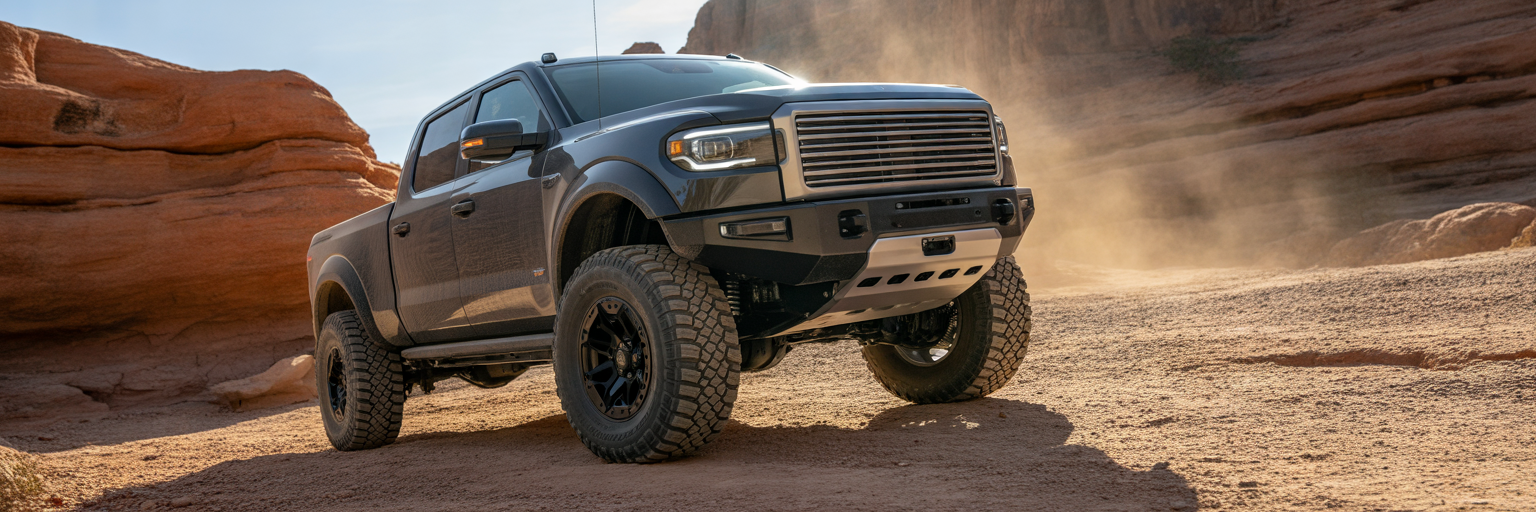
Browsing online classifieds without knowing the underlying anatomy of a trail rig is the fastest way to buy the wrong truck. Before falling in love with shiny paint or aggressive wheels, you need to evaluate the drivetrain and geometry hiding underneath. Research from Edmunds shows that prioritizing fundamental mechanical hardware over cabin tech is the smartest approach when evaluating used 4WD vehicles for trails.
True 4WD Systems and Low-Range Gearing
The single most important distinction in the off road world is the difference between all wheel drive and true four wheel drive equipped with a two speed transfer case. Standard all wheel drive systems use a single gear ratio and rely on computer controlled clutch packs to send power to the rear wheels only after the front wheels begin to slip. True four wheel drive physically locks the front and rear driveshafts together so both axles receive equal torque simultaneously.
Inside that transfer case sits a secondary set of gears known as four wheel drive low range, or 4-Low. Shifting into 4-Low multiplies your engine torque by roughly two to four times depending on the vehicle. This gear reduction allows you to crawl over large boulders at walking speed with precise throttle control, preventing the transmission fluid from overheating. Just as importantly, 4-Low provides immense engine braking on steep downhill grades, holding the vehicle back mechanically so you do not boil your brake fluid riding the pedal all the way down a mountain.
Trail Geometry and Underbody Protection
Horsepower means very little in the dirt if your bumpers get hung up on every washout. Three specific geometric angles dictate what obstacles a vehicle can clear. Approach angle measures the steepest incline the front tires can climb without the front bumper hitting first. Breakover angle determines whether the middle of the undercarriage will scrape when cresting a sharp ridge, a measurement heavily influenced by the distance between the front and rear axles. Departure angle dictates whether the rear bumper or trailer hitch will drag when dropping off a ledge.
Pairing good angles with at least eight and a half inches of ground clearance prevents expensive impacts on uneven American Forest Service roads and rocky desert washes. Even with great clearance, beginners will eventually hear the loud clang of rock meeting metal. Factory stamped steel or aluminum skid plates shielding the radiator, oil pan, transmission, and fuel tank are mandatory. You should also verify that the vehicle features frame mounted steel recovery hooks rather than flimsy bumper eyelets, alongside spacious wheel wells that can accommodate slightly taller all terrain tires without rubbing the fenders at full steering lock.
The Truth About Locking Differentials
Spend ten minutes on any off road forum and you will be convinced that you cannot drive down a dirt road without front and rear locking differentials. With an open differential, power naturally flows to the wheel with the least resistance, meaning if one rear tire lifts into the air over a deep rut, it will spin helplessly while the planted tire does nothing. A locking differential forces both wheels on an axle to spin at the exact same speed regardless of traction.
While a rear locker is undeniably helpful in deep mud or extreme boulder fields, beginners routinely overpay by thousands of dollars chasing specific trim packages just to get that dashboard button. We stand firm in the conviction that open differentials paired with careful tire placement, steady momentum, and a modern brake based traction control system are completely sufficient for ninety percent of beginner and intermediate trails. Learning to pick a smart line where all four tires stay on the ground will teach you far more than relying on a locker to drag you over a poorly chosen obstacle.
| Mechanical Feature | Standard AWD Crossover | True 4WD Truck or SUV | Trail Impact for Beginners |
|---|---|---|---|
| Transfer Case | Single speed with clutch pack coupling | Two speed mechanical with 4-Low range | 4-Low multiplies torque and controls descent speeds on steep grades |
| Ground Clearance | 6.5 to 8.5 inches | 8.5 to 10.8 inches factory | Prevents oil pan and exhaust impacts over protruding trail rocks |
| Suspension Travel | Independent strut with limited articulation | Solid axle or long-travel independent | Keeps tires planted on uneven ruts to maintain forward traction |
| Underbody Protection | Plastic splash guards for aerodynamics | Stamped steel or aluminum skid plates | Shields transmission, transfer case, and fuel tank from boulder strikes |
| Recovery Points | Threaded bumper eyelet for flatbed winching | Frame-mounted steel tow hooks or loops | Allows safe kinetic rope pulls when stuck in mud or sand |
Before moving on to specific vehicle models, keep this quick checklist of core mechanical hardware in mind when reviewing any potential trail rig:
- A dedicated transfer case lever or dial that explicitly shows a 4-Low setting.
- Metal skid plates underneath the front crossmember, transfer case, and fuel tank.
- Heavy steel tow loops bolted or welded directly to the main chassis rails.
- Sufficient gap between the tires and suspension components to fit thirty one to thirty three inch tires.
- A full size spare tire mounted underneath the bed or on the tailgate rather than a temporary donut.
8 Top Off-Road Vehicles Under $25,000 for Trail Novices
Finding the right balance between purchase price, mileage, and capability requires knowing which model years to target and which to avoid. This curated list covers the best beginner 4×4 trucks, cheap reliable off-road SUVs, and budget overland vehicles currently available across two distinct price brackets, stretching from sub fifteen thousand dollar bargains up to the twenty five thousand dollar ceiling.
1. Jeep Wrangler JK (2012 to 2018)
The Jeep Wrangler is the undisputed standard for pure rock crawling capability, mainly because it retains solid live axles at both the front and rear. When one wheel drops into a hole, the opposite wheel is pushed firmer into the dirt, keeping traction consistent. When shopping in the $15,000 to $24,000 bracket, you must strictly target 2012 and newer JK models. That year marked the replacement of the sluggish, oil burning 3.8 liter V6 with the far superior 285 horsepower 3.6 liter Pentastar V6 and a durable five speed automatic transmission. Beyond the joy of removable doors and tops, the Wrangler enjoys the largest aftermarket support network in the automotive industry. Before buying, shine a flashlight down into the engine valley between the cylinder heads to inspect the factory plastic oil filter housing, which is notorious for warping and leaking oil onto the transmission bellhousing.
2. Fifth-Generation Toyota 4Runner (2010 to 2016)
If your vision of off roading involves driving five hundred highway miles to a remote trailhead without worrying about a breakdown, the fifth generation Toyota 4Runner is the benchmark. While pristine late model examples easily exceed thirtyfive thousand dollars, early 2010 to 2016 SR5 and Trail trims with 130,000 to 160,000 miles comfortably sit between $17,000 and $25,000. That mileage means very little to the understressed 4.0 liter 1GR-FE V6 and five speed automatic drivetrain, which regularly surpass three hundred thousand miles with basic fluid changes. The rear seats fold nearly flat to accommodate an interior sleeping platform, and the roll down rear tailgate window makes loading gear effortless. Furthermore, 4Runners hold their resale value better than almost any other SUV on the continent.
3. Second-Generation Nissan Xterra (2011 to 2015)
Because everyone chases the Toyota badge, savvy buyers can pick up a second generation Nissan Xterra for thousands less while getting an arguably more nimble trail rig. Specifically, hunting down a 2011 to 2015 Xterra PRO-4X between $12,000 and $19,000 nets you a factory electronic locking rear differential, Bilstein off road shock absorbers, extensive skid plating, and roof mounted driving lights. Its 4.0 liter V6 produces abundant low end torque, and the leaf sprung solid rear axle handles heavy camping loads without sagging. Families and dog owners love the wipe clean hard plastic cargo area and the clever storage compartment hidden under the rear floor. Sticking to 2011 and newer models also completely avoids the dreaded radiator defect found on earlier models where coolant mixed with transmission fluid.
4. Lexus GX 460 and GX 470 (2006 to 2015)
One of the best kept secrets in the dirt community is that the luxury Lexus GX is actually a globally renowned Toyota Land Cruiser Prado wearing a tuxedo. Because suburban first owners rarely took them off pavement, clean examples priced between $13,000 and $23,000 make incredible budget overland vehicles. Both the older GX 470 and newer GX 460 feature silky smooth V8 engines paired with a full time Torsen four wheel drive system that includes a locking center differential and low range gearing. You get thick acoustic glass, heated leather seats, and a towering greenhouse with fantastic outward visibility on tight trails. The only common failure point is the factory rear air suspension bags, which develop leaks with age; thankfully, an entire aftermarket exists to swap in standard steel coil springs in a single afternoon for a few hundred dollars.
5. Second-Generation Toyota Tacoma (2009 to 2015)
Sometimes an enclosed SUV cabin is the wrong place for muddy recovery gear, chainsaws, and fuel cans. For beginners who want pickup bed utility alongside manageable midsize dimensions, the late second generation Toyota Tacoma ranging from $16,000 to $24,500 is the prime target. Opting for the TRD Off-Road package adds an electronic rear differential locker and Toyota’s clever A-TRAC traction control system, which mimics a front locker by braking spinning wheels. When shopping for any midsize pickup, as detailed in our broader guide on dependable used pickups, chassis condition is everything. You must crawl underneath a second generation Tacoma to verify the condition of the boxed front frame sections and check service records to see if the truck received Toyota’s factory frame replacement or anti corrosion treatment.
6. Jeep Cherokee XJ (1997 to 2001)
Not every beginner wants to spend twenty grand on their first dirt toy. If you are shopping in the sub $15,000 tier, the classic squared off Jeep Cherokee XJ remains a legend for good reason. Priced between $6,500 and $14,000 for clean examples, the XJ weighs roughly a thousand pounds less than modern SUVs and boasts a narrow body that squeezes between trees on tight eastern woodland trails where full size trucks get pinned. Its cast iron 4.0 liter inline six engine produces tractor like low RPM torque and pairs with the nearly indestructible Aisin AW4 four speed automatic transmission. Because the XJ uses a unique integrated frame rail unibody structure, inspect the passenger floorboards and rear leaf spring mounts carefully for rust. You should also verify that the cooling system has been refreshed and check whether 2000 to 2001 models have had their crack prone 0331 cylinder head casting addressed.
7. Second-Generation Nissan Frontier PRO-4X (2012 to 2019)
Much like the Xterra, the second generation Nissan Frontier offers a massive financial discount compared to its Toyota competitor while delivering comparable mechanical grit. Because Nissan kept this generation in production for over fifteen years with minimal changes, a 2012 to 2019 Frontier PRO-4X priced between $14,000 and $22,000 has all its assembly line bugs completely ironed out. Beneath the bed sits a massive Dana 44 rear axle equipped with an electronic locker, bolted to a fully boxed all steel ladder frame that resists flexing over deep washouts. Enthusiasts particularly love the Frontier’s heavy hydraulic power steering rack, which communicates road and trail textures far better than modern numb electric steering systems.
8. First-Generation Toyota Sequoia or Third-Generation Mitsubishi Montero (2003 to 2007)
For buyers who want maximum interior volume for family camping while keeping their spending well under $14,000, two full size wildcards stand out: the 2003 to 2007 Toyota Sequoia and the 2003 to 2006 Mitsubishi Montero. As we explored in our dedicated breakdown of affordable trail rigs, overlooking these slightly larger platforms is a mistake. The first generation Sequoia packs the legendary million mile 4.7 liter V8 and a multi mode transfer case that allows you to drive in four wheel drive on wet or snowy pavement without binding the driveline. Meanwhile, the Dakar Rally bred Mitsubishi Montero features fully independent suspension with cavernous wheel well clearance, a locking center differential, and folding third row seats that disappear into the floor, frequently selling for under ten thousand dollars.
| Vehicle Model and Years | Target Price Range | Drivetrain and Engine | Factory Ground Clearance | Primary Trail Strength |
|---|---|---|---|---|
| Jeep Wrangler JK (2012 to 2018) | $15,000 to $24,000 | 3.6L V6, Part-Time 4WD | 8.8 to 10.0 inches | Solid front and rear axles for extreme articulation |
| Toyota 4Runner (2010 to 2016) | $17,000 to $25,000 | 4.0L V6, Part-Time or Full-Time 4WD | 9.6 inches | Long-term mechanical reliability and cargo volume |
| Nissan Xterra PRO-4X (2011 to 2015) | $12,000 to $19,000 | 4.0L V6, Part-Time 4WD with Rear Locker | 9.5 inches | High factory capability without the brand price premium |
| Lexus GX 460 / GX 470 (2006 to 2015) | $13,000 to $23,000 | 4.6L or 4.7L V8, Full-Time Torsen 4WD | 8.1 to 8.3 inches | V8 torque and quiet highway comfort for long trips |
| Toyota Tacoma TRD (2009 to 2015) | $16,000 to $24,500 | 4.0L V6, Part-Time 4WD with Rear Locker | 9.3 inches | Open bed utility paired with nimble midsize width |
| Jeep Cherokee XJ (1997 to 2001) | $6,500 to $14,000 | 4.0L Inline-6, Part-Time or Full-Time 4WD | 8.3 inches | Lightweight chassis and narrow dimensions for tight woods |
| Nissan Frontier PRO-4X (2012 to 2019) | $14,000 to $22,000 | 4.0L V6, Part-Time 4WD with Rear Locker | 8.9 to 10.1 inches | Boxed ladder frame and Dana 44 rear axle durability |
| Toyota Sequoia (2003 to 2007) | $7,500 to $13,500 | 4.7L V8, Multi-Mode 4WD | 10.0 to 10.6 inches | Full-size cabin space and low-cost V8 dependability |
Matching the right vehicle from this list to your driveway depends heavily on your local geography. Drivers in the Northeast, Appalachia, or the Pacific Northwest should lean toward narrower, shorter wheelbase rigs like the Cherokee XJ, Xterra, or two door Wrangler to navigate tight tree lines and muddy switchbacks. Conversely, enthusiasts in the American Southwest or Rocky Mountains covering vast expanses of desert washboards and high speed two track will appreciate the longer wheelbase stability and V8 highway comfort of a Lexus GX, 4Runner, or Sequoia.
Smart Budgeting and Pre-Purchase Inspection Strategies
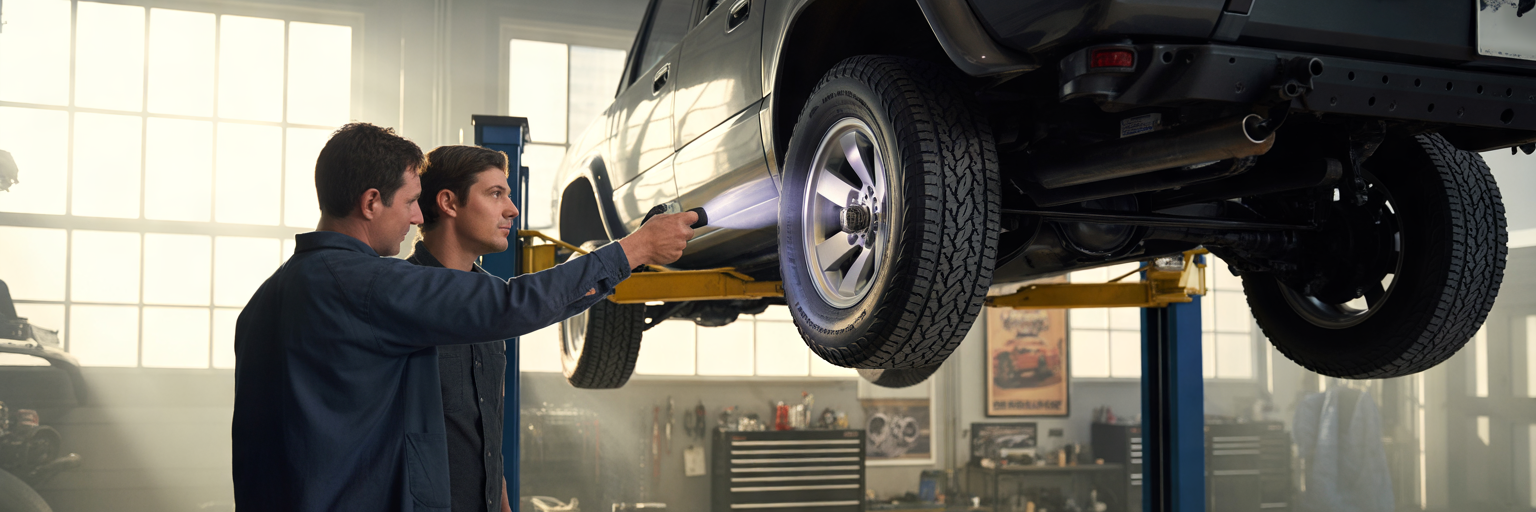
Selecting the right model is only half the battle when shopping in the secondary market. A ten year old four wheel drive vehicle has had a decade of opportunities to be neglected, abused in mud pits, or exposed to corrosive winter road salt. Approaching the buying process with strict financial discipline and a systematic mechanical inspection routine protects you from buying someone else’s expensive headache.
The $20,000 Rule for a $25,000 Budget
The biggest financial trap first time off roaders fall into is spending every penny of their twenty five thousand dollar budget on the vehicle purchase price alone. Seasoned enthusiasts follow the twenty thousand dollar rule: if your total ceiling is $25,000, you should spend no more than $20,000 to $21,000 on the truck itself. That remaining $4,000 to $5,000 buffer is not play money for cosmetic accessories; it is your mandatory mechanical baseline fund.
Once you pay state sales tax and registration fees, that reserve covers immediate preventative maintenance so you can trust the rig fifty miles from cell phone service. Unless the seller provides timestamped paper receipts, you must immediately flush and replace the fluids in the front differential, rear differential, transfer case, transmission, radiator, and brake master cylinder. Whatever money remains in that buffer goes directly toward a fresh set of five quality all terrain tires and replacing worn serpentine belts or radiator hoses.
Why Bone-Stock Commuters Beat Pre-Modified Rigs
It is incredibly tempting to buy a truck that already has a three inch suspension lift, oversized mud tires, and aftermarket bumpers bolted on, thinking the previous owner saved you thousands of dollars in parts. In reality, pre-modified rigs on the budget market are frequently ticking time bombs. Many sellers install cheap polyurethane spacer blocks on top of factory springs just to achieve a lifted look, which forces the front CV axles and ball joints into severe operating angles that cause rapid failure.
Worse yet, amateur wiring jobs for budget LED light bars often involve twisted wires and electrical tape tucked behind the dashboard, creating parasitic battery drains or fire hazards. You are always better off buying a bone stock SUV owned by a suburban commuter who used it to drive to the office and kept up with dealer oil changes. Starting with an unmolested canvas guarantees that the drivetrain has not been beaten on rocks and allows you to choose high quality components when you eventually decide to modify it.
Step-by-Step 4×4 Pre-Purchase Inspection Checklist
When evaluating a prospective 4×4 in person, leave your emotions at home and follow this five step inspection sequence:
- Verify the paperwork first by running the VIN to check for salvage titles, odometer rollbacks, and where the truck spent its life, using the tips in our guide on using vehicle history reports before scheduling a meetup.
- Crawl completely underneath the chassis with a bright flashlight and a flathead screwdriver to tap along the main frame rails, crossmembers, and suspension mounts. Listen for a crisp metallic ring; a dull thud or flaking layers of metal indicates severe internal rust scaling common on Northern Rust Belt trucks, whereas trucks from the Southwest desert require checking for sun baked, cracked rubber control arm bushings.
- Inspect the front axle assemblies closely. On independent front suspension rigs, grab the ribbed rubber CV axle boots and check the valleys for tears or flung dark grease; on solid front axle trucks, inspect the big spherical steering knuckles behind the front wheels for heavy gear oil weeping past the axle seals.
- Find a patch of loose gravel or dirt to test the four wheel drive system. Never engage a part time 4WD system on dry asphalt and turn the wheel, as the lack of wheel slip causes severe driveline bind that can snap transfer case chains. On loose dirt, shift into 4-High and then into 4-Low (which usually requires stopping and placing the transmission in Neutral), listening for clean mechanical engagement without flashing dashboard error lights or metallic grinding noises.
- With the vehicle back in two wheel drive on pavement, turn the steering wheel slowly from full left lock to full right lock while moving at parking lot speeds. If you feel binding in the wheel or hear sharp popping sounds, review our diagnostic guide on steering noises to identify worn tie rod ends, dry ball joints, or failing steering rack bushings.
If a seller refuses to let you crawl underneath the truck or makes excuses about why the four wheel drive light is blinking, hand the keys back and walk away. There are millions of mass produced four wheel drives on American roads, and patience is your best tool for finding a clean survivor.
First Upgrades and Essential Trail Recovery Gear
Once your freshly baselined 4×4 is parked in the driveway, the urge to open an off road catalog and start ordering bolt on parts is overwhelming. Before spending money on shiny metal accessories, you need to focus on the physics of traction and how to get yourself unstuck safely when a trail condition catches you off guard.
Why All-Terrain Tires and Airing Down Come First
Your tires are the only four parts of the vehicle that actually touch the dirt, making them the single highest return upgrade you can buy. Factory highway all season tires feature thin, flexible sidewalls designed for quiet ride quality and thin tread blocks that pack up with mud instantly or slice open on sharp desert shale. Conversely, heavy mud terrain tires roar loudly on the highway, kill fuel economy, and slide dangerously on wet or icy pavement. The sweet spot for any beginner is a reputable all terrain tire carrying the Three Peak Mountain Snowflake rating, which blends tough multi ply sidewalls and aggressive shoulder lugs with silica rubber compounds that grip cold pavement.
Even the best tire performs poorly off road if you leave it inflated to highway pressures of 35 PSI. Airing your tires down to between 15 and 20 PSI at the trailhead transforms your rig’s capability for free. Lowering the air pressure does not primarily widen the tire; rather, it dramatically lengthens the tire footprint front to back like a caterpillar tank track, putting far more rubber lugs in contact with the ground. Softening the tire also allows the tread to conform around sharp rocks instead of bouncing over them, reducing puncture risk and smoothing out jarring washboard vibrations inside the cabin. To do this properly, every beginner needs three inexpensive tools in their cargo area: a brass automatic tire deflator, an accurate analog dial pressure gauge, and a portable 12 volt air compressor that clamps directly to the vehicle battery to pump the tires back up before merging onto the highway.
Building a Safe Beginner Recovery Kit
Getting stuck in sand, snow, or mud is a rite of passage, not a failure. However, recovering a stuck 4,500 pound vehicle involves massive kinetic energy that must be respected. Never use a hardware store tow strap equipped with heavy metal hooks to yank a stuck truck; if a mounting point shears under load, that metal hook turns into a lethal slingshot projectile flying toward the windshield. Instead, pack these five essential items in a canvas gear bag:
- A dedicated nylon kinetic recovery rope designed to stretch up to thirty percent under load, gently pulling a stuck vehicle out like a giant rubber band without shocking the frames.
- Two synthetic soft shackles woven from ultra high molecular weight polyethylene rope, which are stronger than steel D-rings, float in mud, and weigh only a few ounces so they cannot cause injury if a line parts.
- A solid aluminum or steel hitch receiver recovery block that slides directly into your two inch trailer hitch pin, providing a centered, bombproof rear pull point.
- A pair of reinforced composite traction boards with aggressive cleats that wedge underneath spinning tires to provide an instant bridge out of deep sand or slick mud.
- A long handled, pointed steel shovel for clearing dirt away from hung up differentials and digging gentle ramps in front of all four tires before attempting a pull.
Avoiding the Heavy Accessory Trap
Scroll through social media and every overland rig seems to be outfitted with a full plate steel front bumper, a heavy winch, steel rock sliders, roof racks, Dual swing out rear tire carriers, and a hard shell rooftop tent. While these builds look ready for an expedition, bolting four hundred to six hundred pounds of static metal and camping gear onto a stock beginner vehicle destroys how it drives. Every pound of accessories subtracts directly from your legal payload capacity, often overloading the factory suspension springs until the truck sags onto its rubber bump stops.
All that added weight increases braking distances on steep mountain highway descents, stresses wheel bearings, and raises your center of gravity when perched on off camber trails. If you eventually find yourself tackling remote solo trails where self recovery is necessary, you can follow our DIY winch installation guide to add front end hardware properly. Until then, drive your vehicle completely stock for your first six months on the dirt and only upgrade components when the terrain exposes a real mechanical limitation.
Post-Trail Maintenance and Responsible Off-Roading Habits
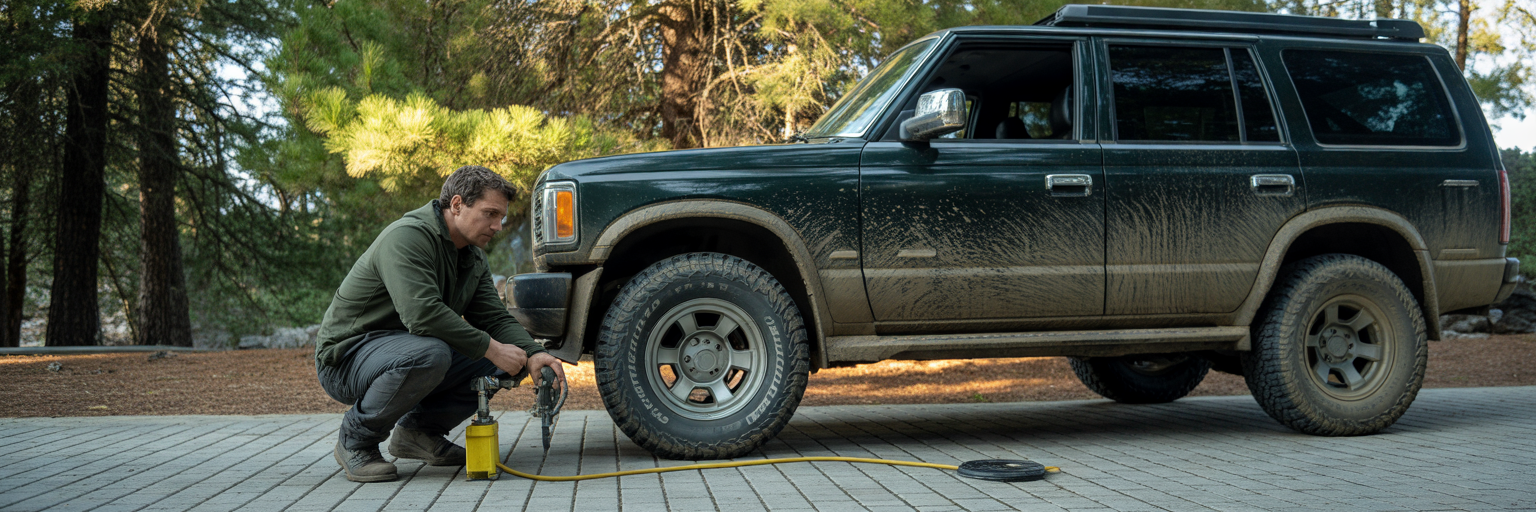
The adventure does not end when your tires touch pavement at the end of the weekend. How you care for your vehicle in the driveway on Monday morning determines whether your budget 4×4 lasts another decade or develops chronic mechanical failures. Equally important is how you conduct yourself on the trail to ensure public lands stay open for future generations of enthusiasts.
The Post-Trip Wash and Mechanical Inspection
Leaving a thick coat of dried mud plastered to the sides of your truck as a badge of honor is terrible for your hardware. When mud packs inside the inner barrels of your wheels and dries in uneven clumps, it throws the wheels severely out of balance, causing violent steering wheel shakes at sixty miles per hour. Worse yet, abrasive mud and small pebbles trapped inside the brake calipers bake onto the rotors, rapidly scoring the metal and wearing down friction material; if you hear grinding or squealing after a trip, consult our guide on brake pad warning signs to inspect your pads immediately.
Take thirty minutes at a self serve coin car wash or in your driveway with a garden hose nozzle to thoroughly flush out the wheel wells, suspension coils, and radiator fins, as caked mud on a radiator will quickly overheat an engine on the highway. Make sure to stick the hose nozzle directly into the drain holes along the boxed frame rails until the water runs clear. Trapped dirt inside a frame holds moisture like a wet sponge for weeks, rotting the steel chassis from the inside out. While you are underneath with a towel, grab the driveshafts to check for looseness and inspect the rubber exhaust hangers, which frequently pop loose after brushing over tall desert brush.
Fluid Checks After Water and Dust Exposure
Driving through a shallow creek crossing or spending two days in fine desert silt requires a quick fifteen minute mechanical check under the hood and axles. When you drive all morning, the heavy metal axle housings and the gear oil inside your differentials get very hot. Plunging that hot axle into cold stream water instantly cools the housing, creating a sudden drop in internal air pressure. Normally, a small one way vent valve called a differential breather allows air in and out while keeping water out, but if that breather valve is clogged with old dirt, the vacuum sucks dirty creek water right past the rubber axle seals.
After any water crossing that reaches your wheel hubs, loosen the upper fill plug on your differentials and stick your pinky finger or a zip tie inside to check the oil condition. Clean gear oil looks like clear amber honey; if it looks like a tan coffee milkshake, water has contaminated the oil and you must drain and refill it before driving at highway speeds. Following dusty runs in places like Moab or Anza-Borrego, unclip your engine air filter box to tap the heavy sand out of the paper pleats, and use a manual grease gun to pump fresh lithium grease into the zerk fittings on your driveshaft U-joints to push out any abrasive grit.
Tread Lightly Principles on Public Lands
American off roaders enjoy access to millions of acres of public land managed by the U.S. Forest Service and the Bureau of Land Management, a privilege that rarely exists in other parts of the world. Keeping these trails open requires following established Tread Lightly ethics every time you shift into four wheel drive. Always stay strictly on designated, marked routes and never drive around mud puddles or fallen trees onto fragile alpine tundra or desert cryptobiotic soil, as widening trails is the number one reason land managers erect permanent locked gates.
When meeting another vehicle on a narrow single track mountain grade, remember that the vehicle climbing uphill always has the right of way. Backing a truck down a steep, loose incline is far more dangerous and prone to jackknifing than a descending vehicle backing up a short distance to a wide turnout. Always air your tires back up to street pressure before hitting pavement, pack out every piece of trash you bring in, and team up with at least one other vehicle whenever exploring remote backcountry. By pairing a smartly purchased budget 4×4 with mechanical sympathy and respect for public lands, you set yourself up for years of unforgettable exploration far beyond the pavement.