
The Unique Challenges of Driving While Tall
You know the feeling. The traffic light turns green, but you only know because the car behind you honked. To see it, you have to crane your neck down, contorting your body just to get a glimpse under the roofline. Or maybe it’s the constant, unwelcome pressure of the center console against your right knee, a problem that goes from a minor annoyance to a real pain on any drive longer than twenty minutes. For taller drivers, finding a comfortable car isn’t about luxury. It’s about basic safety and control.
Compromised posture on a long trip can lead to nagging back pain, while knees that interfere with the steering wheel create a genuine hazard in an emergency maneuver. The search for a new vehicle becomes a frustrating exercise in folding yourself into cars that look spacious from the outside but feel like a penalty box from the driver’s seat. This guide is designed to end that frustration. We’re focusing on new 2026 models with a firm budget of $40,000, looking past flashy exteriors to find vehicles with truly intelligent interior design.
Our evaluation isn’t based on a car’s overall size. Instead, we’re judging them on the metrics that actually matter to someone over six feet tall. We will assess each vehicle based on:
- Headroom: The real, usable space above your head, not just a number on a spec sheet.
- Legroom: The ability to extend your legs without your knees hitting the dashboard or center console.
- Seat Adjustability: The range of motion the seat offers to find a sustainable driving position.
- Ease of Entry and Exit: Getting in and out without performing gymnastics.
- Visibility: A clear, unobstructed view of the road and your surroundings.
- Long-Distance Comfort: How the car feels after an hour behind the wheel, not just a quick trip around the block.
Consider this your honest guide. We will highlight the models that get it right and call out the common design flaws that disappoint, from intrusive sunroofs that steal precious inches to bulky dashboards that rob you of knee room. It’s time to find a car that fits you, not the other way around.
Decoding the Dimensions of Driver Comfort

Walking into a dealership armed with the right knowledge can transform your car buying experience. Instead of relying on a salesperson, you can become your own expert by understanding what truly creates a comfortable cabin. It starts by looking beyond the brochure and knowing how to interpret car headroom and legroom specs in the real world.
Headroom, for instance, is more than just a single measurement. The critical number is the distance from your head to the headliner while you’re in your actual driving position. Always check for sunroof intrusion. The hardware for a sliding glass panel can easily consume two to three inches of vital space, so if you’re testing a car, make sure it has the options you intend to buy.
Legroom is even more deceptive. A car can boast a great legroom number but feel cramped due to a poorly designed footwell. Pay attention to the width of the space for your feet. Is the steering column placed too low? Does the center console bulge out, forcing your right leg into an awkward angle? These design choices make a bigger difference than a half-inch of theoretical space.
True comfort comes from superior seat adjustability. Look for a generous range of motion. How far back does the seat travel? A few extra inches of track can be the difference between cramped and comfortable. Check the seat height adjustment as well. Lowering the seat cushion can create more headroom and a better driving position. Finally, features like seat cushion tilt and effective lumbar support are essential for maintaining good posture on long drives.
Getting in and out gracefully depends on three things: the door’s opening angle, the height of the roofline right at the A-pillar where you get in, and the height of the door sill you have to step over. A tall roofline is useless if you have to duck under a low-sweeping pillar to get seated.
Visibility is a critical safety factor. A tall driver’s higher eye level can be a problem in cars with low rooflines or poorly placed rearview mirrors that create a massive forward blind spot. Smart engineering, not just sheer size, is what creates a feeling of spaciousness. The best automotive interiors use custom design approaches to maximize every inch for the user, much like how premium brands engineer packaging to feel efficient and luxurious. It’s this thoughtful approach that separates a truly comfortable car from one that simply looks big.
Top SUV Picks for Ample Space and Value
For many tall drivers, the search for a comfortable vehicle naturally begins with SUVs. Their upright seating position and higher rooflines offer an inherent advantage. However, not all SUVs are created equal. Many prioritize swooping, stylish rooflines over interior volume, making them surprisingly cramped. The key is to find models that balance practicality and design. Here are three of the best 2026 SUVs under $40,000 that deliver genuine space where it counts.
Jeep Grand Cherokee Laredo: The Commanding All-Rounder
The Jeep Grand Cherokee has long been a favorite for its blend of capability and comfort, and the base Laredo trim is a fantastic value for tall drivers. Its boxy profile translates directly into excellent headroom, even for those well over six feet. The driving position is commanding, with a high seat and expansive glass providing a clear view of the road. The seat offers significant height adjustment, allowing you to find the perfect balance between headroom and visibility. With generous legroom and a dashboard that doesn’t encroach on your personal space, the Grand Cherokee feels open and accommodating.
Honda Pilot: The Family Hauler with Front-Row Freedom
If you need space for the family but refuse to compromise on your own comfort, the Honda Pilot is a top contender. Honda is known for its brilliant interior packaging, and the Pilot is a prime example. The cabin feels exceptionally wide, providing ample shoulder and hip room that prevents you from feeling boxed in. The front seats are designed with American drivers in mind, offering extensive rearward travel. Perhaps most importantly for daily use, the large door openings and relatively low sills make getting in and out remarkably easy, a small detail that makes a big difference over time.
Subaru Outback: The Versatile Crossover That Fits
The Subaru Outback occupies a sweet spot between a wagon and an SUV, offering the best of both worlds. It boasts class-leading legroom that rivals much larger vehicles, and its thoughtfully designed cockpit provides excellent headroom, even on models equipped with a sunroof. The driving position feels more like a car than a truck, which many drivers prefer for long-distance comfort. Its higher ground clearance not only adds capability but also raises the seat height, contributing to easier entry and exit. For those who want ample space without the bulk of a full-size SUV, the Outback is one of the smartest choices available and a leader among suvs with most legroom.
| Model | Front Headroom (in.) | Front Legroom (in.) | Key Feature for Tall Drivers |
|---|---|---|---|
| Jeep Grand Cherokee (Laredo) | 39.9 | 41.3 | Commanding driving position and excellent seat height adjustment. |
| Honda Pilot (Sport) | 40.5 | 41.0 | Wide cabin and large doors for easy entry and exit. |
| Subaru Outback (Base) | 40.1 | 42.8 | Exceptional legroom and great visibility from a car-like driving position. |
Note: Dimensions are based on 2026 model year estimates for base trims without a sunroof, which maximizes available headroom. These figures represent the most relevant metrics for a tall driver’s comfort.
A 2024 report from U.S. News on the best cars for tall people reinforces this, highlighting models like the Jeep Grand Cherokee for their substantial front-row space. As you evaluate these options, be wary of SUVs with aggressive, coupe-like rooflines. This design trend almost always sacrifices the very interior volume that tall drivers need. For those also considering electrification, seeing how these spacious gasoline models compare to all-electric counterparts in a guide to choosing your 2026 electric SUV can provide valuable context.
Spacious Sedans That Defy Expectations
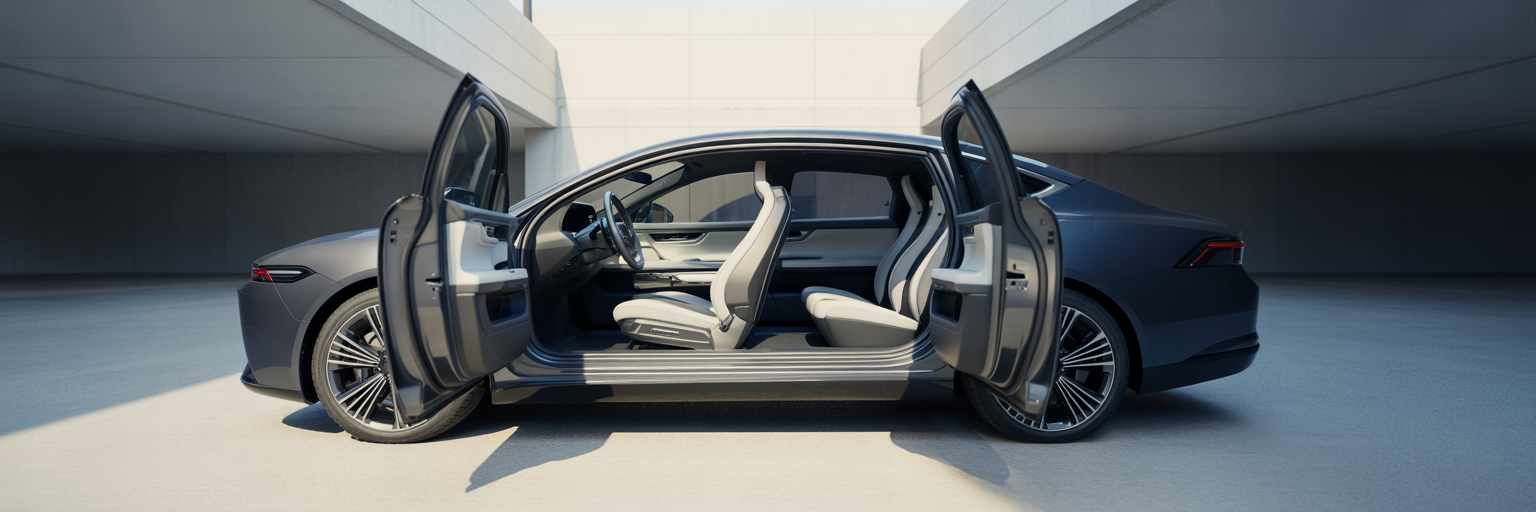
There’s a common belief that if you’re tall, you have to drive an SUV or a truck. That simply isn’t true. While many modern sedans have fallen victim to style-over-substance designs with plunging rooflines, a select few prioritize smart interior engineering. These models prove that a lower-slung vehicle can still offer outstanding comfort and space for taller drivers, often with the added benefits of better fuel economy and handling. The secret lies in finding the exceptions to the rule.
Honda Accord: The Benchmark for Interior Packaging
For decades, the Honda Accord has been a masterclass in maximizing interior space. Honda’s engineers consistently deliver a cabin that feels a class above its segment. The 2026 model continues this tradition with impressive front legroom and a cleverly designed low-slung seat that preserves headroom despite its sleek profile. The dashboard is pushed forward, and the controls are placed logically, creating an open, airy feel from the driver’s seat. Excellent forward visibility and a thoughtfully shaped center console that stays out of your knee’s way make the Accord one of the most comfortable and user-friendly sedans for tall people on the market. For buyers weighing it against its chief rival, a detailed look at the 2026 hybrid sedan showdown can offer deeper insights.
Hyundai Sonata: Style Meets Surprising Space
The Hyundai Sonata proves that you don’t have to sacrifice style for space. While its exterior is bold and modern, its interior is a testament to thoughtful design. The cabin is noticeably wide, giving you plenty of shoulder room, and the dashboard curves gracefully away from the driver and passenger. This design choice not only looks good but also creates a genuine feeling of openness and prevents your knees from making contact with hard plastics. The Sonata also offers generous seat travel, allowing drivers to slide the seat far back to find a perfect, sustainable driving position for long journeys. It’s a car that looks great but, more importantly, feels great to sit in.
While these models excel, it’s crucial to be cautious of the “four-door coupe” trend sweeping the sedan market. Cars with fastback rooflines might look sporty, but that aggressive slope almost always compromises front headroom and makes the cabin feel claustrophobic. For a tall person, a sedan’s usability hinges on practical design, not just styling. A quick test sit is the only way to know for sure if a car will work for you.
Capable Trucks with Generous Cabin Room
When it comes to finding a vehicle with uncompromising interior space, it’s hard to beat a truck. Their inherent design, featuring vertical cabins and high rooflines, creates a naturally accommodating environment for tall drivers. While they might seem like an obvious choice, many buyers overlook them, assuming they are too expensive or purely for work. However, within the $40,000 budget, there are excellent options that provide both massive personal space and everyday utility.
Toyota 4Runner: The Rugged, Roomy SUV-Truck Hybrid
While technically an SUV, the Toyota 4Runner is built on a truck platform, and it shows in the best way possible. Its body-on-frame construction results in a distinctly upright and boxy cabin that translates directly into outstanding headroom. You sit high up, with a commanding view of the road that inspires confidence. The interior is utilitarian and straightforward, which means there are no swooping, intrusive dashboard elements to steal knee room. For drivers who value rugged simplicity and a cabin that feels almost endlessly tall, the 4Runner is a legendary and practical choice.
Full-Size Pickups: The Unbeatable Space of a Crew Cab
This might be the best-kept secret for tall drivers on a budget. While top-tier luxury trucks soar in price, work-oriented trims of full-size pickups can often be found near the $40,000 mark. Models like a Ford F-150 XL or a Ram 1500 Tradesman in a Crew Cab configuration offer an enormous interior volume that no other vehicle type can match. The key is focusing on the right cab. Forget Regular or Extended Cabs; the Crew Cab is the non-negotiable choice. It provides maximum front seat travel and a back seat that’s spacious enough for other tall adults. These are some of the best trucks for tall drivers under 40000 because you get unparalleled legroom, headroom, and shoulder room without paying for luxury features you may not need. For those who need both personal space and serious capability, a truck’s interior volume is simply unmatched. If your needs push you toward more capability, exploring which heavy-duty truck is right for you can provide a useful perspective.
Vehicles That Look Roomy But Often Disappoint

One of the biggest frustrations for a tall car shopper is the “large on the outside, small on the inside” phenomenon. You walk up to a vehicle that looks substantial, only to find the driver’s seat is surprisingly cramped. This is rarely an accident. It’s often the result of specific design and styling choices that prioritize aesthetics over ergonomics, consuming potential passenger space in the process. Learning to spot these red flags can save you a lot of time and disappointment at the dealership.
Here are the main culprits that make a car feel smaller than it is:
The Sunroof. This is the number one offender. While the idea of an open-air experience is appealing, the sliding mechanism, drainage channels, and the glass panel itself can steal one to three critical inches of headroom. If you are considering a car with a sunroof, you must test drive a model equipped with one. The version without a sunroof might fit you perfectly, while the one you actually intend to buy will have you brushing your head against the headliner.
Oversized Center Consoles. Many modern cars, especially those with a sporty or luxurious feel, feature wide transmission tunnels and bulky center consoles packed with controls, cupholders, and storage bins. This hardware can severely intrude on knee and leg space, forcing you into an uncomfortable, offset driving position where your right leg is constantly pressed against a hard surface. This is a major issue in otherwise comfortable cars for long drives.
Aggressively Raked Windshields. To achieve a sleek, aerodynamic profile, designers often give cars a steeply angled windshield. This design choice has several negative consequences for tall drivers. It brings the header rail—the structural beam at the top of the windshield—closer to your forehead, inducing a sense of claustrophobia. It also necessitates thick A-pillars for structural rigidity, which can create significant blind spots and obstruct your view.
The lesson here is simple but powerful: trust your own in-person experience over spec sheets and marketing photos. A 15-minute test drive where you focus on the actual feel of the space is the only true test. If it feels tight in the showroom, it will feel ten times worse an hour into a road trip.
Your Test Drive Checklist for a Perfect Fit
You’ve done the research and narrowed down your choices. Now comes the most critical step: the test drive. This isn’t just about seeing how the car accelerates or handles. This is your personal fit-test, a protocol to ensure the vehicle works for your body. Don’t let a salesperson rush you. Take your time and use this checklist to make an informed decision. Finding one of the best cars for tall drivers means finding one that is both comfortable and safe.
- The Entry and Exit Test
Before you even start the engine, get in and out of the car several times. Try both the driver and passenger sides. Did you have to duck your head significantly? Was it an awkward twist to get your legs in? If getting in and out feels like a chore, it will become a major point of frustration in a car you own. - The Seating Position Protocol
Once inside, take at least five minutes to adjust the seat. Ignore the salesperson and focus. Push the seat all the way back, then all the way down. Adjust the steering wheel’s tilt and telescoping functions. Set the seatback angle and the lumbar support. Can you find a position that feels genuinely sustainable for an hour-long drive, not just for a quick trip around the block? - The Headroom and Legroom Check
With the seat in your ideal position, perform a physical check. How many fingers can you fit between your head and the headliner or sunroof frame? A four-finger gap is a good benchmark. Now, check your legs. Are your knees completely clear of the dashboard and center console, even when you move your foot between the pedals? Can you move your right foot easily and without obstruction from the accelerator to the brake? - The Visibility Scan
Perform a full 360-degree check from your driving position. Can you see overhead traffic lights without craning your neck? Look over your left and right shoulders to check the blind spots. Is the rearview mirror so large or poorly placed that it blocks your forward view? Your ability to see your surroundings clearly is non-negotiable for safety.
A car that fits you properly is more than just comfortable. It’s safer, less fatiguing, and ultimately more enjoyable to drive. This checklist ensures you don’t just buy a car, you invest in one that’s right for you.